
A millwright foreman needs a crew member to clear a jammed aggregate conveyor belt on a highway paving plant, and the operator says the start button at the control shack is switched off. What must the foreman require before anyone reaches into the roller?
Select an answer to reveal the explanation.
Short Explanation
Trusting an off button while your crew's hands are inside a roller is trusting luck instead of hardware. The trap is thinking a spotter or an emergency stop replaces physical isolation, when only a personal lock and zero-energy test guarantee the belt stays dead.
Full Explanation
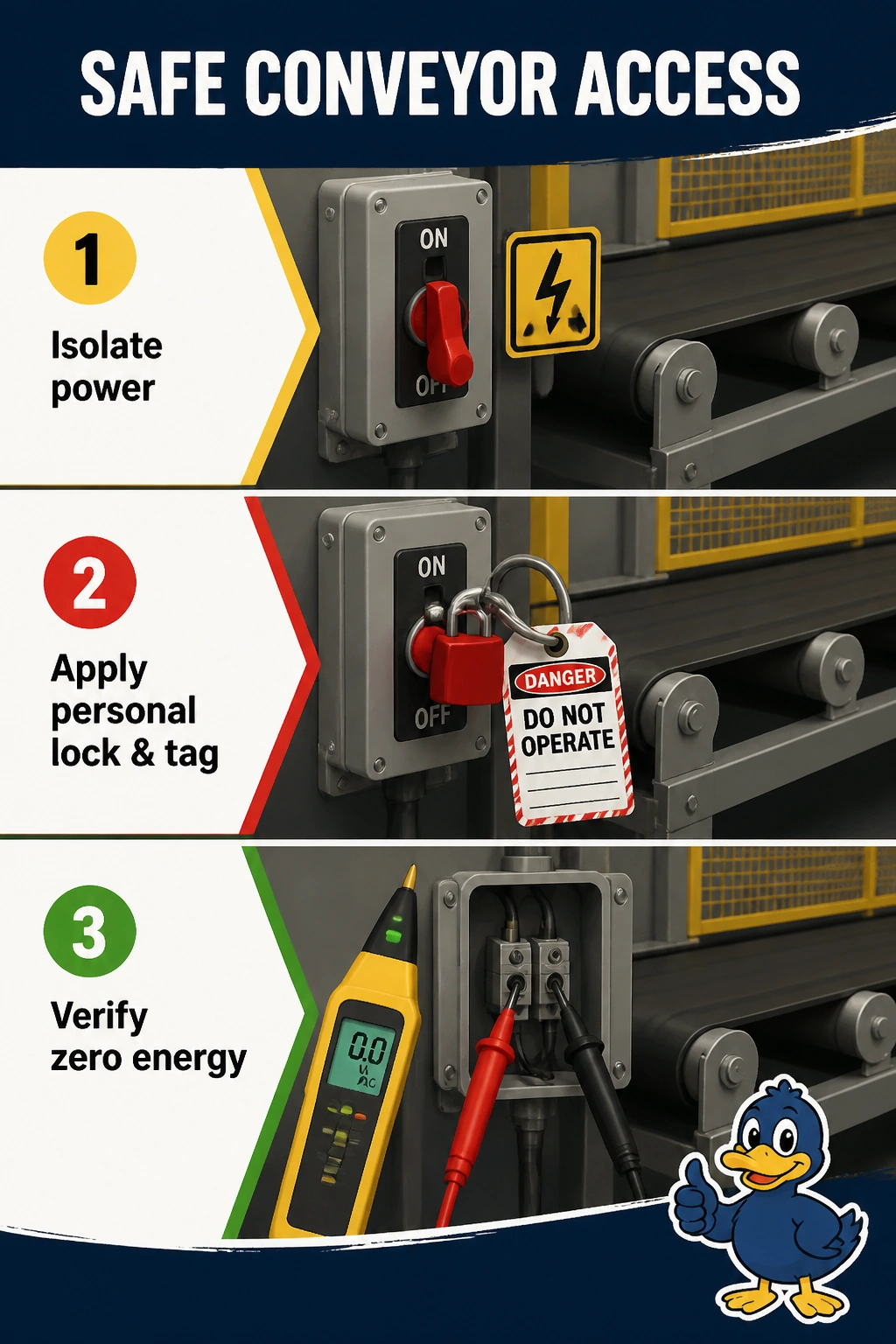
Unexpected startup or stored mechanical energy during jam clearing can cause fatal caught-between or amputation injuries. Choosing to "Isolate the power source, apply a personal lock and tag, and verify zero energy" follows OSHA hazardous energy control principles by physically disconnecting the energy source, securing it with each exposed worker's personal lock, and testing the start control to confirm zero energy. Choosing to "Post a spotter at the control shack with a two-way radio while the jam is cleared" relies on human communication rather than physical isolation and fails if another switch is bumped. Choosing to "Have the operator stand beside the emergency stop pull-cord until the belt moves" depends on a control circuit rather than an energy-isolating device and reacts only after motion starts. Choosing to "Place a warning cone on the control panel and wear insulated leather work gloves" offers no physical barrier against restart and zero protection against crushing rollers. Caveat: conveyors can also hold stored gravitational or tension energy, so block or release belt tension before reaching in. Operational check: inspect the disconnect box before work begins to confirm lockout hardware fits properly and every worker places their own lock.
Prefer to study offline? Printable PDF study book + test engine ($7.50, unofficial). These questions stay free here.