
Before hoisting steel roof joists with a mobile crane, a rigging foreman notices a synthetic web sling has frayed load-bearing stitching. What must the foreman do with the sling?
Select an answer to reveal the explanation.
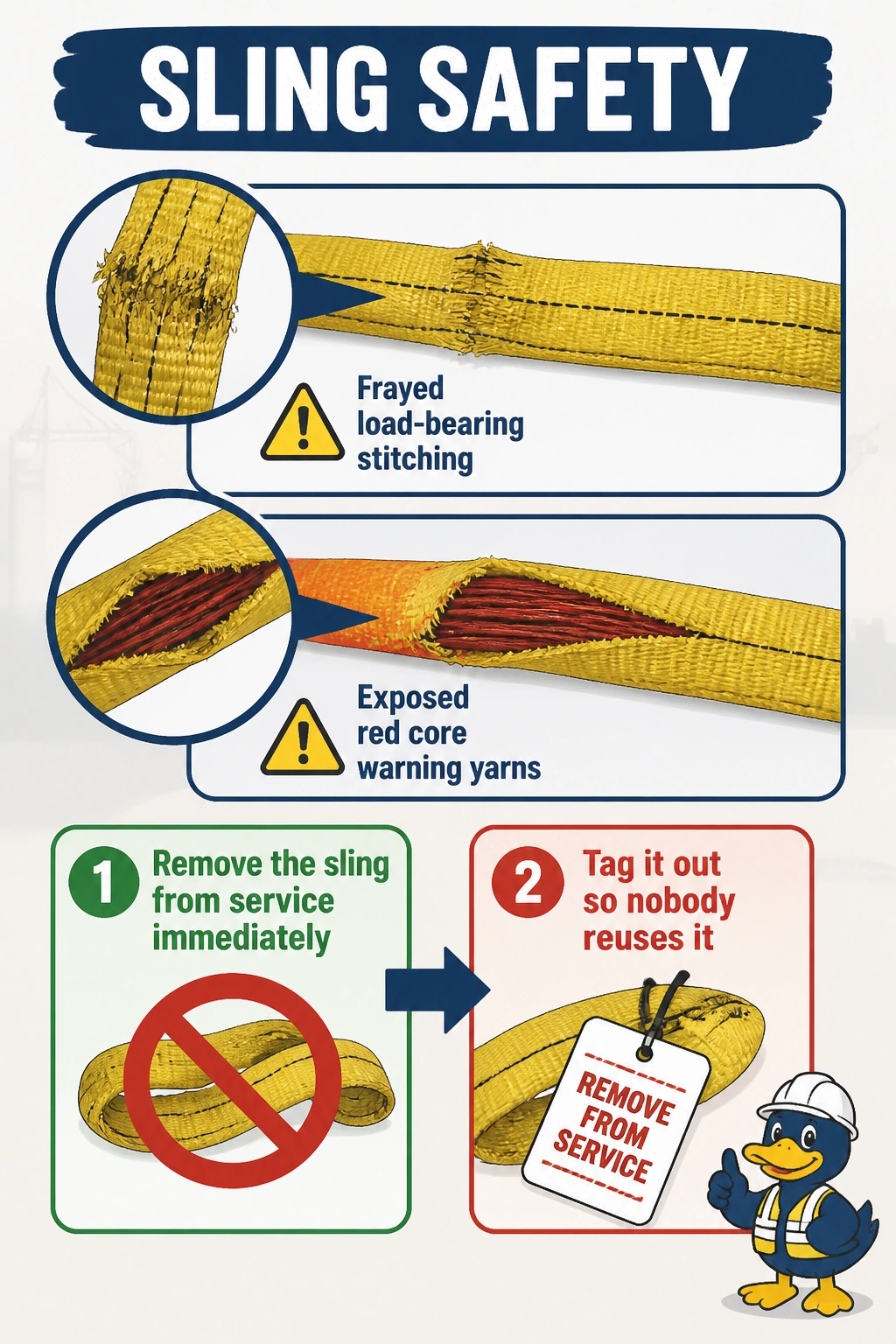
Short Explanation
You should remove the sling from service immediately when its load-bearing stitching is frayed; you cannot rely on its remaining strength. Tag it out so nobody reuses it, rather than derating it, taping it, or keeping it as a backup.
Full Explanation
OSHA 1926.251(e)(8) requires immediate removal of a sling from service for broken or worn stitches, and exposed red core yarns are an ASME B30.9 removal criterion. Frayed load-bearing stitching alone is enough to require removal, so remove the sling from service immediately and tag it out so nobody reuses it. Once load-bearing seams fray, the sling’s remaining strength is unpredictable, and it can fail suddenly under load. Derating the sling to half its rated capacity for light bundles of decking is not safe: damaged rigging has no reliable reduced rating. Wrapping frayed stitching with heavy utility tape and re-inspecting after the lift conceals the defect but does not restore structural integrity. Keeping the sling in the tool trailer as a backup for low-height moves with a rough-terrain forklift leaves defective rigging accessible, where another worker could grab it for a lift. Tagging it out is only the first step; permanently destroying or cutting the sling prevents its accidental return to the rigging box. Before signaling the crane, perform a hands-on inspection of the replacement sling’s stitching, webbing, and capacity tag.
Prefer to study offline? Printable PDF study book + test engine ($7.50, unofficial). These questions stay free here.