
A roofing foreman inspects a portable extension ladder set up to access a 16-foot-high commercial roof edge and sees the side rails end flush with the parapet flashing. What must the foreman require before anyone climbs the ladder?
Select an answer to reveal the explanation.
Short Explanation
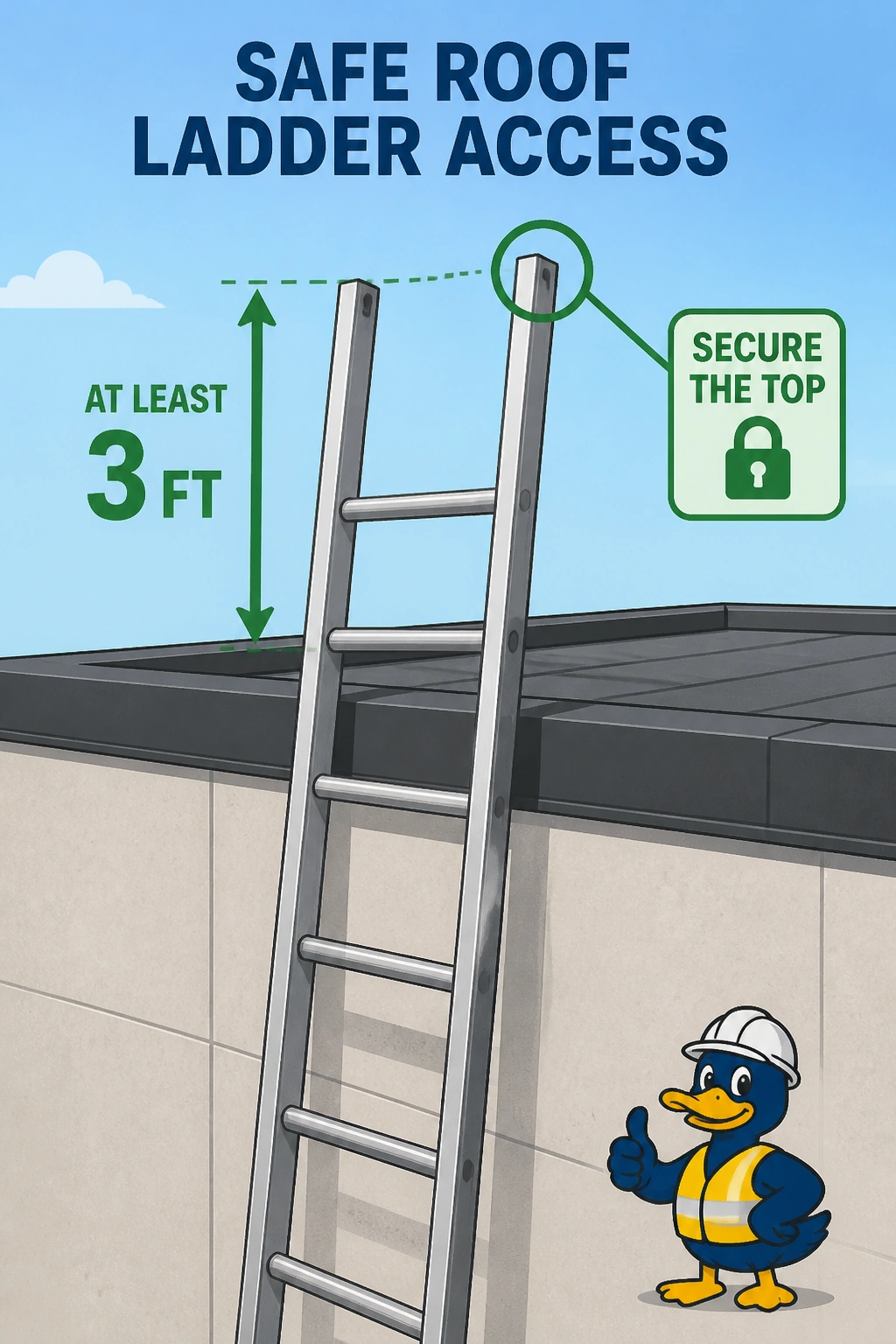
When you step off a ladder whose rails end at the roof edge, you have no secure handhold just as your balance shifts. Before anyone climbs, require the rails to extend at least three feet above the landing and the top to be secured, giving you handholds through the transition. A helper at the base cannot make up for rails that stop at the landing.
Full Explanation
Under 29 CFR 1926.1053, a portable ladder used to access an upper landing must extend its side rails at least three feet above the landing and have its top secured. The extension gives you a stable handhold while stepping onto or off the roof, and securing the top helps prevent the ladder from shifting sideways during that transition. Having a helper stand at the base while workers step directly onto the parapet does not provide handholds above the landing, where a loss of balance can lead to a fall. Angling the ladder more steeply so its top rungs sit below the flashing does not provide the required rail extension and can compromise proper setup. Tying a rope from a middle rung to a roof drain does not provide upper handholds or secure the top rails; it instead applies a lateral pull at the rung. As an exam caveat, if a three-foot extension is physically impossible, the ladder must be secured at the top to a rigid support and paired with a grabrail. Before opening access, check for the three-foot projection, a proper four-to-one setup angle, and a firm tie-off at the upper landing.
Prefer to study offline? Printable PDF study book + test engine ($7.50, unofficial). These questions stay free here.