
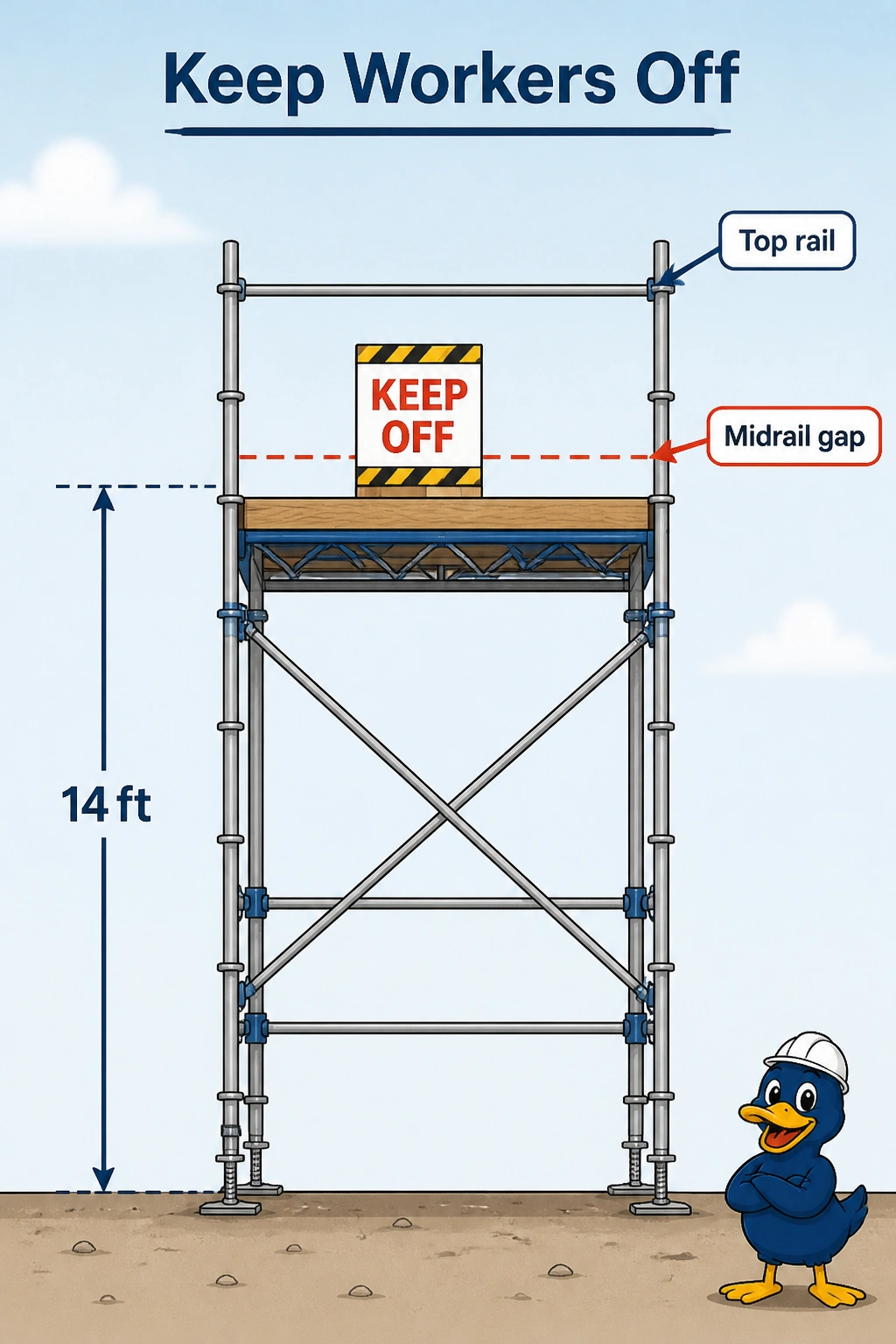
While walking a multi-story commercial jobsite, a masonry foreman notices a 14-foot-high supported scaffold platform has a top rail installed, but the midrail is missing along the work side and no workers are tied off. What should the foreman do?
Select an answer to reveal the explanation.
Short Explanation
A scaffold with a missing midrail is a trapdoor disguised as a guardrail. The trap is trusting caution tape or veteran balance to hold someone back, when you must clear the deck until compliant fall protection is installed.
Full Explanation
Under OSHA 29 CFR 1926.451(g), workers on supported scaffolds more than 10 feet above a lower level must be protected by a complete guardrail system—including top rail, midrail, and toeboards where falling objects are a hazard—or by a personal fall arrest system. Choosing to "Keep workers off that section until a compliant midrail or fall arrest is in place" removes the fall exposure immediately rather than gambling with a gap under the top rail. Choosing to "Allow experienced masons to work on the platform if they stay close to the inside wall face" relies on worker balance instead of physical fall protection. Choosing to "String yellow caution tape across the missing midrail gap to mark the edge" offers zero structural resistance if a worker trips or leans back. Choosing to "Let the crew finish the course of block as long as a toeboard is installed below" addresses falling tools at the deck edge while leaving a wide-open fall gap between the deck and top rail. Caveat: only a competent person may supervise scaffold modifications or tag an incomplete section out of service. Operational check: inspect scaffold guardrails, planking, and access ladders before each shift and tag any incomplete bay red until repaired.
Prefer to study offline? Printable PDF study book + test engine ($7.50, unofficial). These questions stay free here.