
While grinding magnesium-alloy concrete screeds in a site fabrication tent, sparks ignite a pile of fine magnesium shavings on the steel workbench. Which extinguishing method should the trained supervisor use on this incipient fire?
Select an answer to reveal the explanation.
Short Explanation
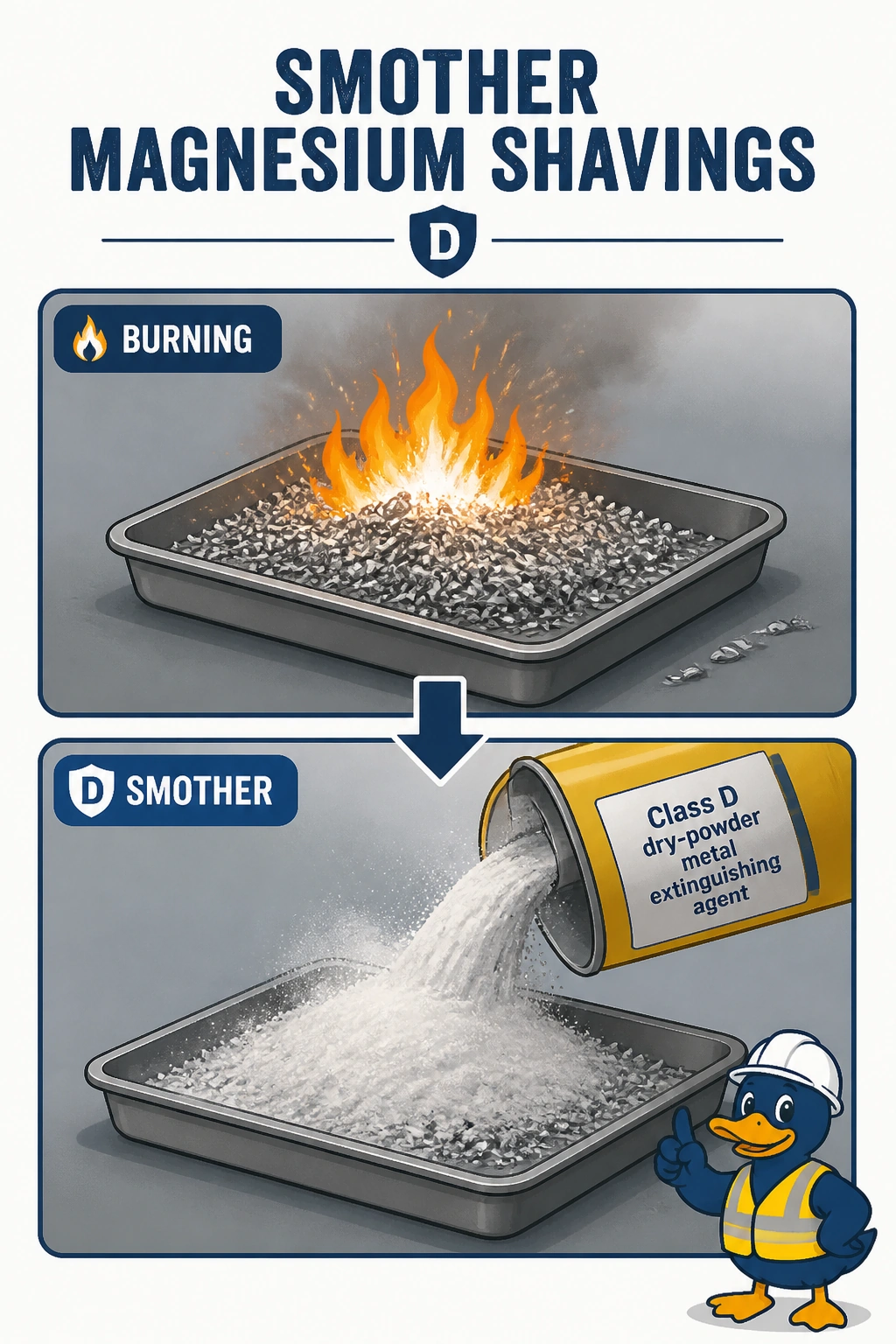
Throwing water onto burning magnesium is like pouring gasoline on a campfire—it reacts violently and scatters molten metal across your shop. You must smother the burning shavings with a Class D dry-powder metal extinguishing agent designed to crust over the metal and starve it of oxygen. The trap is grabbing a standard multipurpose ABC extinguisher that cannot stop a metal fire.
Full Explanation
Combustible metals such as magnesium, titanium, and sodium burn at extreme temperatures and react dangerously with water, carbon dioxide, and standard dry-chemical agents. Choosing to Smother the burning shavings with a Class D dry-powder metal extinguishing agent applies a specialized powder such as sodium chloride or graphite that forms an oxygen-excluding crust over the burning metal without reacting. Conversely, choosing to Apply a pressurized water stream from a standard Class A pump tank extinguisher causes an exothermic reaction that releases flammable hydrogen gas and splatters burning metal. Selecting to Blanket the burning metal shavings with carbon dioxide from a Class BC cylinder fails because burning magnesium can strip oxygen from carbon dioxide and intensify combustion. Choosing to Spray standard multipurpose ABC dry chemical directly into the glowing metal pile is ineffective on Class D metal fires and can scatter fine shavings. As a caveat, Class D extinguishers are specific to the metal involved and are only for small incipient fires when evacuation routes remain clear. For an operational check, verify that a rated Class D unit is mounted near any combustible-metal grinding station, keep shavings swept into covered metal drums, and evacuate immediately if the fire spreads beyond the bench.
Prefer to study offline? Printable PDF study book + test engine ($7.50, unofficial). These questions stay free here.