
While soldering copper water lines in a renovation corridor, a pipefitter accidentally brushes a forearm against a hot torch tip, leaving a red, blistering two-inch thermal burn. What first-aid step should the supervisor take first?
Select an answer to reveal the explanation.
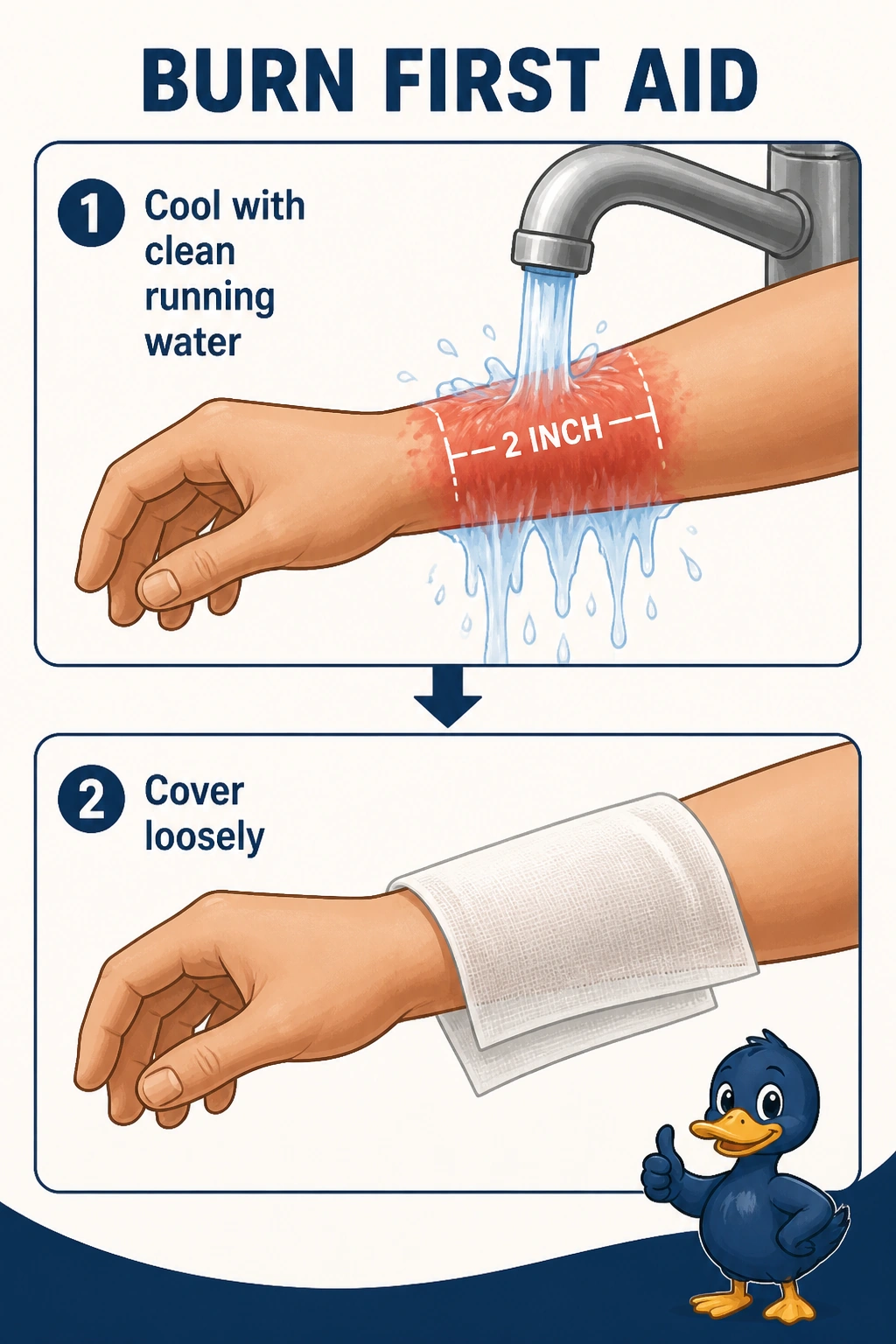
Short Explanation
When skin gets burned, your first job is to pull the heat out gently—ice or greasy ointments only lock damage in or invite infection. The trap is reaching for ice, popping blisters, or taping the wound tight instead of cooling with clean water and covering loosely.
Full Explanation
For a minor thermal burn, the proper immediate first-aid response is to Cool the burn with clean running water and cover loosely with a sterile, non-stick dressing. Cool (not icy) running water stops the burning process in the tissue, reduces swelling, and eases pain, while a loose sterile dressing shields the damaged skin from contamination. Choosing to Apply ice directly to the blistered skin fails because extreme cold causes further tissue damage and vasoconstriction over the burn. Deciding to Pop the blisters and coat the burn with ointment fails because intact blisters form a natural sterile barrier against bacteria, while thick ointments trap heat and complicate medical evaluation. Opting to Wrap the bare burn tightly with dry adhesive tape fails because tight wrapping restricts swelling and adhesive tape can tear fragile burned skin during removal. Keep in mind that any large burn, deep burn, or burn affecting the face, hands, or joints requires prompt professional medical evaluation. Verify that jobsite first-aid kits are stocked with sterile non-adherent burn dressings and that potable running water is accessible near hot-work areas.
Prefer to study offline? Printable PDF study book + test engine ($7.50, unofficial). These questions stay free here.