
While unloading galvanized sheet-metal ductwork, a worker suffers a deep forearm laceration that is spurting bright red blood onto the slab. What should the trained supervisor do immediately?
Select an answer to reveal the explanation.
Short Explanation
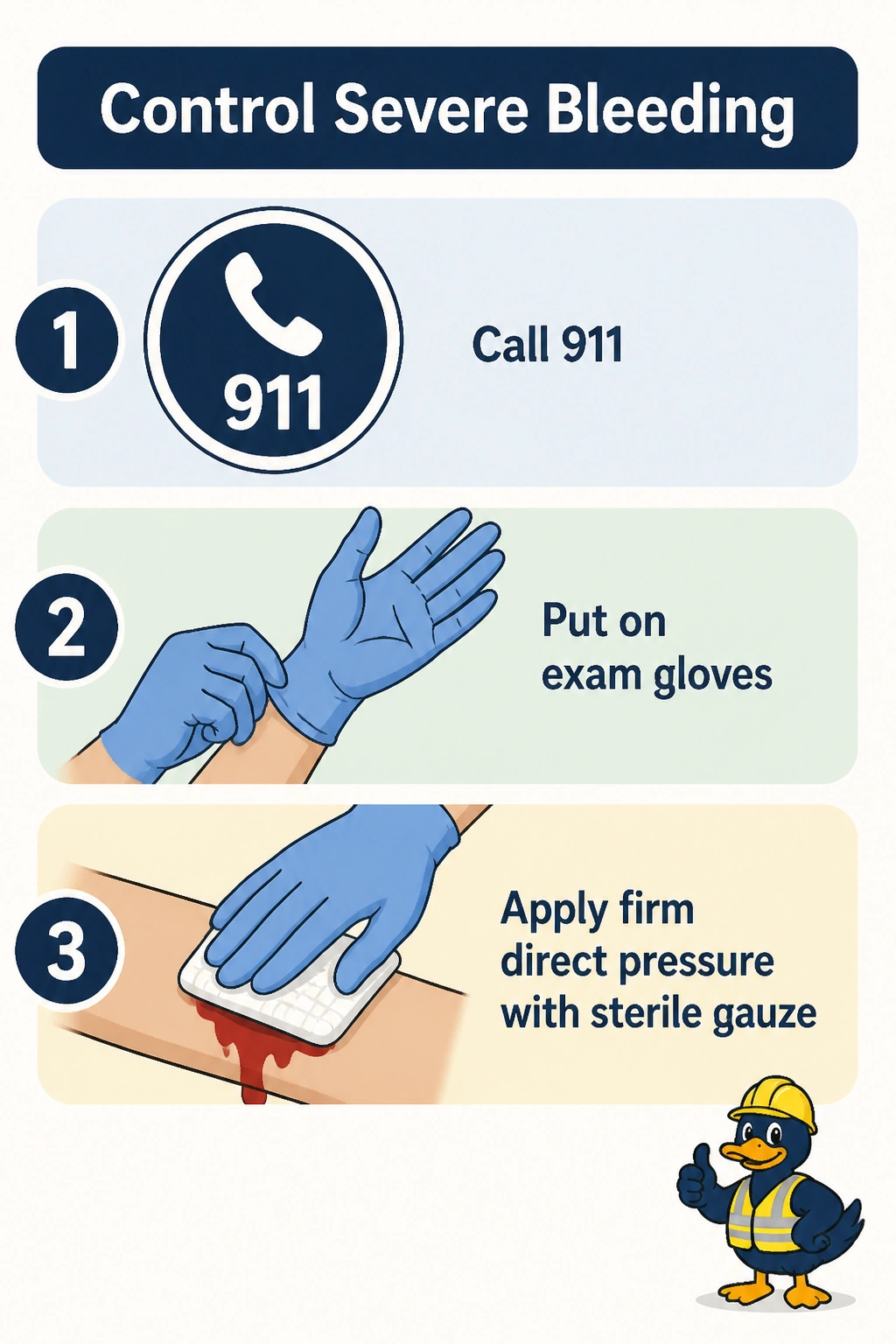
You’re facing a possible arterial bleed, so call 911, put on exam gloves, and apply firm direct pressure with sterile gauze right away. Don’t spend time rinsing the wound or walking the worker to the trailer; control the bleeding while help is on the way.
Full Explanation
Life-threatening arterial bleeding requires immediate hemorrhage control and professional emergency care, so call 911, put on exam gloves, and apply firm direct pressure with sterile gauze. Gloves protect against bloodborne pathogens, while continuous pressure slows blood loss until paramedics arrive. Washing the wound under a hose to check its depth before wrapping it loosely wastes critical time, introduces non-sterile water, and fails to stop active bleeding. Walking the worker to the job trailer first aid kit before deciding on EMS increases blood loss and risks sudden shock or collapse along the route. Applying a cold pack over the forearm and elevating it without touching the cut cannot compress a severed vessel or control severe bleeding. If blood soaks through the initial dressing, add more sterile gauze on top and maintain firm pressure rather than removing the original pad. A tourniquet is appropriate only if you are trained and direct pressure fails. As a practical check, verify after every crew rotation that trauma dressings, gloves, and emergency site-address cards are stocked at each floor’s first-aid station.
Prefer to study offline? Printable PDF study book + test engine ($7.50, unofficial). These questions stay free here.