
While framing a commercial retail shell, tornado sirens sound and a tornado warning is issued for the jobsite's county while crews are working inside the unenclosed steel frame and the mobile office trailer. Where should the site supervisor direct the crew?
Select an answer to reveal the explanation.
Short Explanation
When tornado sirens wail, your jobsite trailer turns from an office into a sail. The trap is staying near glass or mobile structures just to keep the crew together, when you need solid interior walls on the lowest level to shield everyone from flying debris.
Full Explanation
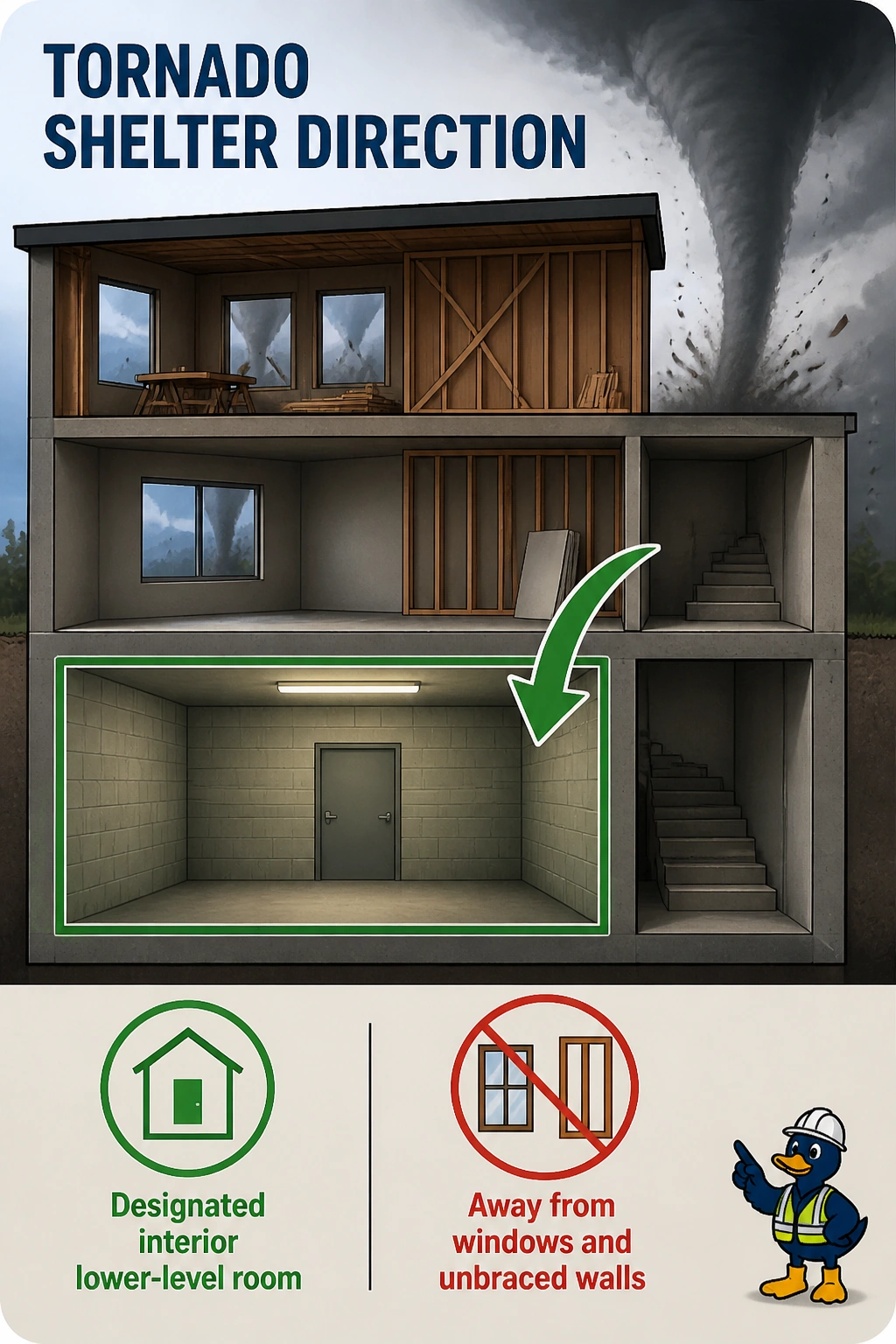
During a tornado warning, structural collapse and airborne debris cause the deadliest construction injuries, so the supervisor must "Move the crew to the designated interior lower-level room away from windows and unbraced walls" immediately. Lower interior rooms without exterior glass provide the strongest barrier against high winds and flying materials. Choosing to "Assemble the entire crew inside the mobile jobsite office trailer so everyone can be counted in one place" is dangerous because unanchored or light-frame trailers can overturn or break apart in tornadic winds. Choosing to "Send workers to their personal pickup trucks in the open parking lot to wait out the storm" exposes them to vehicle rollover, falling power lines, and airborne debris. Choosing to "Stage the crew near the ground-floor glass lobby doors so they can exit quickly after the storm" places workers directly beside shattering glass and unbraced entryways. One caveat is that partially built interior rooms must be checked ahead of time so unsecured materials or overhead ductwork are not stored above the shelter space. Before work starts on site, post clear tornado shelter signage and conduct a headcount drill at the designated interior room.
Prefer to study offline? Printable PDF study book + test engine ($7.50, unofficial). These questions stay free here.