
While trenching near a commercial driveway, an excavator bucket snags and ruptures a pressurized natural gas service line, releasing a loud hiss and strong mercaptan odor. What should the foreman order immediately?
Select an answer to reveal the explanation.
Short Explanation
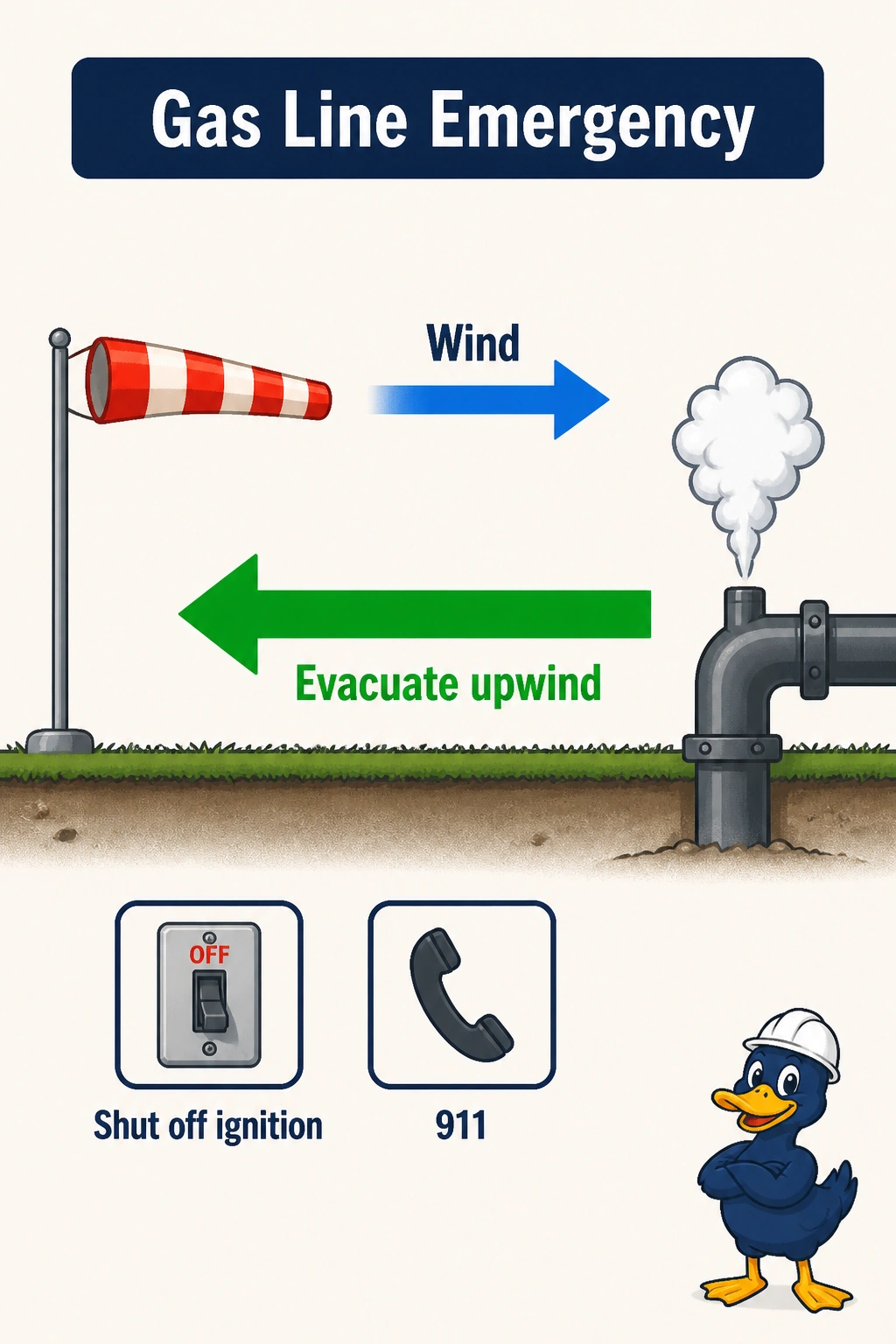
A ruptured gas line turns the whole jobsite into a potential spark box, and every second spent near the trench raises the stakes. Your job is not to play plumber or hero—clear the crew upwind, kill ignition sources if safe, and let 911 and the utility handle the line.
Full Explanation
A pressurized natural gas release creates an immediate fire, explosion, and asphyxiation hazard that requires rapid isolation rather than field repair. The foreman must Shut off nearby ignition sources, evacuate upwind, and call 911 and the gas utility so crews move out of the flammable vapor plume and trained utility responders can shut the main valve. Choosing to Keep the excavator idling over the trench to shield the leak while calling the utility leaves a running diesel engine and hot exhaust right above escaping gas, creating a severe ignition risk. Ordering a crew to Have a laborer close the curb valve with a wrench while standing in the trench exposes a worker to high-pressure jetting, toxic displacement of oxygen, and flash fire inside a confined excavation. Trying to Direct a water hose spray into the trench to disperse the gas cloud before evacuating wastes critical evacuation time and does not eliminate the explosive mixture. As a field caveat, avoid operating cell phones, radios, or light switches inside the immediate odor zone; make emergency calls from the upwind assembly area. For an operational check, review utility shutoff contacts and the site's upwind rally point during your daily pre-task briefing whenever excavating near marked or unmarked utilities.
Prefer to study offline? Printable PDF study book + test engine ($7.50, unofficial). These questions stay free here.