
On a bridge approach paving job, a paver's hydraulic hose bursts and spills several gallons of hydraulic fluid onto the asphalt ten feet uphill from an open municipal storm drain. What should the foreman have the crew do first?
Select an answer to reveal the explanation.
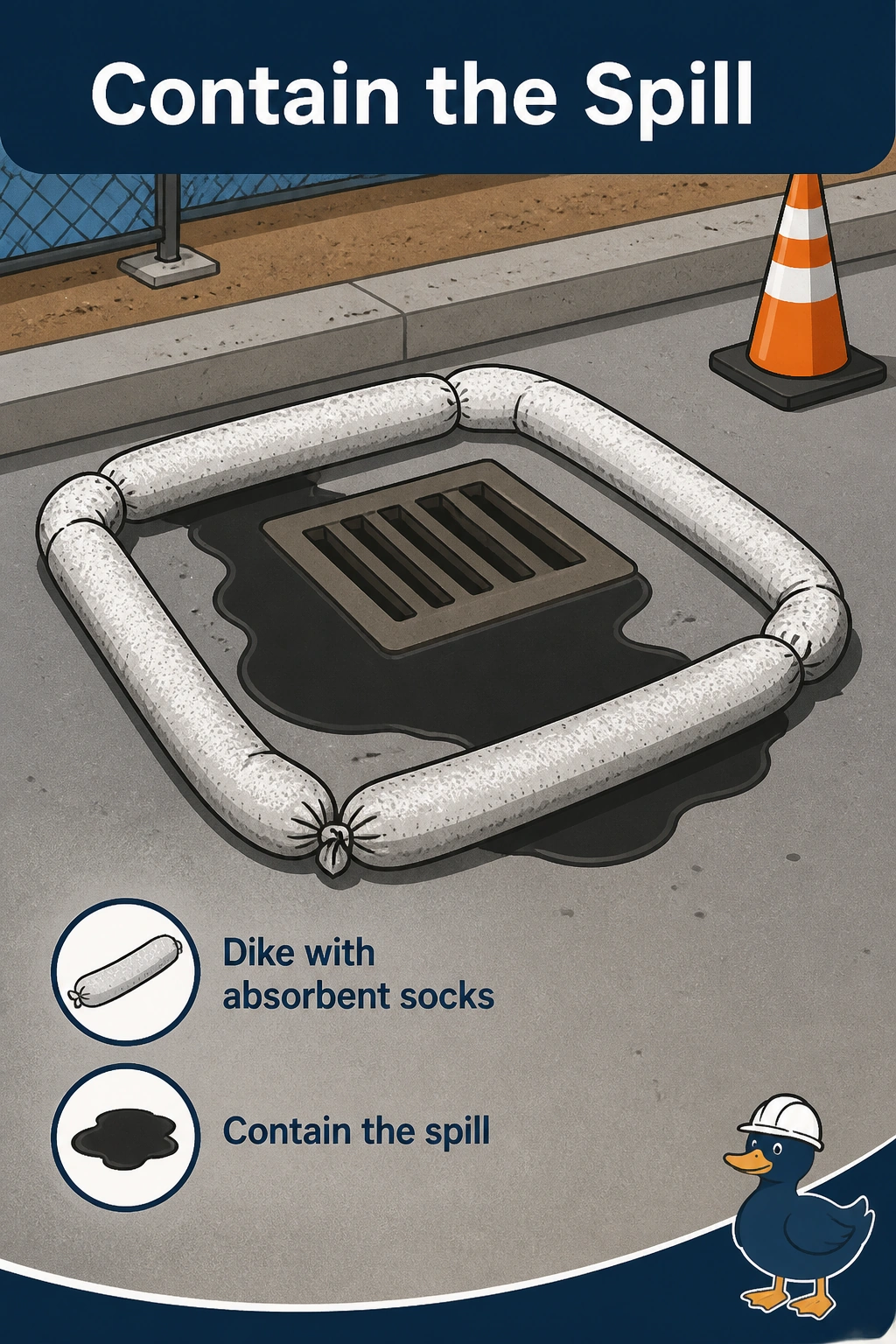
Short Explanation
Hosing hydraulic oil down a storm drain only trades a slip hazard on asphalt for pollution in a local creek. The trap is trying to clear the surface fast with water when your first move is to block the drain and contain the spill.
Full Explanation
When a petroleum or hydraulic spill threatens a storm drain, the immediate priority is source isolation, so the foreman must "Dike around the storm drain with absorbent socks and contain the spill" before it enters the municipal system. Blocking the downhill path prevents environmental contamination and keeps the slick from spreading across the haul lane. Choosing to "Wash the hydraulic fluid into the storm drain with a water hose to prevent a slip hazard" illegally discharges oil into stormwater and spreads the slick over a wider area. Choosing to "Cover the wet hydraulic oil with loose dry sand and leave it for the night shift" leaves an uncontained slip hazard and allows rain or runoff to wash oil past the sand into the drain. Choosing to "Wait for the paving shift to finish before notifying anyone about the hydraulic leak" lets the spill migrate unchecked and risks further equipment failure. One caveat is that once contained, used absorbent socks and pads must be bagged, labeled, and disposed of according to site spill-response rules while the paver is locked out for hose repair. Confirm every paving crew keeps a stocked spill kit with absorbent socks on the support truck.
Prefer to study offline? Printable PDF study book + test engine ($7.50, unofficial). These questions stay free here.