
At the end of a woodworking shift in a hotel lobby renovation, painters leave linseed-oil-stained wiping rags piled inside an open cardboard trash box beside a stack of trim lumber. What must the foreman require for those rags?
Select an answer to reveal the explanation.
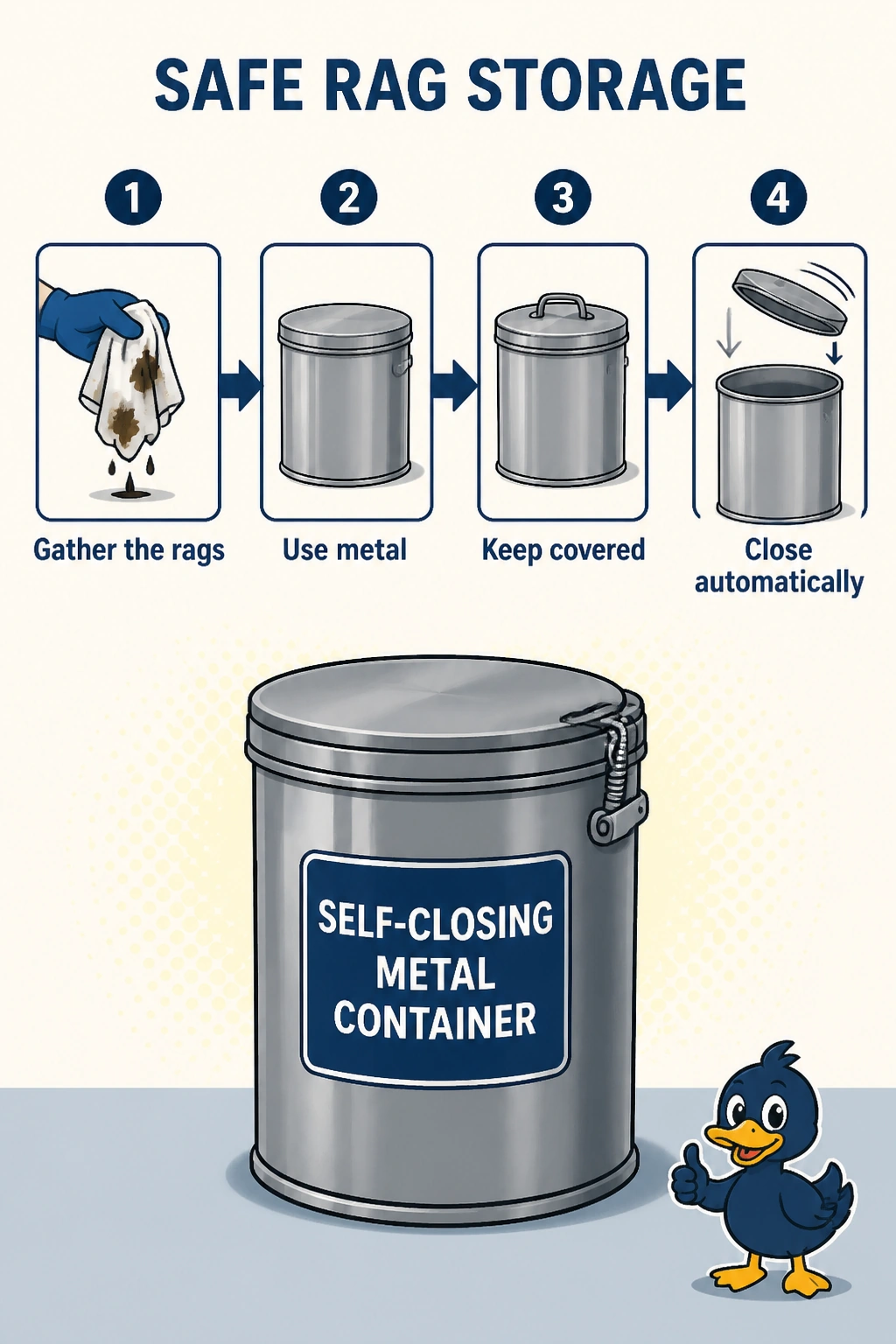
Short Explanation
Linseed oil heats up as it dries, and a pile of oily rags in cardboard can ignite all by itself after your crew goes home. The trap is tossing them into plastic bags or general scrap, where trapped heat turns into an overnight structure fire.
Full Explanation
Drying oils such as linseed oil oxidize exothermically when exposed to air, and bunched rags trap that heat until they reach ignition temperature without an external spark. Choosing to Place the oil-soaked rags in a covered self-closing metal container restricts oxygen supply, contains any heat buildup inside noncombustible steel, and isolates fuel away from surrounding trim lumber. Deciding to Leave the rags spread out inside the cardboard box near the exit door leaves combustible paper and air currents together where spontaneous ignition could block egress. Choosing to Tie the rags inside a heavy plastic garbage bag in the hallway traps heat inside meltable plastic that fuels a fire once ignition starts. Opting to Toss the oily rags into the general wood-scrap roll-off container mixes a self-heating ignition source directly with dry sawdust and lumber scraps. As a caveat, empty metal rag containers regularly and dispose of contents per site hazardous-waste rules rather than letting them overflow. For an operational check, inspect finishing areas at shift end to verify lids close tightly and no oily rags remain in open trash.
Prefer to study offline? Printable PDF study book + test engine ($7.50, unofficial). These questions stay free here.