
During an unannounced evacuation drill on a multi-story hospital build, the supervisor discovers that concrete grinders on the third floor completely drown out the temporary horn alarm, leaving three workers unaware of the drill. What should the supervisor do?
Select an answer to reveal the explanation.
Short Explanation
You want an emergency drill to reveal blind spots before a real fire or chemical release happens. If you leave an inaudible alarm zone unchanged and rely on workers watching the hallway windows, you leave them unprotected during an actual emergency.
Full Explanation
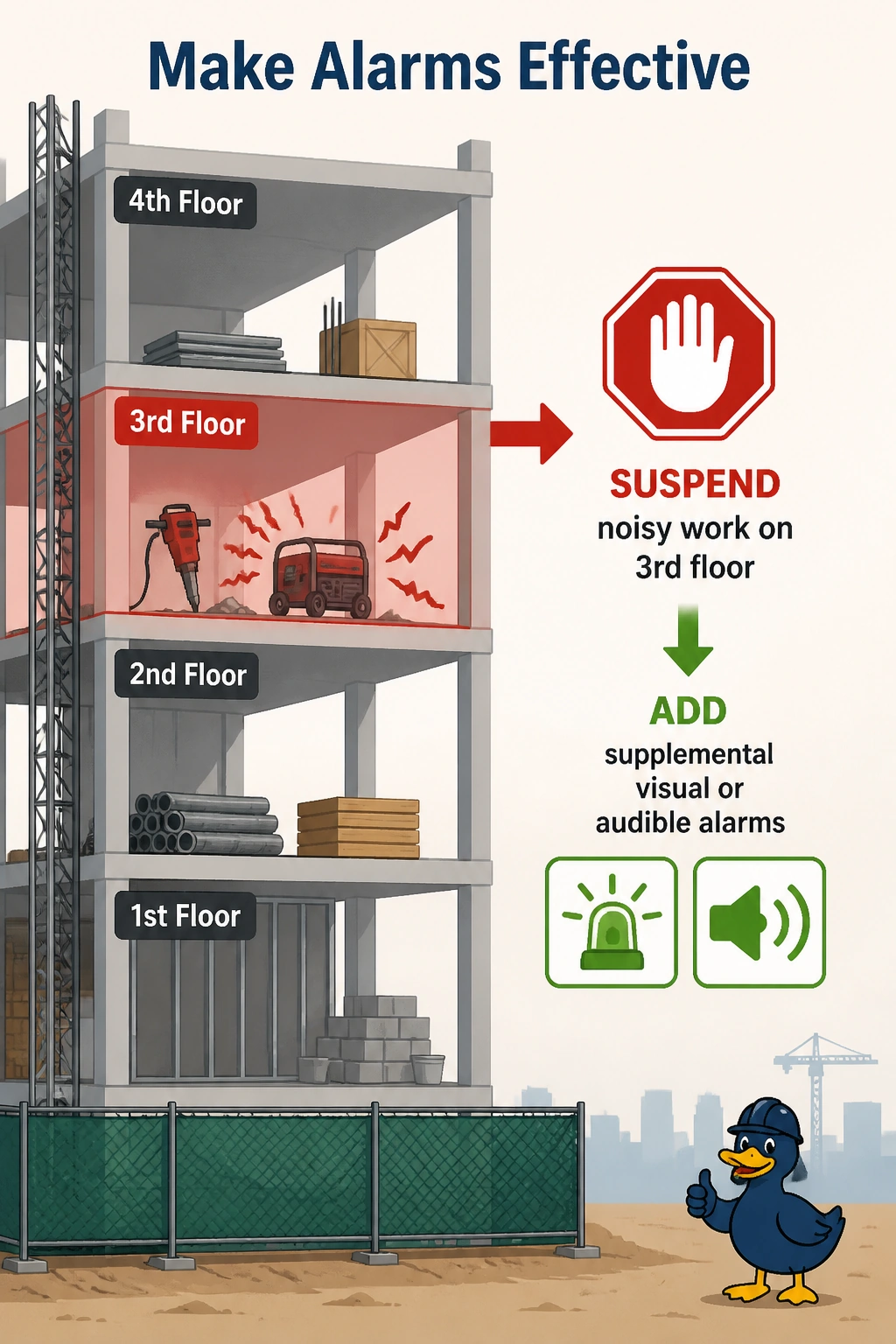
An emergency action plan works only when every occupant receives the evacuation signal promptly, so suspend noisy work on the third floor until supplemental visual or audible alarms are added. OSHA 1926.35 requires an employee alarm only when another OSHA standard requires an emergency action plan, and it points to 1926.159, which is not in the current CFR. The right action on these facts is still to suspend grinding until every worker on the floor can receive the evacuation signal. Telling the crew to watch hallway windows for evacuating trades relies on chance visual cues while workers are focused on power tools, not a dependable alarm. Scheduling another drill next month without changing the alarm setup documents a known failure but leaves the crew unprotected in the meantime. Instructing workers to remove one earplug while grinding compromises hearing protection against hazardous noise without guaranteeing they will hear the horn. As an exam caveat, the required response is to address the known alarm failure, not merely repeat the drill; any temporary arrangement must ensure workers receive the signal until supplemental alarms are in place. As a practical check, test the upgraded audible and visual alarms while grinders are running and log successful verification.
Prefer to study offline? Printable PDF study book + test engine ($7.50, unofficial). These questions stay free here.