
While inspecting a mechanical contractor's staging yard, a site supervisor finds full oxygen cylinders stored right next to acetylene cylinders against a wooden shed wall with no barrier between them. What must the supervisor require?
Select an answer to reveal the explanation.
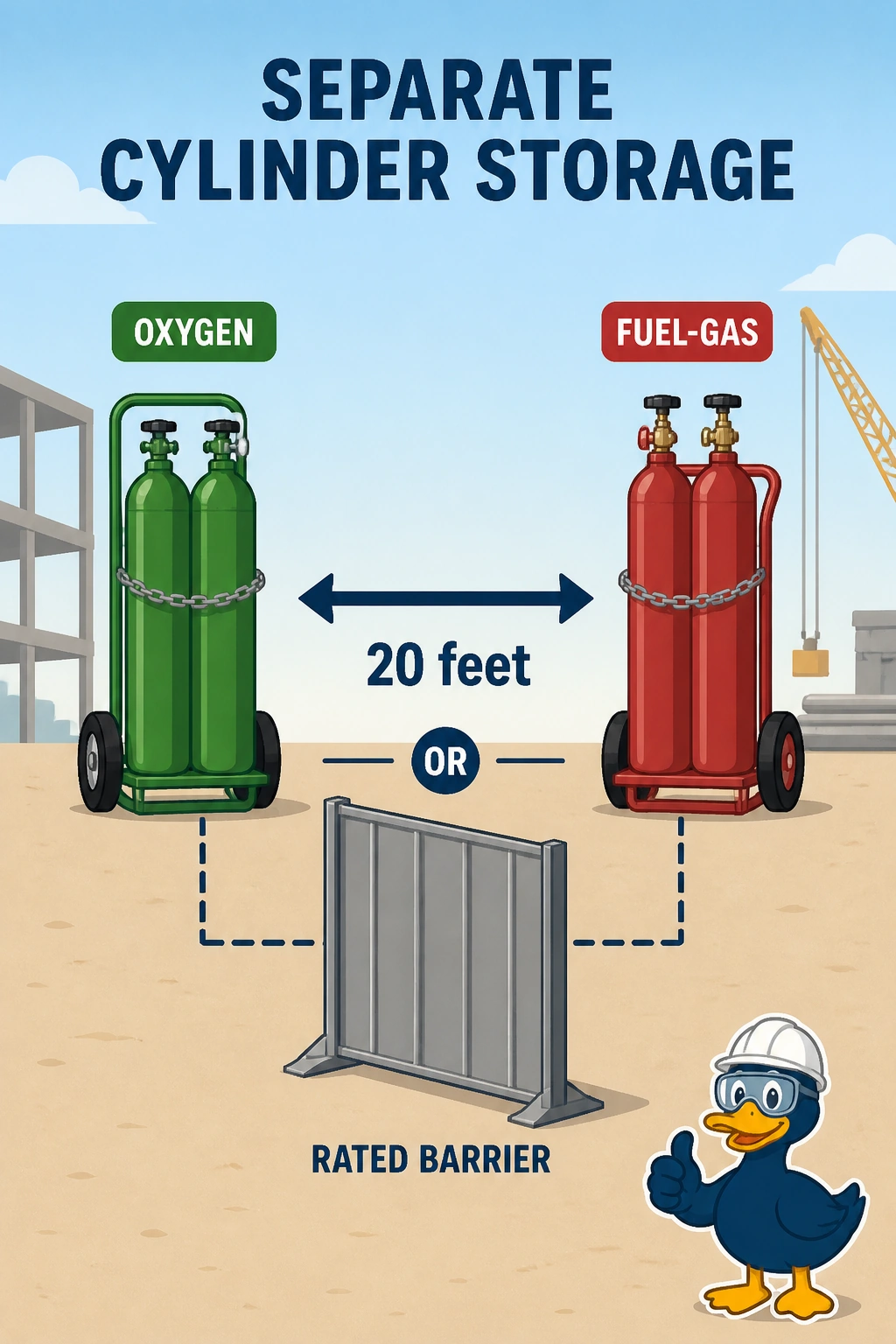
Short Explanation
Storing oxygen right beside fuel gas is like stacking matches on top of kindling—one leak turns a small spark into a blowtorch. The trap is thinking upright chains are enough, when your rule is physical separation or a fire-rated wall between them.
Full Explanation
Under 29 CFR 1926.350(a)(10), oxygen cylinders in storage shall be separated from fuel-gas cylinders or combustible materials by a minimum of 20 feet or by a noncombustible barrier at least 5 feet high with a fire-resistance rating of at least one-half hour. Specifically, the standard requires a minimum 20-foot separation or a noncombustible barrier at least 5 feet high with a fire-resistance rating of at least one-half hour so an acetylene leak cannot mix with concentrated oxygen to accelerate a fire. Choosing to Chain all cylinders together upright and post a no-smoking sign on the shed prevents tipping and reduces one ignition source, but it leaves oxygen and fuel gas side by side next to a combustible wooden wall. Choosing to Lay the acetylene cylinders flat on wooden dunnage away from direct sunlight violates cylinder storage rules because acetylene cylinders must remain upright so liquid acetone does not escape through the valve. Choosing to Leave the regulators attached and bleed the hoses at the end of each shift addresses torch-cart use rather than storage, where regulators must be removed and valve protection caps installed. One caveat is that cylinders mounted on a single portable welding cart in active use are treated differently from storage racks, provided valves are closed when unattended. As an operational check, verify valve caps are tight, secure both groups upright in separate racks, and measure the 20-foot clearance.
Prefer to study offline? Printable PDF study book + test engine ($7.50, unofficial). These questions stay free here.