
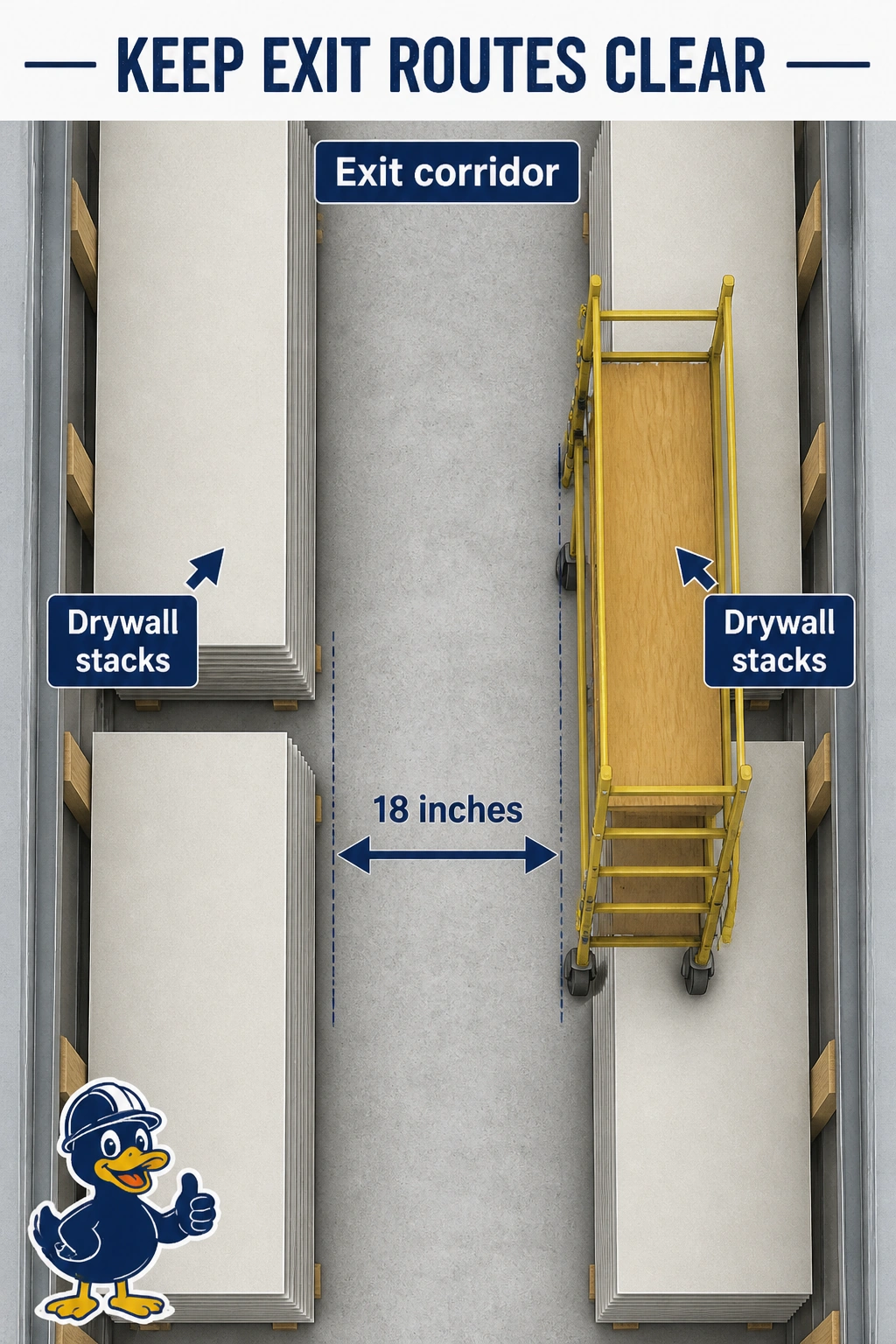
During a multi-story interior buildout, a supervisor notices drywall stacks and rolling scaffolds parked inside a marked stairwell exit corridor, narrowing the walkway to 18 inches. What should the supervisor do?
Select an answer to reveal the explanation.
Short Explanation
An exit route is like a fire lane at a busy intersection: you cannot park there just because you will only be a few minutes. The trap is slapping warning tape on a blockage or planning around it instead of clearing the path immediately.
Full Explanation
Under 1926.34, the exit route must stay free and unobstructed while the building is occupied. 1910.37 does not apply to this construction work. The supervisor must Stop work in that corridor and have the crew relocate the materials so the exit route stays clear and unobstructed. Removing the drywall and scaffolds restores full egress width and prevents tripping or bottlenecking during an emergency. Choosing to Hang high-visibility orange flagging tape on the drywall stacks so crews notice the narrow path only highlights the hazard while leaving the physical obstruction in place. Deciding to Post a temporary sign directing workers to use the exterior material hoist if an alarm sounds is dangerous because material hoists are not safe emergency exits and may lose power or become overloaded. Choosing to Leave the materials in place until the afternoon shift finishes hanging drywall on that floor leaves the entire floor exposed to a blocked escape route for hours. Caveat: even short-term staging in a designated exit corridor violates egress rules and slows responder entry. Operational check: walk every floor's exit corridors and stair landings during daily site inspections and require immediate relocation of any staged materials.
Prefer to study offline? Printable PDF study book + test engine ($7.50, unofficial). These questions stay free here.