
While refueling a portable concrete mixer, spilled gasoline ignites in a shallow puddle on the asphalt pad near a storage trailer. Which extinguishing method should the trained foreman use if the fire is small and incipient?
Select an answer to reveal the explanation.
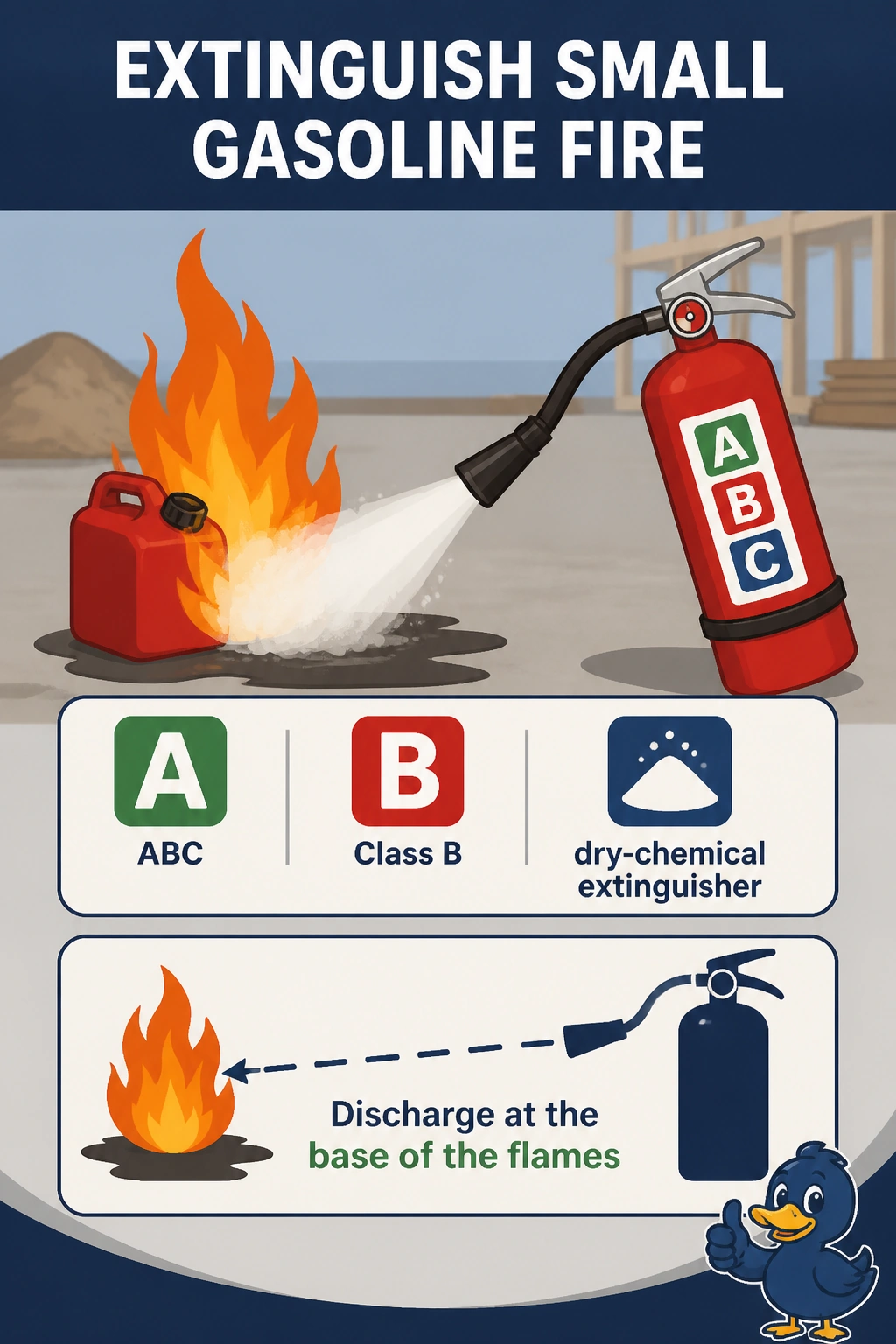
Short Explanation
Grabbing the nearest water hose for a gasoline fire is like trying to put out a grease skillet with a pitcher of water—it spreads the burning fuel everywhere. Your best move is matching the fuel class to an extinguishing agent that smothers the vapors at the base.
Full Explanation
Gasoline is a flammable liquid (Class B fuel) that is lighter than water and insoluble in it. Selecting Discharge an ABC or Class B dry-chemical extinguisher at the base of the flames interrupts the chemical chain reaction and smothers the flammable vapors without scattering the liquid pool. Choosing Apply a steady stream from a site water hose to cool the fuel is dangerous because the water sinks beneath the gasoline and floats the burning fuel outward toward the storage trailer. Choosing Use a pressurized water extinguisher aimed into the puddle creates the same spreading hazard and fails to extinguish hydrocarbon vapors. Choosing Spray a Class A water-based unit across the top of the flames fails both in agent type and technique, since Class A units are rated only for ordinary combustibles like wood or paper and aiming above the flames misses the fuel-vapor interface. A critical caveat is that a supervisor should attempt incipient-stage suppression only with a clear exit behind them and evacuate immediately if the fire grows or threatens fuel tanks. As an operational check, inspect fuel-transfer areas daily to confirm a charged ABC or Class B extinguisher is mounted within easy reach and its pressure gauge reads in the operable range.
Prefer to study offline? Printable PDF study book + test engine ($7.50, unofficial). These questions stay free here.