
A utility crew attendant sees a coworker collapse inside a 12-foot sanitary manhole during valve work, calls out to the foreman, and starts climbing down the ladder to pull the coworker out. What should the foreman order immediately?
Select an answer to reveal the explanation.
Short Explanation
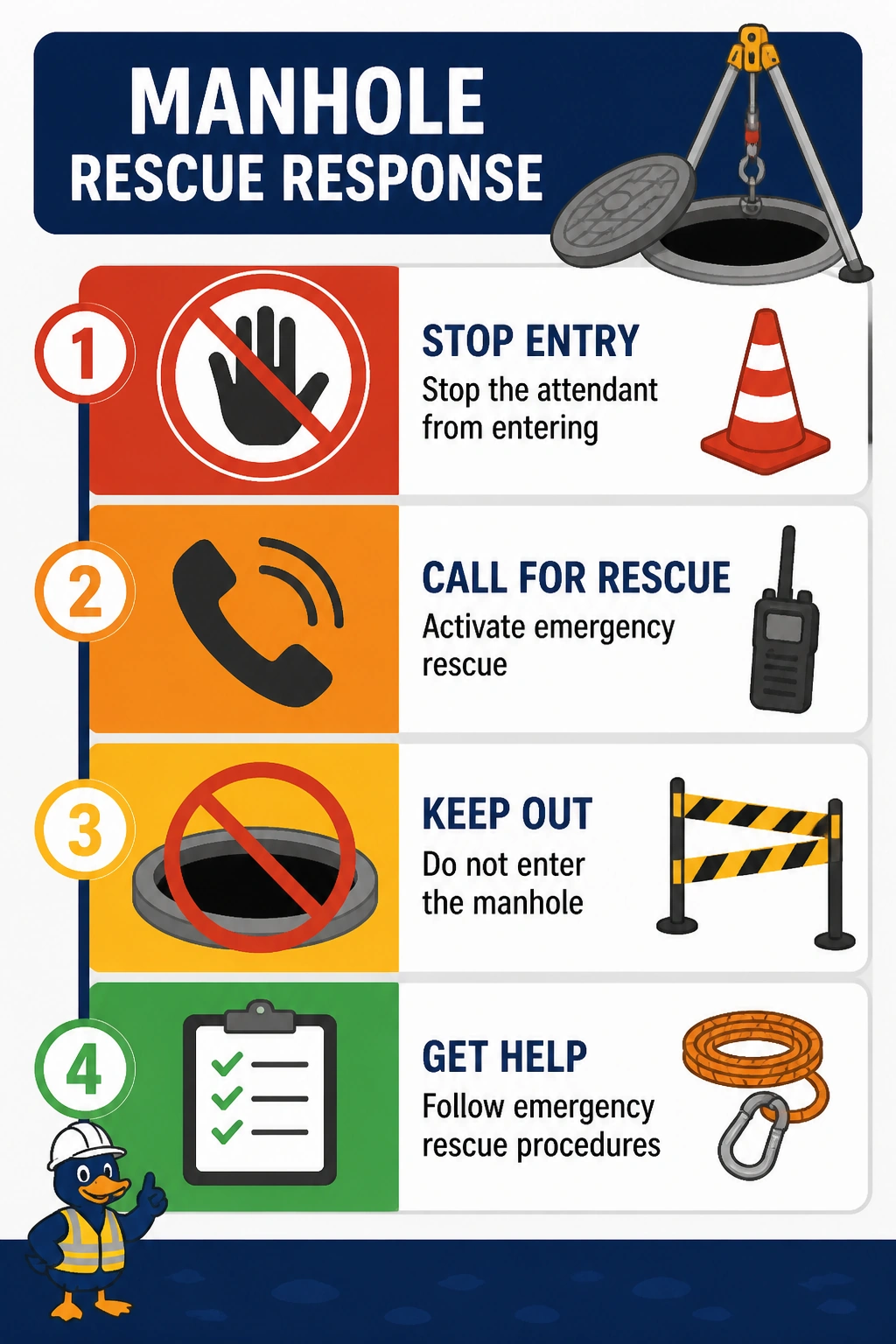
You may feel an urgent pull to climb down and help, but entering an unsafe manhole can turn one emergency into two. Your safest move is to stop the attendant from entering and activate trained rescue immediately.
Full Explanation
Many confined-space fatalities involve would-be rescuers who rush into an oxygen-deficient or toxic atmosphere without air-supplying equipment or backup. Stop the attendant from entering and activate emergency rescue to prevent a second casualty and get trained rescuers or non-entry retrieval systems working immediately. Telling the attendant to hold their breath and hurry down to attach a rope can lead to collapse in the same toxic or low-oxygen pocket within seconds. Sending a second worker down with a standard dust mask is equally dangerous: a dust mask supplies no oxygen and does not filter toxic sewer gases such as hydrogen sulfide. Lowering a portable fan and waiting for the worker to wake before calling 911 wastes critical minutes; an unconscious worker may already be suffering brain hypoxia. Caveat: non-entry retrieval with a tripod, winch, and full-body harness is the preferred first response when the worker is already connected and the space allows safe extraction. Practical check: before any manhole entry, test the atmosphere from outside, verify continuous forced-air ventilation, and stage the retrieval tripod and rescue phone numbers at the opening.
Prefer to study offline? Printable PDF study book + test engine ($7.50, unofficial). These questions stay free here.