
An excavator is lowering a heavy cast-iron manhole ring into a 6-foot-deep utility trench while two pipefitters wait inside the trench directly beneath the bucket's swing path to guide it into place. What must the safety technician require before the lift proceeds?
Select an answer to reveal the explanation.
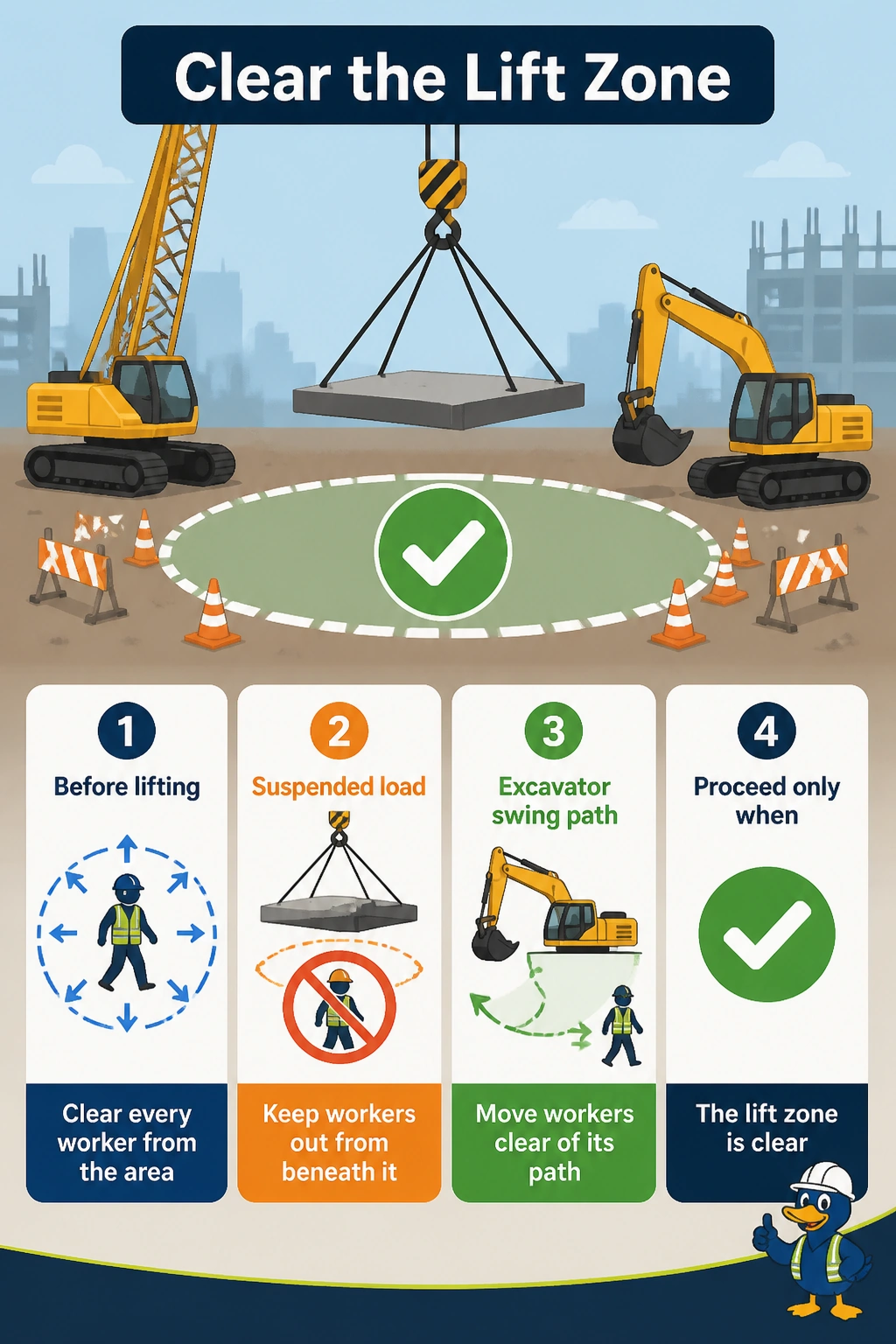
Short Explanation
You protect your crew by clearing the trench and excavator swing path before this heavy ring moves; OSHA 29 CFR 1926.651(e) prohibits employees from standing beneath loads handled by lifting or digging equipment. PPE, a continuous horn, or short pry bars cannot make the fall zone safe if a sling fails or the load drops.
Full Explanation
OSHA 29 CFR 1926.651(e) prohibits employees from standing beneath loads handled by lifting or digging equipment, so require all workers to clear the area beneath the suspended manhole ring and the excavator’s swing path before lowering it. A failed shackle, snapped sling, or sudden hydraulic drop can leave workers in a 6-foot trench with no time to escape. Requiring the pipefitters to wear ANSI Type II hard hats and steel-toed boots does not protect them from the crushing force of a heavy cast-iron ring. Instructing the operator to sound the horn continuously adds a warning but does not remove workers from the struck-by and crushing zone. Having pipefitters steady the ring with short wooden pry bars from directly underneath the bucket still places them in the fall zone; tag lines should be used from a safe distance instead. An exam caveat: even with a trench box installed, overhead struck-by hazards remain until the load is landed and unhooked. As a practical check, confirm that workers have exited the trench or moved outside the swing radius and are using tag lines from stable ground before the operator begins the lift.
Prefer to study offline? Printable PDF study book + test engine ($7.50, unofficial). These questions stay free here.