
During a morning site walk, a safety technician sees an experienced roofer working near an unguarded roof edge without tying off, even though a harness and anchor are within reach. Which coaching approach best addresses this at-risk behavior for lasting compliance?
Select an answer to reveal the explanation.
Short Explanation
Catching a veteran worker unclipped at a roof edge calls for immediate action, not a silent note or a lecture. The trap is handing out blind punishment or waiting for a meeting, when your best move is stopping the hazard and uncovering what got in the way.
Full Explanation
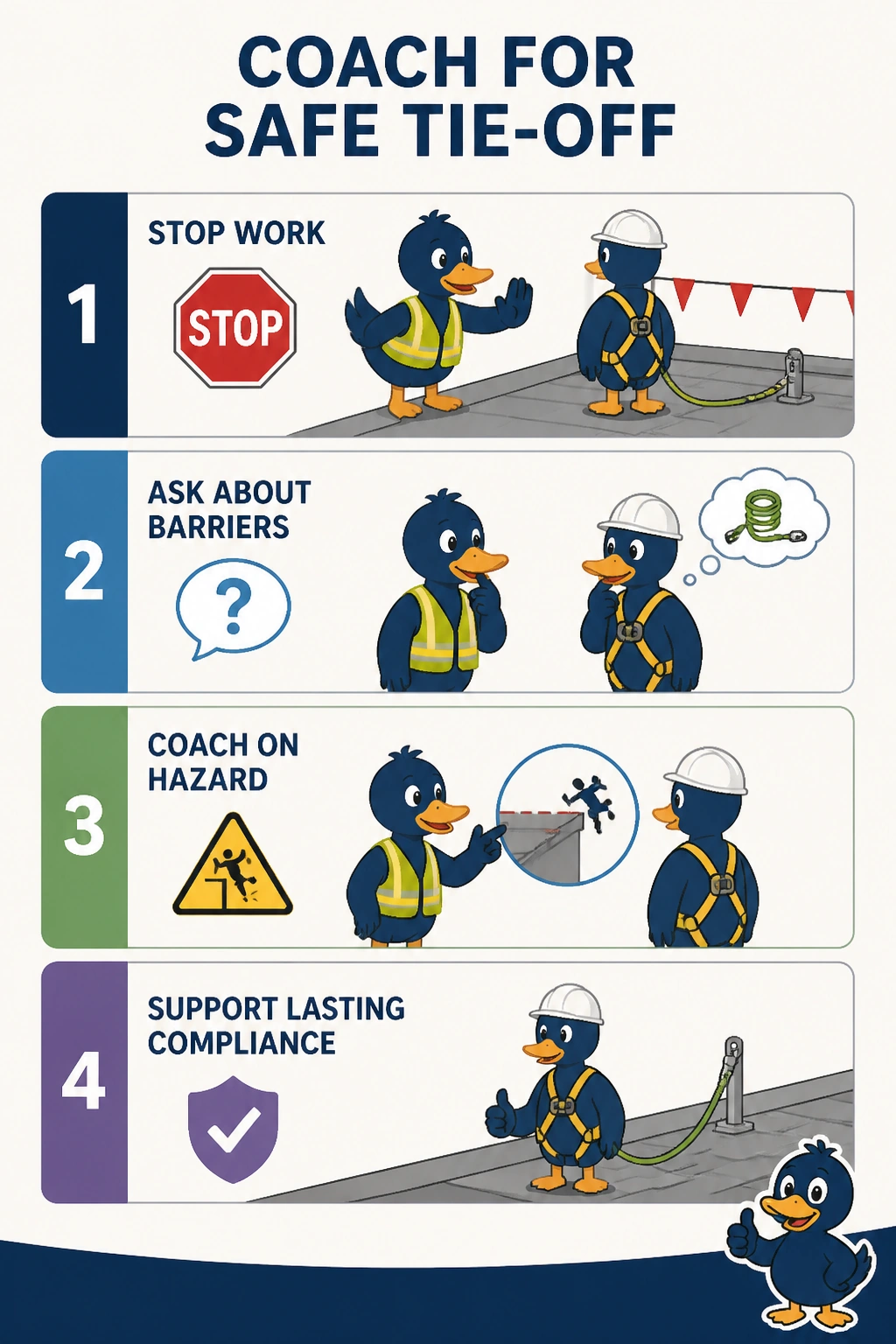
Effective safety leadership pairs immediate hazard intervention with collaborative problem-solving, which is why the technician should Stop the work, ask what barrier prevented tie-off, and coach on the hazard. Asking open questions often uncovers practical obstacles—such as an anchor positioned too far from the work zone, a tangled lanyard, or rushing to beat weather—that punishment alone never solves. Choosing to Immediately suspend the roofer without discussing why the anchor went unused skips the diagnostic conversation and leaves the underlying workflow barrier intact for the next worker. Choosing to Wait until the weekly toolbox talk to mention fall protection generically leaves an imminent fall hazard active on the roof right now. Choosing to Document the violation silently and email the safety director at shift end fails the core duty to intervene immediately when a worker faces a life-threatening fall exposure. Caveat: if a worker refuses to tie off after coaching or repeatedly bypasses life-safety controls, progressive discipline under company policy is appropriate. Operational check: have the roofer step back from the leading edge, inspect the harness and anchor placement together, and verify proper tie-off before work resumes.
Prefer to study offline? Printable PDF study book + test engine ($7.50, unofficial). These questions stay free here.