
During interior drywall finishing on a commercial office build, a crew cannot quite reach the ceiling grid from a single-tier rolling scaffold platform and places two overturned five-gallon joint-compound buckets on the deck to stand on. What must the safety technician require immediately?
Select an answer to reveal the explanation.
Short Explanation
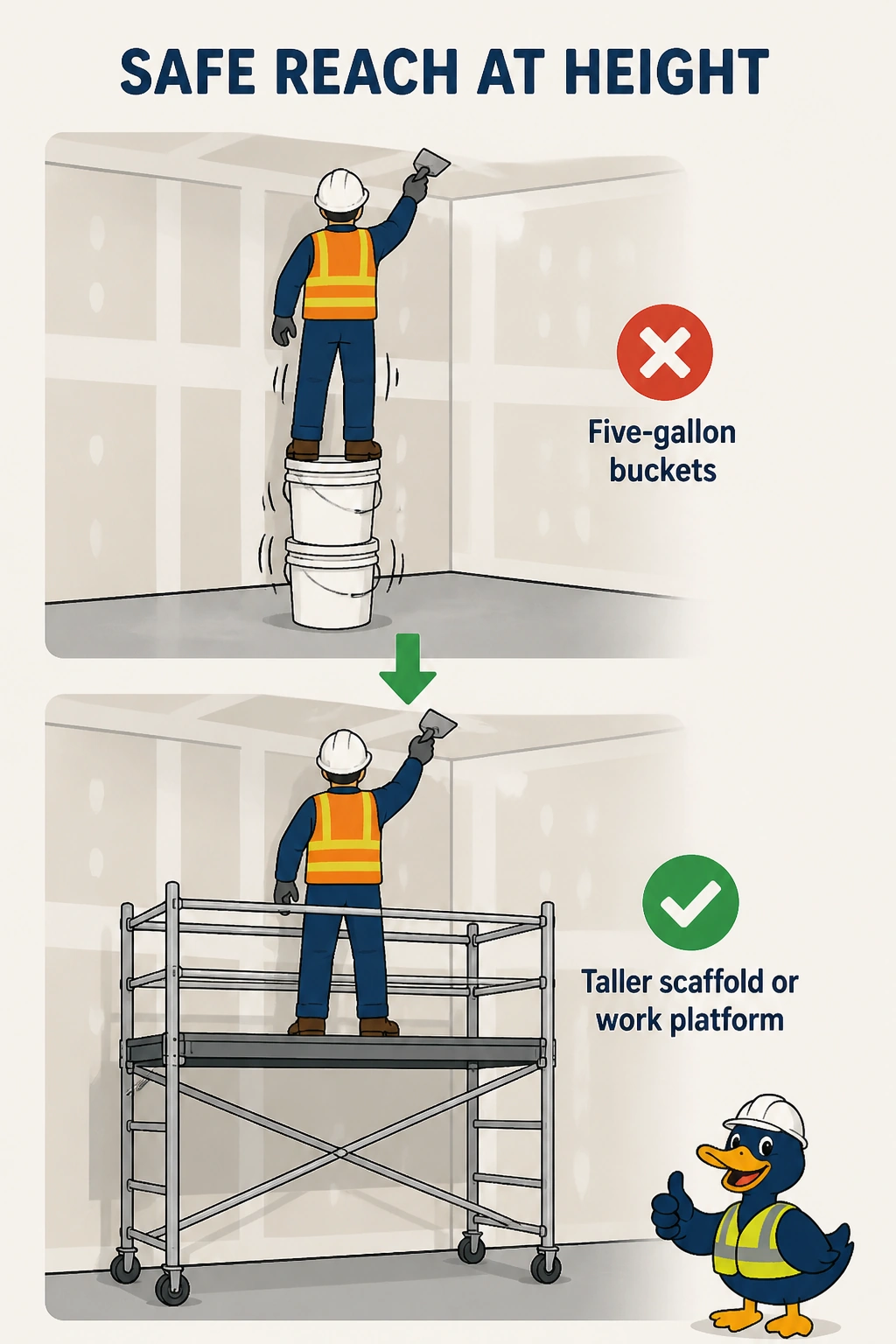
Standing on overturned buckets atop a scaffold creates a serious fall risk. You must remove them and provide a taller scaffold or properly designed work platform, as OSHA prohibits makeshift devices to increase working height. Straps or plywood do not make buckets a safe, rated platform.
Full Explanation
OSHA 29 CFR 1926.451(f)(14) strictly prohibits using makeshift devices such as boxes, barrels, or buckets on top of scaffold platforms to increase working height. You must remove the buckets and provide a taller scaffold or properly designed work platform so workers can reach the ceiling without compromising guardrail height or footing. Securing the buckets to the scaffold planking with heavy-duty ratchet straps does not make them suitable for supporting a worker: plastic buckets can crush or crack under load, and their added height still reduces the effective height of perimeter guardrails. Limiting the makeshift bucket platform to one worker at a time while keeping both feet centered does not overcome the prohibition on makeshift risers or prevent tipping. Placing a sheet of three-quarter-inch plywood across both buckets to distribute the worker's weight creates an unanchored, unstable bridge that can slide off with lateral movement. A useful caveat is that a properly designed work platform must preserve safe footing and guardrail protection; simply adding height is not enough. For an operational check, inspect scaffold decks during daily walks and verify workers have the proper platform height before overhead finishing begins.
Prefer to study offline? Printable PDF study book + test engine ($7.50, unofficial). These questions stay free here.