
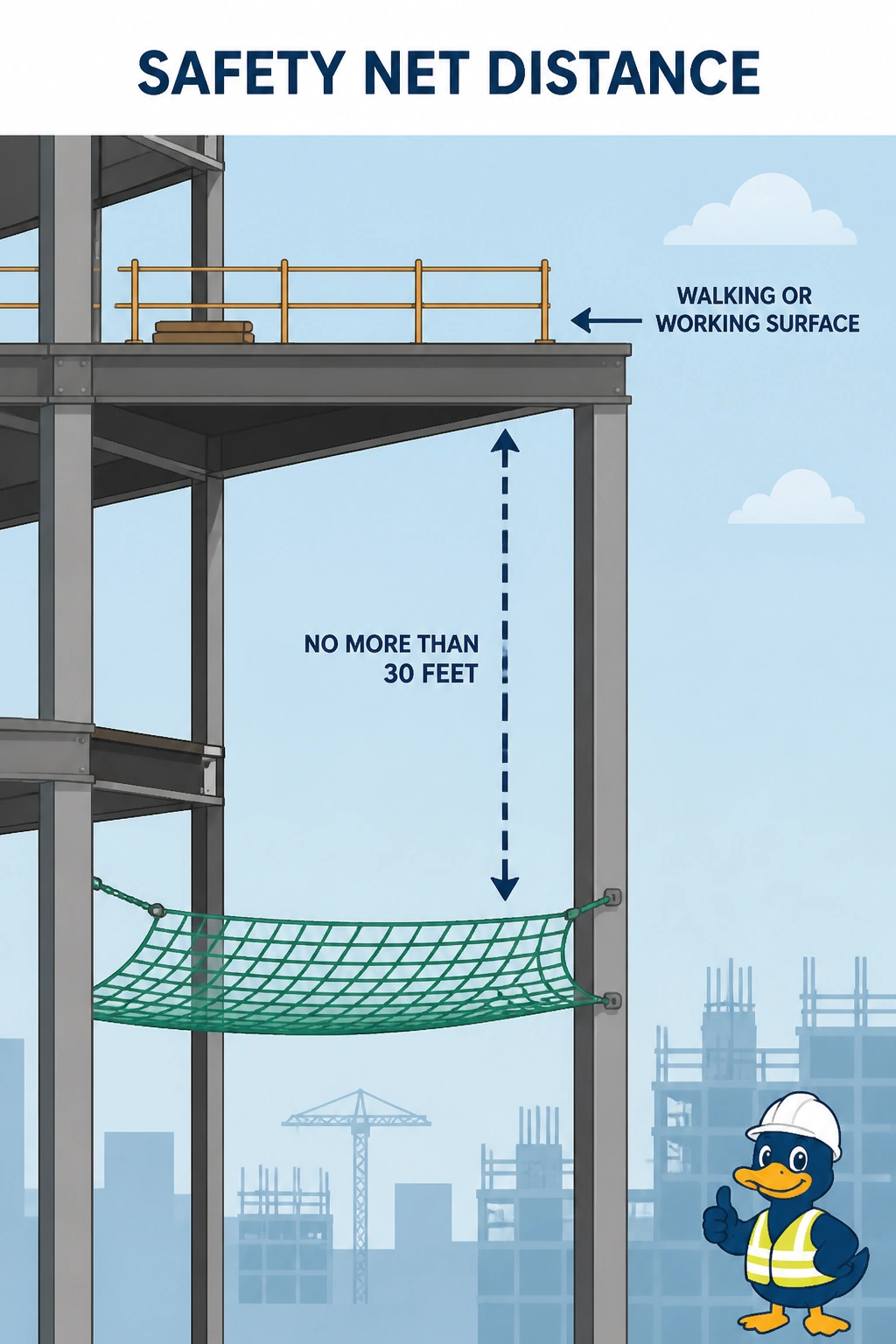
Ironworkers are decking an open atrium roof where guardrails and personal fall arrest anchorages are not feasible for one bay, so the contractor elects to install a perimeter and under-deck safety net system. Under OSHA 29 CFR 1926.502, what is the maximum vertical distance allowed below the walking or working surface for installing the safety net?
Select an answer to reveal the explanation.
Short Explanation
A safety net works like a trapeze catch—if you hang it too far below the performer, the fall energy and swing radius turn the catch into another injury. OSHA requires safety nets to be installed as close as practicable under the work area and never more than 30 feet below. The trap is picking a tighter 15-foot guess or assuming a passing drop test lets you hang the net 45 feet down.
Full Explanation
Under OSHA 29 CFR 1926.502, safety nets must be installed as close as practicable beneath the walking or working surface on which employees are working, and in no case No more than 30 feet below the walking or working surface. Limiting the drop distance controls impact forces and keeps the falling worker from striking lower structural members before the net arrests the fall. Selecting No more than 15 feet below the elevated structural steel decking states a stricter limit than the federal construction standard actually mandates, though closer placement is always encouraged when framing permits. Choosing At any height above 6 feet as long as a perimeter warning line is erected confuses low-slope roofing warning line rules with safety net vertical clearance requirements. Choosing No more than 45 feet below the work area if a 400-pound drop test passes is incorrect because the 400-pound sandbag drop test verifies net strength and installation integrity rather than extending the 30-foot maximum vertical limit. Caveat: nets must also extend outward sufficiently from the outermost edge of the work surface depending on the vertical drop distance, and must have unobstructed clearance below so the net does not contact lower objects during deflection. Operational check: measure both the vertical distance from the work deck and the outward horizontal projection with a tape measure before allowing crews overhead.
Prefer to study offline? Printable PDF study book + test engine ($7.50, unofficial). These questions stay free here.