
A utility crew is installing storm pipe in a 7-foot-deep trench where groundwater is actively seeping and pooling around the workers' boots. What must the safety technician require under 29 CFR 1926.651 before work continues inside the trench?
Select an answer to reveal the explanation.
Short Explanation
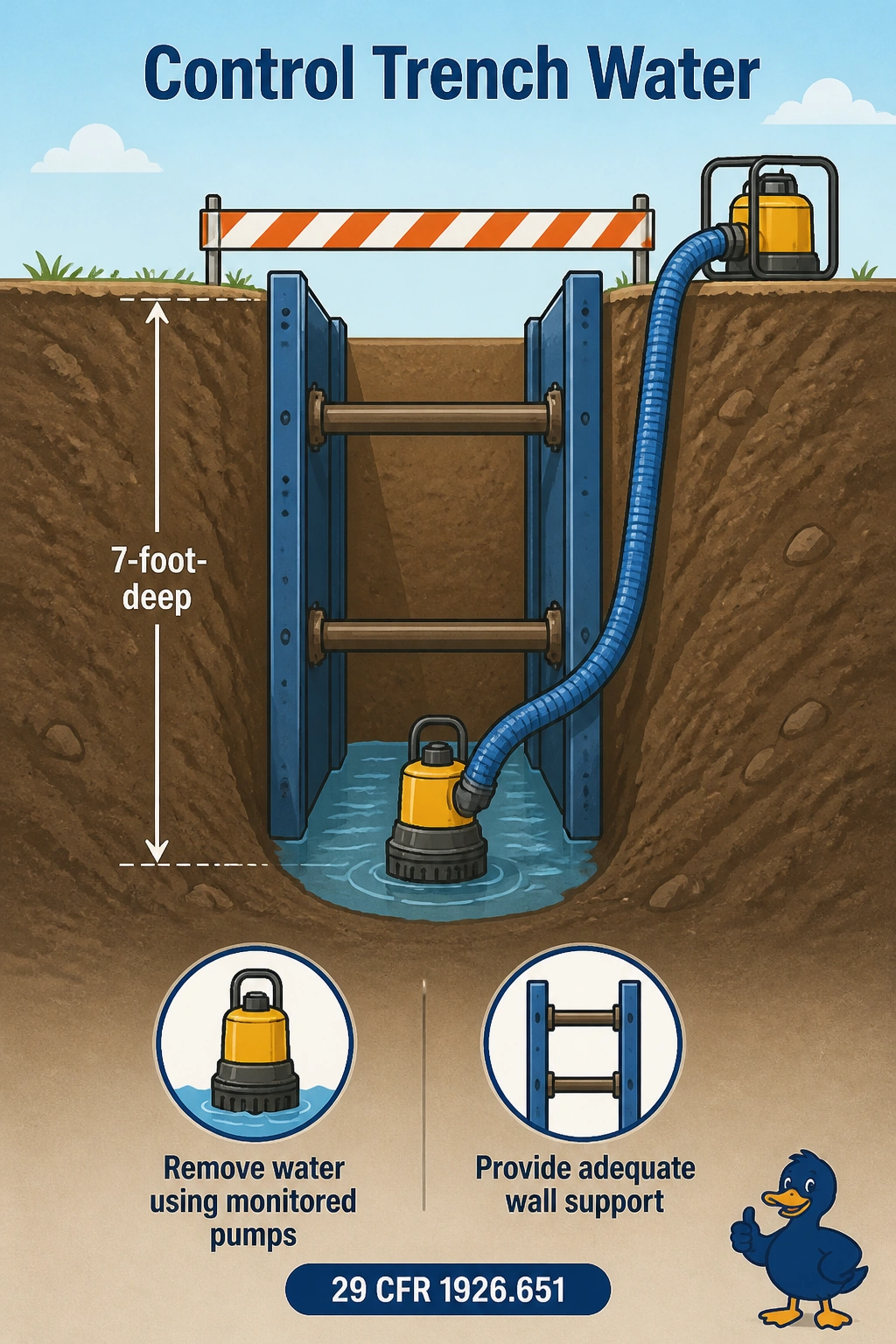
Standing water in a trench is not just a muddy nuisance—it quietly softens soil walls until they give way beneath your crew. Under 29 CFR 1926.651, you must control water accumulation with monitored removal equipment and proper support before anyone works inside. The trap is thinking waterproof boots protect workers from a saturated trench collapse.
Full Explanation
Water seepage rapidly degrades soil cohesion and adds hydrostatic pressure against trench walls, making sudden cave-ins far more likely. Under 29 CFR 1926.651, employers must not allow employees to work in excavations with accumulated water unless precautions are taken, so the technician must require the crew to Remove the accumulating water using monitored pumps and provide adequate wall support. Choosing to Allow work to continue as long as the crew wears waterproof rubber boots and high-visibility vests ignores the structural instability of saturated soil and leaves workers exposed to engulfment. Deciding to Wait until the end of the shift to pump the trench so pipe installation stays on schedule allows water to undermine the trench base throughout the day. Trying to Double the height of the spoil pile along the trench edge to block surface runoff worsens the hazard by adding surcharge weight right next to the excavation wall. As a caveat, water removal equipment must be continuously monitored by a competent person to ensure it keeps pace with inflow. As an operational check, inspect pump discharge lines, confirm shoring or trench box ratings for wet soil, and verify competent-person sign-off before re-entry.
Prefer to study offline? Printable PDF study book + test engine ($7.50, unofficial). These questions stay free here.