
During a basement build-out, an electrician hangs temporary string lighting across steel bar joists by tying the electrical cord directly to the joists with bare bulbs exposed at head height. What must the safety technician require under 29 CFR 1926.405?
Select an answer to reveal the explanation.
Short Explanation
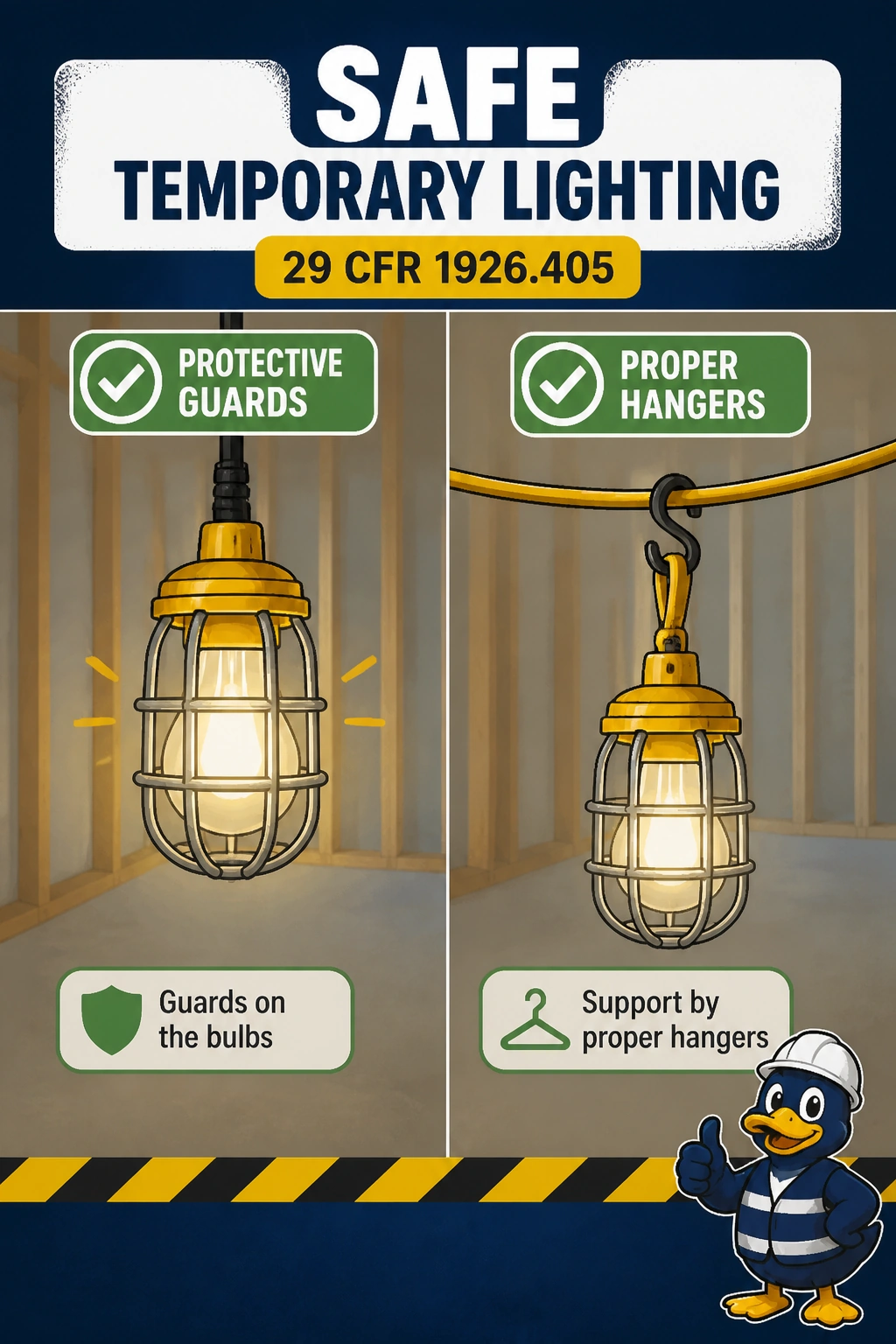
Bare temporary bulbs hanging by their own wires are a shock and shatter hazard waiting for the first tall ladder to pass by. Under 29 CFR 1926.405, you must guard bulbs against accidental contact and never suspend lights by their electric cords unless designed for it. The trap is thinking plastic wrap or lowering the cord solves the electrical risk.
Full Explanation
Temporary construction lighting faces constant traffic from materials, tools, and ladders, making exposed glass bulbs and strained conductors prime electrical hazards. To comply with 29 CFR 1926.405, the technician must require the electrician to Install protective guards on the bulbs and support the lights by proper hangers rather than letting the electric cord bear mechanical tension. Choosing to Wrap the exposed bulbs in clear plastic sheeting to prevent dust from settling on the glass creates a heat-buildup fire hazard and provides zero impact protection. Deciding to Keep the temporary lights energized continuously so workers notice broken bulbs right away leaves live exposed filaments energized if a bulb shatters. Trying to Lower the string lights to waist height so workers can replace burned-out bulbs easily places fragile bulbs directly into the path of passing workers and carts. As a caveat, verify that guards are nonconductive or properly grounded and that temporary lighting circuits are protected by ground-fault circuit interrupters where required. As an operational check, walk temporary corridors before each shift to confirm all cages are intact and no cords are pinched by metal tie wire.
Prefer to study offline? Printable PDF study book + test engine ($7.50, unofficial). These questions stay free here.