
After saw-cutting expansion joints in a cured warehouse floor, a concrete crew grabs push brooms to dry-sweep the fine gray dust into piles before lunch. What must the safety technician require under OSHA 29 CFR 1926.1153(f)?
Select an answer to reveal the explanation.
Short Explanation
Push brooms turn settled concrete dust right back into an invisible cloud of lung-damaging silica, undoing every engineering control you used during the cut. The trap is thinking a quick sweep or a basic mask makes cleanup harmless, when your job is to keep that dust out of the air altogether.
Full Explanation
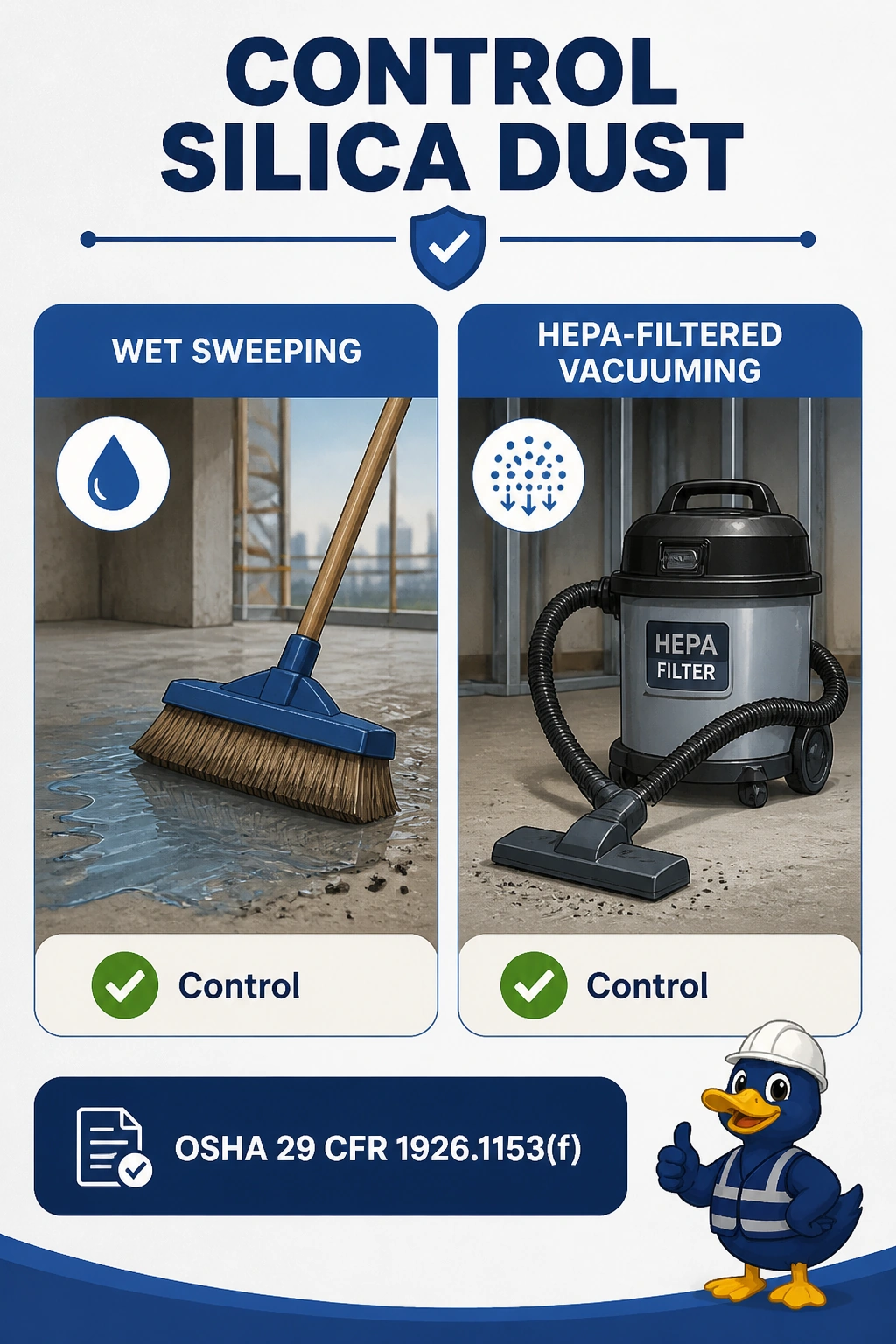
Under OSHA 29 CFR 1926.1153(f), employers must prohibit dry sweeping or dry brushing where wet sweeping, HEPA-filtered vacuuming, or other methods that minimize exposure are feasible, so the technician must Replace dry sweeping with wet sweeping or HEPA-filtered vacuuming to control airborne silica. Wetting the dust or capturing it with a HEPA vacuum prevents fine particles from re-entering breathing zones. Choosing to Allow dry sweeping if workers wear disposable dust masks during cleanup fails because PPE cannot substitute for prohibited housekeeping and dust masks do not protect against respirable silica. Attempting to Use compressed air at low pressure to blow the dust toward an open bay is also barred because 1926.1153(f)(2) prohibits compressed air for cleaning clothing or surfaces where it could contribute to respirable silica exposure unless a ventilation system captures the dust cloud or no alternative method is feasible. Blowing dust toward an open bay meets neither condition. Trying to Schedule dry sweeping after regular shifts when fewer trades are nearby still exposes the cleanup crew to uncontrolled silica. Caveat: dry sweeping is allowed only where the employer shows wet, HEPA, or other minimizing methods are infeasible. Check carts each shift for working HEPA vacuums and water sprayers.
Prefer to study offline? Printable PDF study book + test engine ($7.50, unofficial). These questions stay free here.