
During a pre-lift rigging inspection on a structural steel job, a rigger spots a wire rope choker sling with localized crushing and birdcaging where the strands have unlaid into a cage-like bulge. What must the safety technician require before the lift proceeds?
Select an answer to reveal the explanation.
Short Explanation
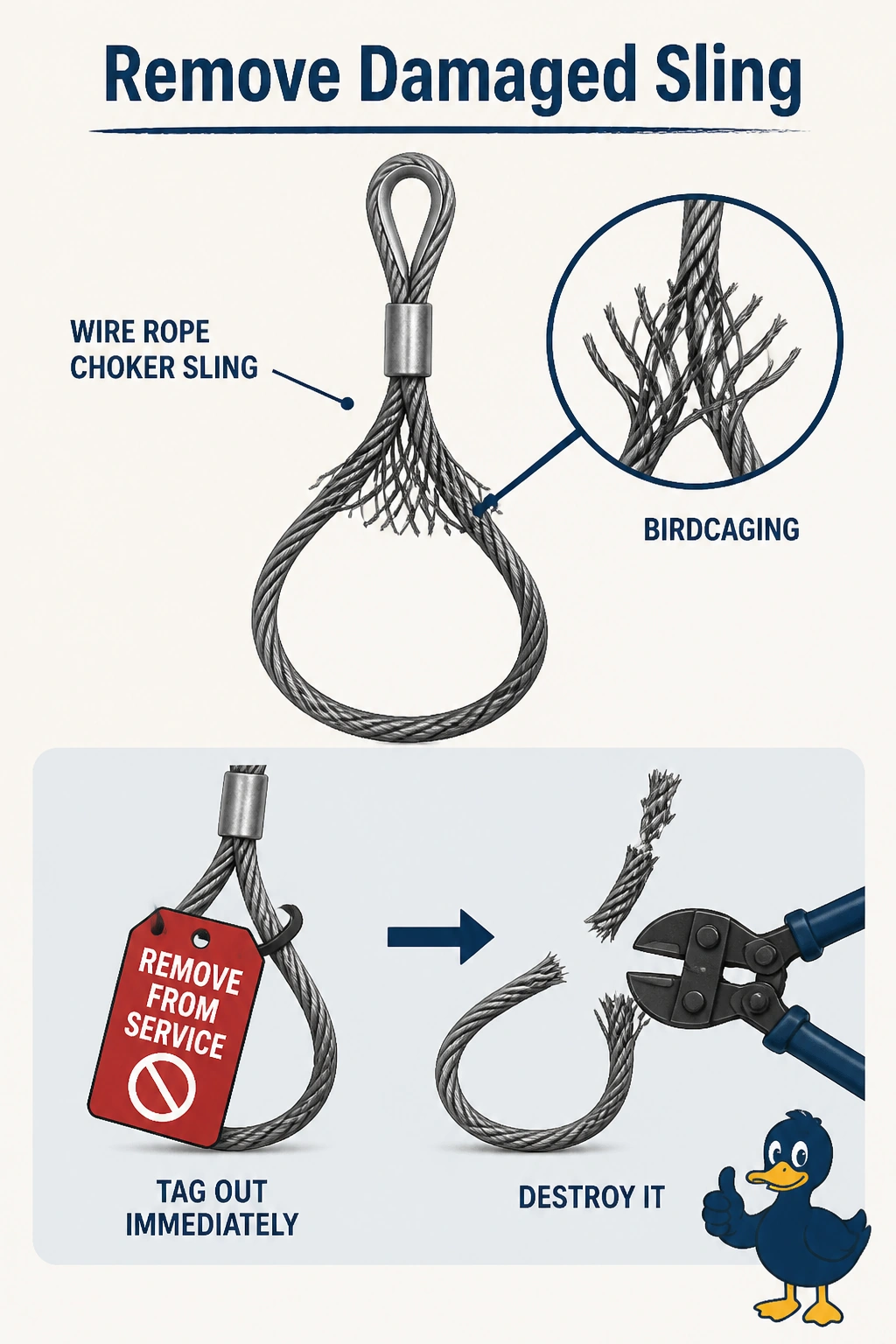
You’re right to stop the lift: birdcaging or crushing permanently disrupts the wire rope’s structure, so you cannot trust the sling under load. Require tagging the sling out of service immediately and destroying it; friction tape or a reduced load cannot make it safe.
Full Explanation
Under OSHA 29 CFR 1926.251, wire rope slings must be inspected before each use and removed from service when defects such as crushing, birdcaging, or other distortion of the rope structure are present. Tagging the sling out of service immediately and destroying it prevents another crew from using it accidentally; birdcaging indicates severe shock loading or sudden release of tension and permanently weakens how the strands share the load. Wrapping the damaged section tightly with friction tape conceals the structural defect without restoring strength and may trap moisture that accelerates corrosion. Using the sling only for loads under half of its rated tag capacity is unsafe because its remaining strength is unpredictable; the damage requires removal, not derating. Hammering the raised strands flat against the core on an anvil can work-harden and fracture the steel wires, increasing failure risk. As an exam caveat, distinguish repairable concerns from structural distortion that requires removal from service. Before any pick, verify that the capacity tag is legible and inspect the sling’s physical condition. As a practical check, cut the eyes off condemned wire rope slings before placing them in the scrap bin so they cannot re-enter circulation.
Prefer to study offline? Printable PDF study book + test engine ($7.50, unofficial). These questions stay free here.