
A pipefitter notices stiff threads on an oxygen cylinder regulator valve before torch cutting and reaches for a tube of bearing grease to lubricate the fitting. What must the safety technician require immediately?
Select an answer to reveal the explanation.
Short Explanation
Oxygen and oil are a recipe for an instant torch in your hands, not a smooth fit. When pure oxygen meets petroleum grease under pressure, it can ignite violently on its own, which is why the trap of using "just a little" lubricant on stiff threads is so dangerous.
Full Explanation
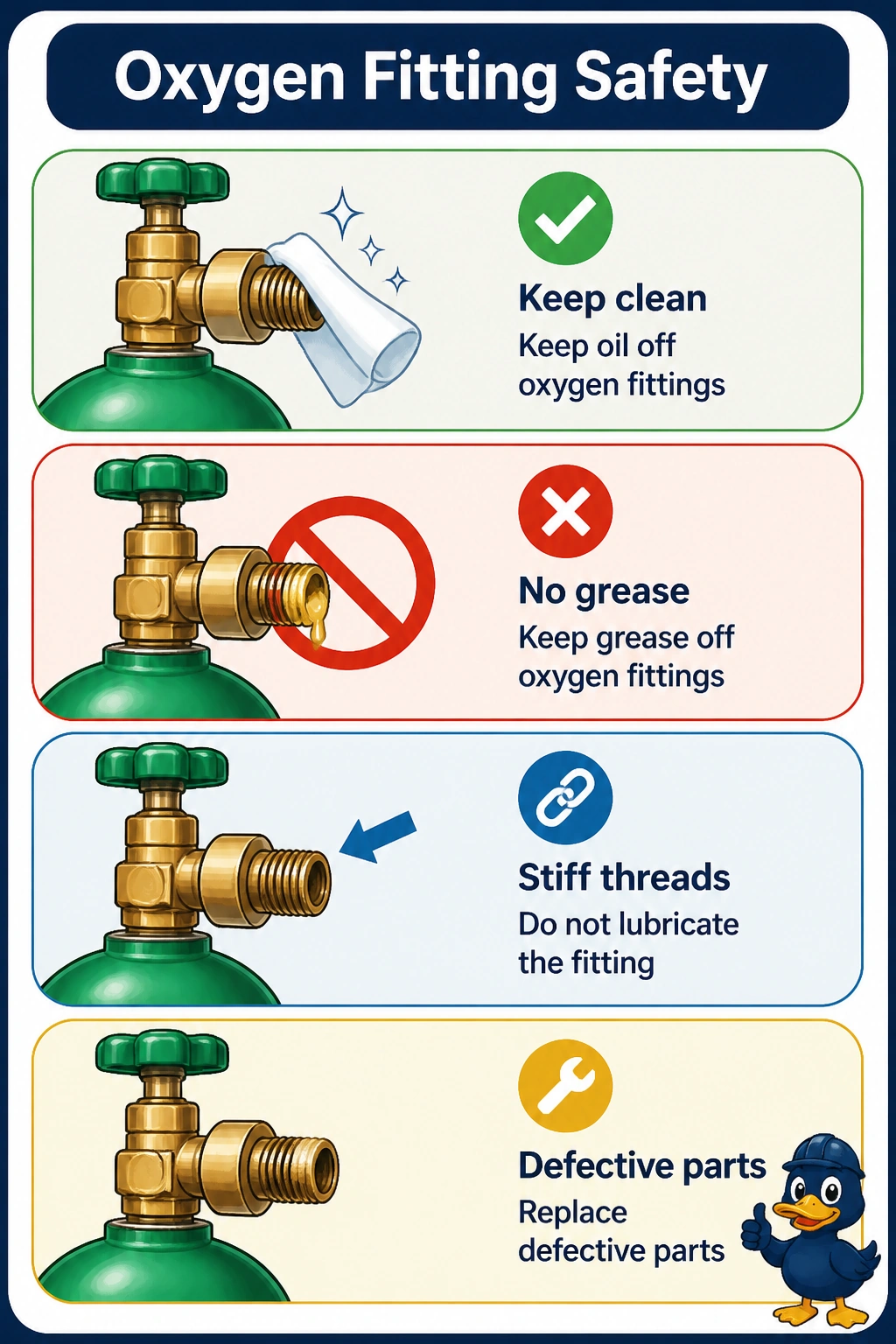
Under OSHA 29 CFR 1926.350, technicians must Keep all oil and grease off oxygen fittings and replace defective parts because pure oxygen under high cylinder pressure dramatically lowers the ignition threshold of hydrocarbons, causing rapid, explosive combustion even without an external spark. Choosing to Apply a thin coat of petroleum grease only to the outer brass threads fails because trace grease migrates onto sealing surfaces and into the gas stream during assembly. Choosing to Flush the regulator port with compressed shop air and reuse the stiff valve fails because shop air often contains compressor oil mist and does not repair damaged or cross-threaded brass seats. Choosing to Switch to a silicone spray lubricant on the cylinder valve stem before assembly also fails because aerosol carriers and unapproved lubricants can ignite or contaminate oxygen-service components. One key caveat is that even oily work gloves or greasy rags used to wipe a valve can introduce enough residue to trigger a flash fire. As a concrete operational check, inspect cylinder valves, regulators, and worker gloves for oil residue before every setup, and tag out any binding fitting for exchange by the gas supplier.
Prefer to study offline? Printable PDF study book + test engine ($7.50, unofficial). These questions stay free here.