
A municipal paving contractor assigns a laborer to flag haul trucks and public vehicles entering an active lane closure at dusk without supplemental lighting. What personal protective equipment must the safety technician require for the flagger?
Select an answer to reveal the explanation.
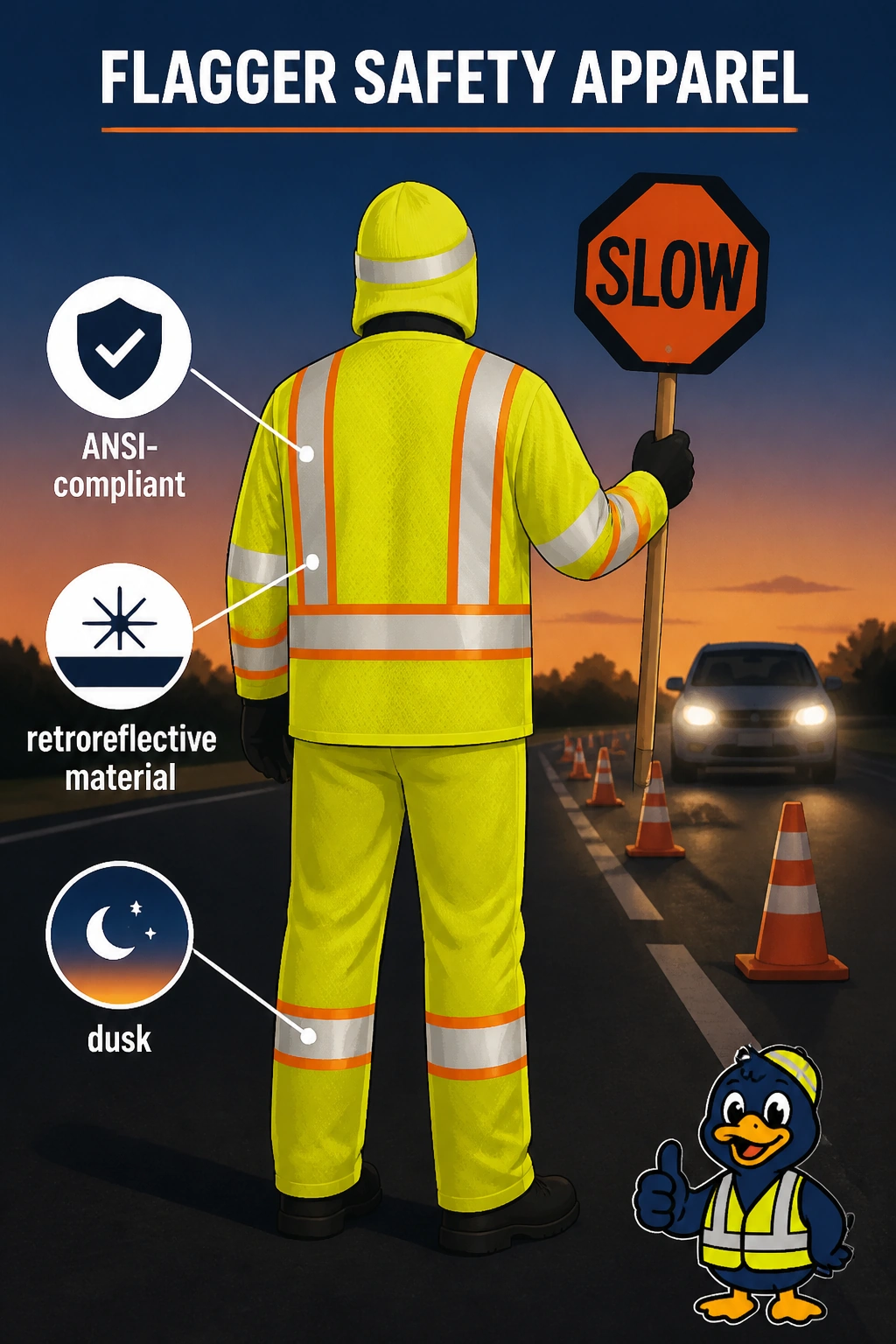
Short Explanation
At dusk, a driver's headlights only pick up what bounces light back, so plain fabric disappears fast. You need retroreflective high-visibility gear rated for low light; the trap is assuming any bright daytime shirt or vest works once the sun drops.
Full Explanation
Under OSHA 29 CFR 1926.201 and the Manual on Uniform Traffic Control Devices, flaggers exposed to vehicular traffic must wear ANSI-compliant high-visibility safety apparel with retroreflective material for dusk so approaching drivers can detect and recognize the worker's silhouette at safe stopping distances. Using A standard cotton vest with orange paint stripes and a red cloth hand flag fails because non-retroreflective paint and cloth do not reflect headlight beams back to drivers in low-light conditions. Relying on A white hard hat paired with dark navy coveralls for contrast against asphalt fails because dark torso clothing blends into shadows and provides no 360-degree conspicuity. Wearing Leather work gloves and steel-toe boots without additional torso visibility fails because foot and hand PPE do not address the primary struck-by hazard from moving traffic. Except in emergencies, flagger stations shall be illuminated when flagging is used at night, and shall be preceded by advance warning signs. Nighttime illumination is not an automatic dusk rule. As a concrete operational check, inspect each flagger's garment label for ANSI/ISEA 107 compliance, check that retroreflective strips are clean and intact, and verify portable lighting before lane closure begins.
Prefer to study offline? Printable PDF study book + test engine ($7.50, unofficial). These questions stay free here.