
A utility crew arrives at a new site to dig an 8-foot-deep sewer trench, and the foreman assumes the ground is stable Type A clay based on a neighboring project a mile away. What must a competent person do before selecting a trench protective system?
Select an answer to reveal the explanation.
Short Explanation
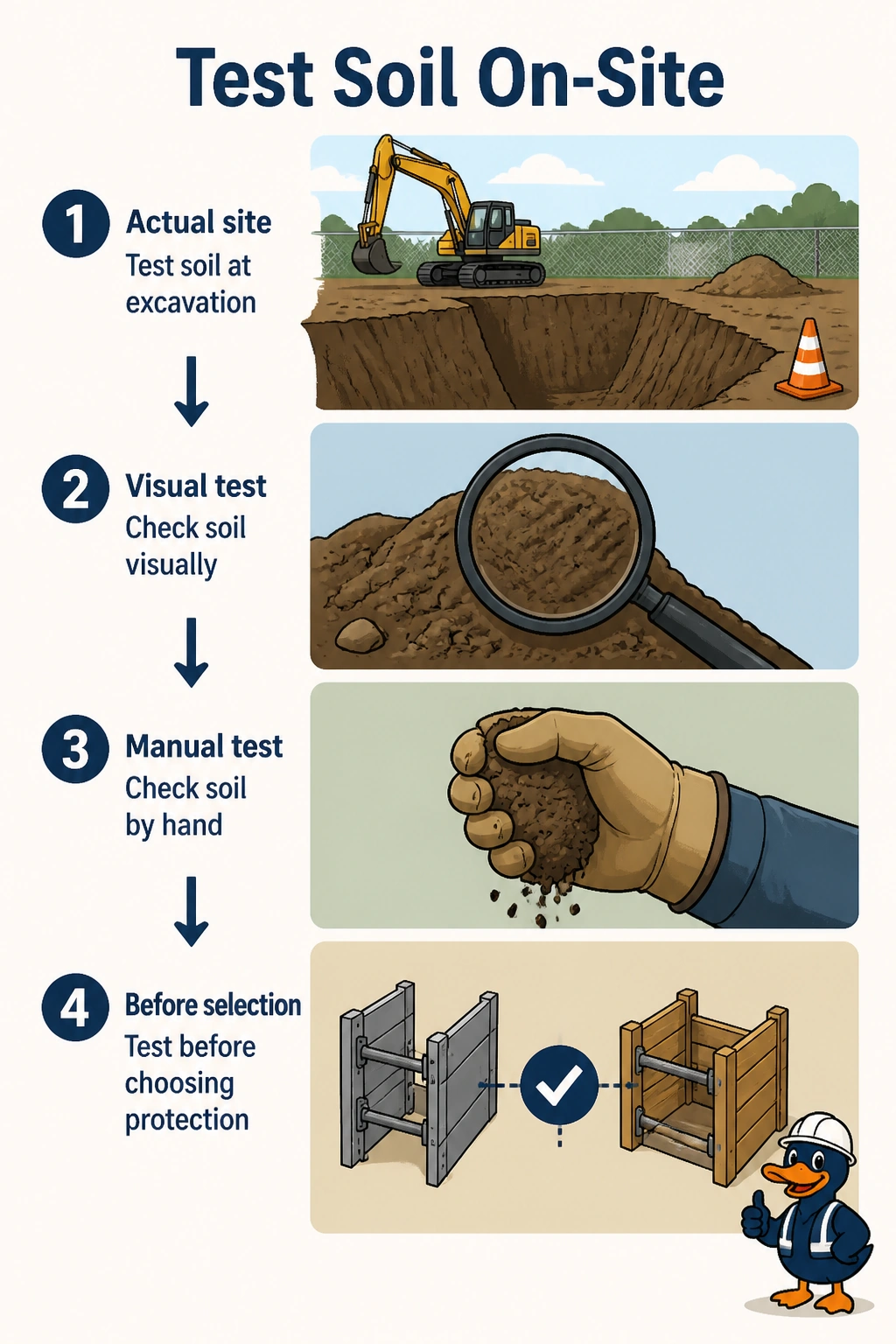
Soil a mile away can be a completely different beast from the dirt under your boots today. Before you pick a slope or trench box, a competent person has to test the actual site; the trap is guessing soil type by color or nearby jobs.
Full Explanation
Under OSHA 29 CFR 1926 Subpart P Appendix A, a competent person must Conduct visual and manual soil tests on the actual excavation site—checking for fissuring, vibration, previously disturbed soil, and cohesive strength—before selecting sloping, benching, or shoring. Choosing to Rely on the neighboring site's soil report to choose a standard sloping angle fails because soil strata, moisture content, and past utility disturbance vary dramatically over short distances. Choosing to Treat all clay soils as Type A unless groundwater floods the trench bottom fails because fissured clay, layered soils, or clay subject to traffic vibration must be downgraded to Type B or Type C even when dry. Choosing to Begin digging to full depth first and evaluate wall stability from the surface fails because unverified walls can collapse without warning and soil classification must guide protective system selection from the start. If soil is not classified, do not use Type A or Type B slopes. 29 CFR 1926.652(b)(1) allows sloping no steeper than 1-1/2 horizontal to 1 vertical without a soil classification. Shields or shoring may be used within 1926.652(c) manufacturer or other tabulated data without a PE design. A registered professional engineer is required for sloping or benching outside those options and for excavations deeper than 20 feet, not as the only alternative to Type C. As a concrete operational check, document the competent person's visual and manual test results—such as thumb penetration or ribbon testing—on the daily trench inspection log.
Prefer to study offline? Printable PDF study book + test engine ($7.50, unofficial). These questions stay free here.