
During a morning pre-use inspection, a sheet metal worker notices a cracked fiberglass side rail and a bent rung on a 10-foot stepladder. What must the safety technician require immediately under OSHA 29 CFR 1926.1053?
Select an answer to reveal the explanation.
Short Explanation
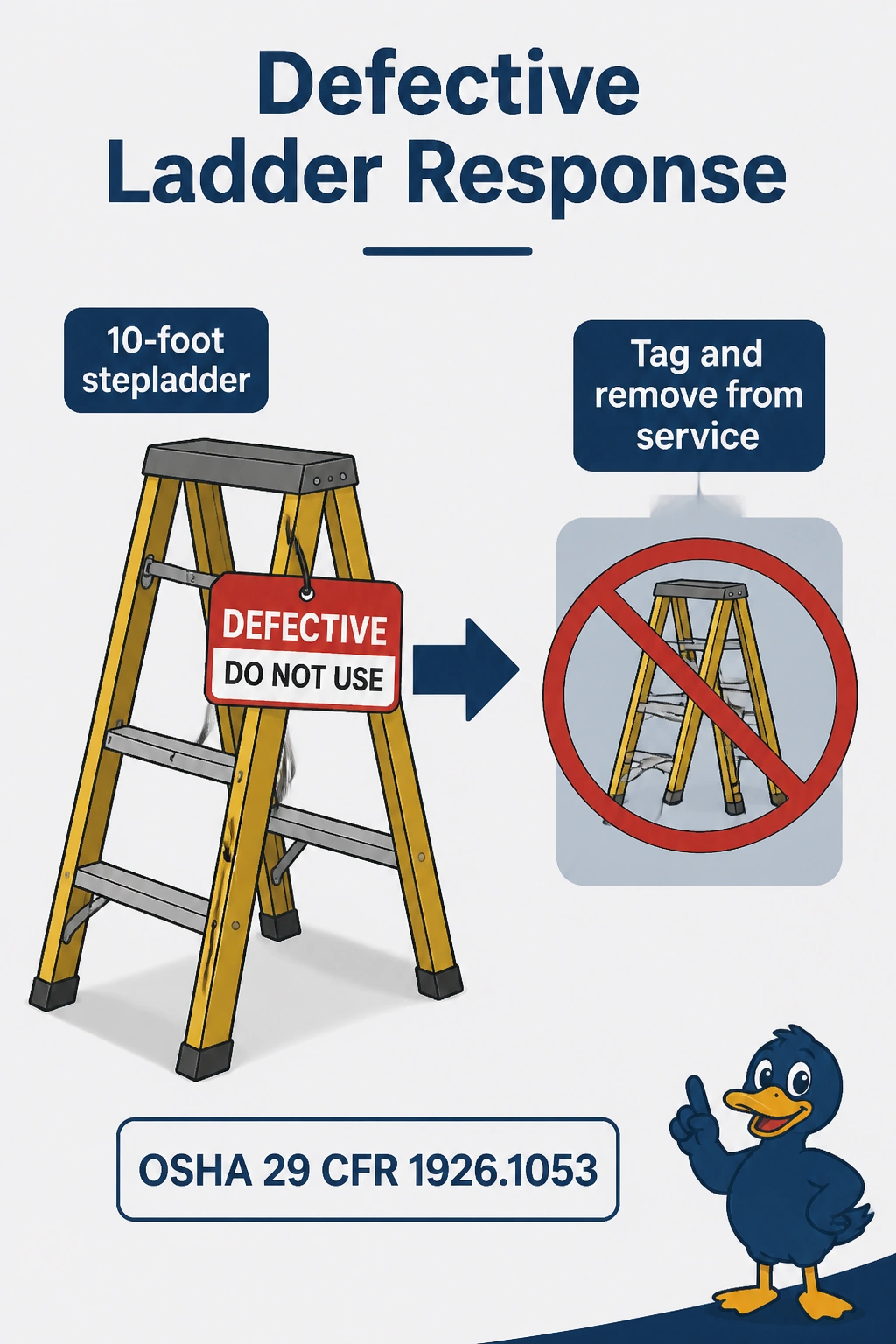
You’re right to treat a cracked rail and bent rung as a structural defect that makes the ladder unsafe to use. Tag it and remove it from service until it’s repaired or replaced; tape, climbing past the rung, or changing the ladder’s angle won’t make it safe.
Full Explanation
Under OSHA 29 CFR 1926.1053, a portable ladder with structural defects—such as broken or missing rungs, cleats, or steps, or broken or split rails—must be immediately marked as defective or tagged with “Do Not Use” language and withdrawn from service until repaired or replaced. Tagging the ladder as defective and removing it from service prevents another worker from using it before it is made safe. Wrapping heavy duct tape around the cracked side rail and restricting the ladder to light-duty tasks does not restore its structural integrity; repairs must restore the ladder to a condition meeting its original design criteria. Allowing workers to climb past the damaged rung, even while maintaining three points of contact, leaves a compromised load-bearing component in service. Setting the stepladder against a wall at a steeper angle misuses the ladder and creates an immediate tip-over hazard. As a caveat, lock or physically remove a tagged ladder from the work area rather than leaving it near gang boxes. As a practical check, inspect ladder storage racks weekly and promptly cut up or dispose of ladders that cannot be repaired.
Prefer to study offline? Printable PDF study book + test engine ($7.50, unofficial). These questions stay free here.