
A renovation crew is preparing to remove old insulation from a vacant warehouse attic where thick layers of dried pigeon and rodent droppings cover the joists. Which control strategy best protects workers from biological airborne hazards such as histoplasmosis or hantavirus?
Select an answer to reveal the explanation.
Short Explanation
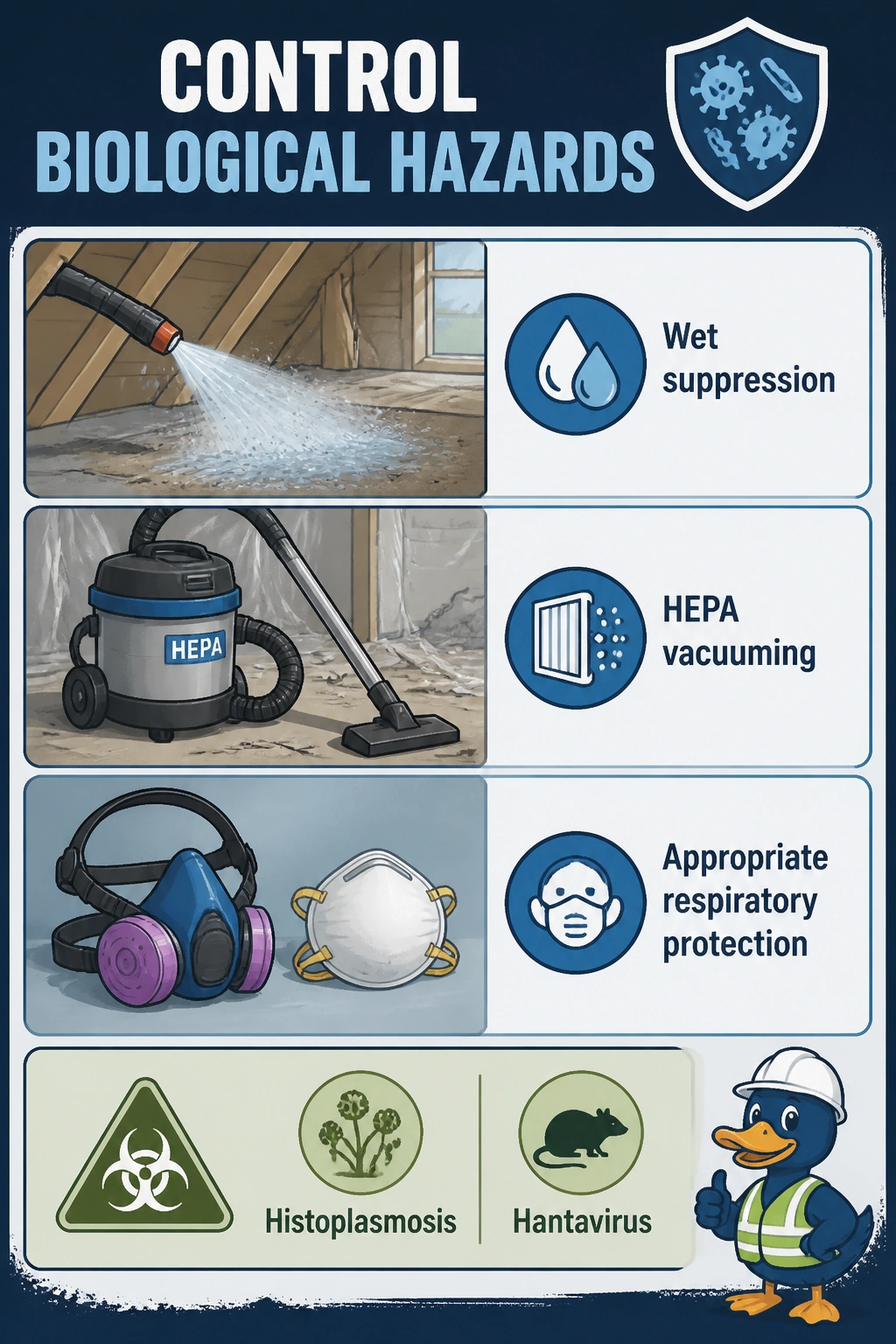
Dried bird and rodent droppings look harmless until a broom kicks fungal spores or viral particles straight into the air you breathe. You control this biological hazard by wetting debris and using HEPA vacuums with respirators, avoiding the trap of dry sweeping or blowing dust.
Full Explanation
The most effective control strategy is to Apply wet suppression, HEPA vacuuming, and appropriate respiratory protection. Lightly misting droppings with water or disinfectant solution prevents infectious spores and viral particulates from becoming aerosolized, while HEPA-filtered vacuuming captures residue safely and NIOSH-approved respirators plus disposable coveralls protect workers during disturbance. Choosing to Dry-sweep the attic joists with stiff brooms before turning on exhaust fans aerosolizes concentrated biological dust directly into workers' breathing zones and spreads contamination through airflow. Similarly, selecting Use a compressed-air blowgun to clear dust from ceiling trusses quickly creates violent dust clouds and violates safe cleaning practices. Electing to Rely solely on standard surgical masks while shoveling dry debris into chutes fails because loose surgical masks do not seal to the face or filter fine bioaerosols. One caveat is that over-wetting an attic ceiling can damage structural gypsum or create slip and electrical hazards, so misting must be controlled carefully. As an operational check, verify respirator fit-test records, stage sealed disposal bags at the work area exit, and enforce handwashing before breaks.
Prefer to study offline? Printable PDF study book + test engine ($7.50, unofficial). These questions stay free here.