
A commercial framing crew plans to use a powder-actuated fastening tool to shoot track pins into a cured concrete slab. Under OSHA 29 CFR 1926.302, what prerequisite must be met before any worker operates this tool?
Select an answer to reveal the explanation.
Short Explanation
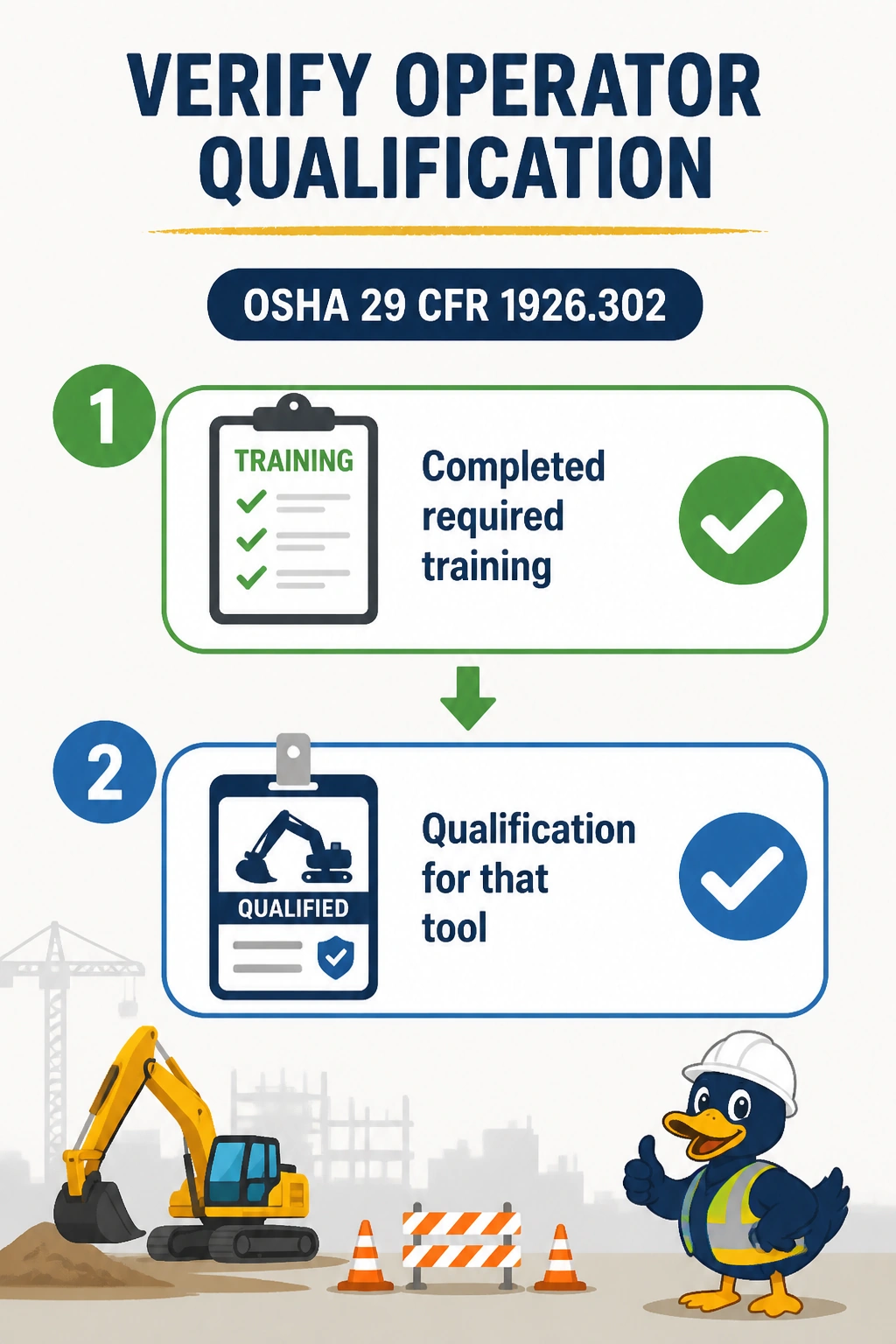
A powder-actuated tool fires fasteners with explosive force, so handing one to an untrained worker is like tossing car keys to someone who has never driven. You must confirm formal tool qualification first, rather than falling for the trap that general carpentry experience is enough.
Full Explanation
Under OSHA 29 CFR 1926.302, the required prerequisite is to Verify that the operator has completed required training and holds qualification for that tool. Powder-actuated tools use propellant charges capable of causing severe penetrating injuries or ricochets, so only employees who have been trained in the safe operation of the specific tool in use are permitted to operate it. Choosing to Permit any experienced carpenter to operate the tool after a brief verbal walkthrough fails because general trade tenure does not satisfy tool-specific instruction and qualification rules. Selecting Allow use without eye protection if the fastener penetrates concrete cleanly violates mandatory personal protective equipment rules, as flying concrete spall poses a constant eye hazard. Electing to Substitute a higher-powered cartridge if the first fastener fails to seat properly is dangerous because misfires and base-material resistance require careful inspection and manufacturer-approved procedures rather than blindly stepping up charge power. One caveat is that qualification for one manufacturer's tool does not automatically qualify a worker on a different model with distinct safety interlocks. As an operational check, inspect operator qualification cards at the tool crib and verify daily pre-use function checks before issuing cartridges.
Prefer to study offline? Printable PDF study book + test engine ($7.50, unofficial). These questions stay free here.