
Ironworkers are stick-welding structural steel columns on an open commercial floor while plumbers work twenty feet away without shaded welding helmets. What control must the safety technician require under OSHA 29 CFR 1926.351 to protect nearby trades from arc flash?
Select an answer to reveal the explanation.
Short Explanation
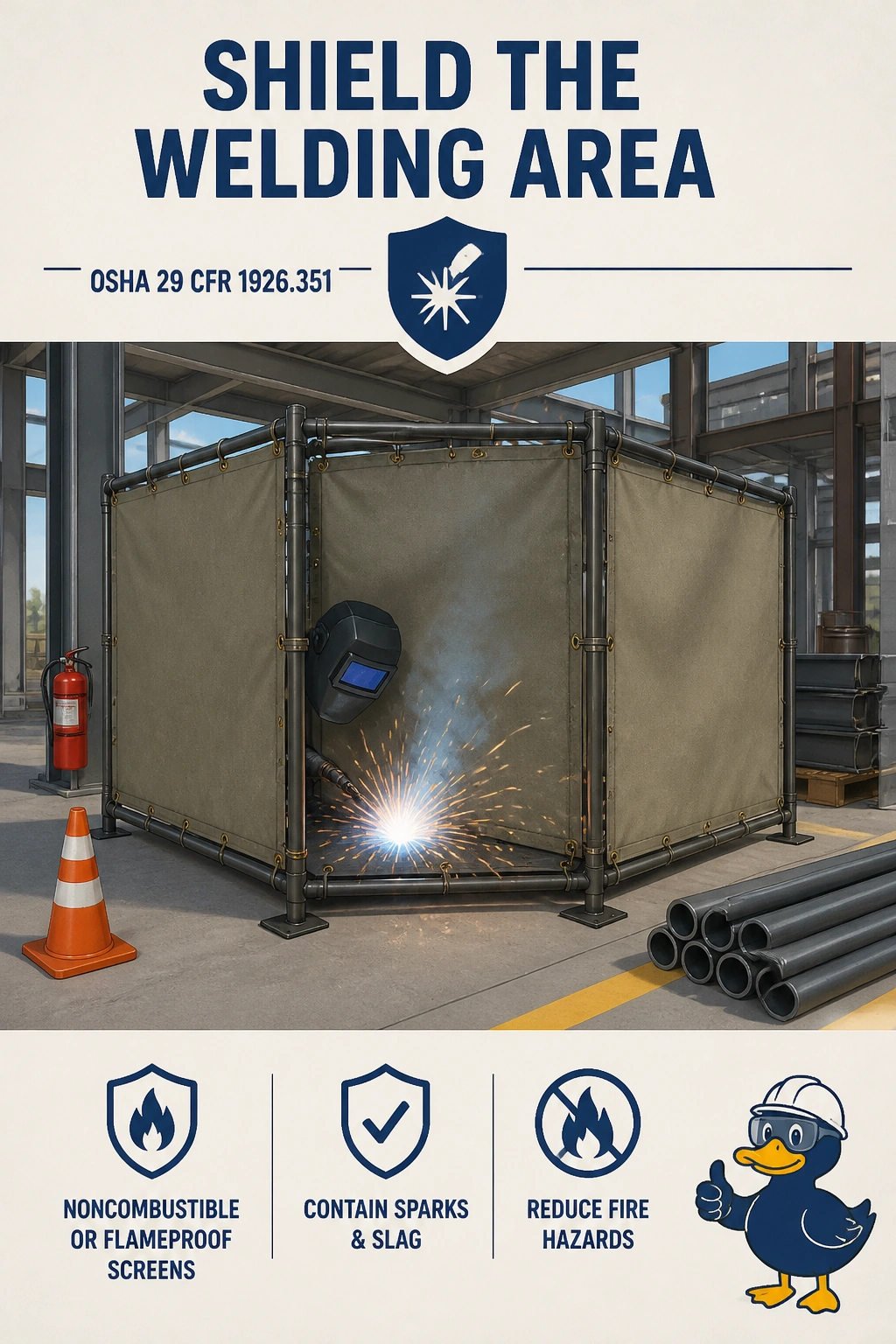
You can protect nearby trades from painful ultraviolet eye burns even when they are not holding the stinger. Under OSHA 29 CFR 1926.351, require noncombustible or flameproof screens whenever practicable; looking away is unreliable, and clear polyethylene can melt and let UV rays pass.
Full Explanation
Electric arc welding emits intense ultraviolet and infrared radiation that can cause photokeratitis, commonly called arc eye, in unprotected workers nearby. Shielding the welding area with noncombustible or flameproof screens blocks direct arc rays from reaching adjacent trades and helps contain hot slag and sparks, as required under OSHA 29 CFR 1926.351. Clear polyethylene sheeting around the column can melt, create a fire hazard, and fail to block ultraviolet light. Telling nearby plumbers to look away whenever they hear the welder strike an arc relies on reaction after the flash begins and does not reliably protect peripheral vision. Moving the welding machine power leads farther from the plumbers’ work bench only relocates cables; it does not block radiation from the arc. Exam caveat: when screens are not practicable in a tight space, nearby workers still need appropriate shaded eye protection. Practical check: during multi-trade walks, verify that screens block line-of-sight arc rays from walkways and adjacent work zones.
Prefer to study offline? Printable PDF study book + test engine ($7.50, unofficial). These questions stay free here.