
Masons on a commercial school project are developing lower-back and shoulder soreness from repeatedly lifting heavy concrete blocks off low pallets and carrying them across an uneven slab. Applying ergonomic control principles, which change best reduces this musculoskeletal risk?
Select an answer to reveal the explanation.
Short Explanation
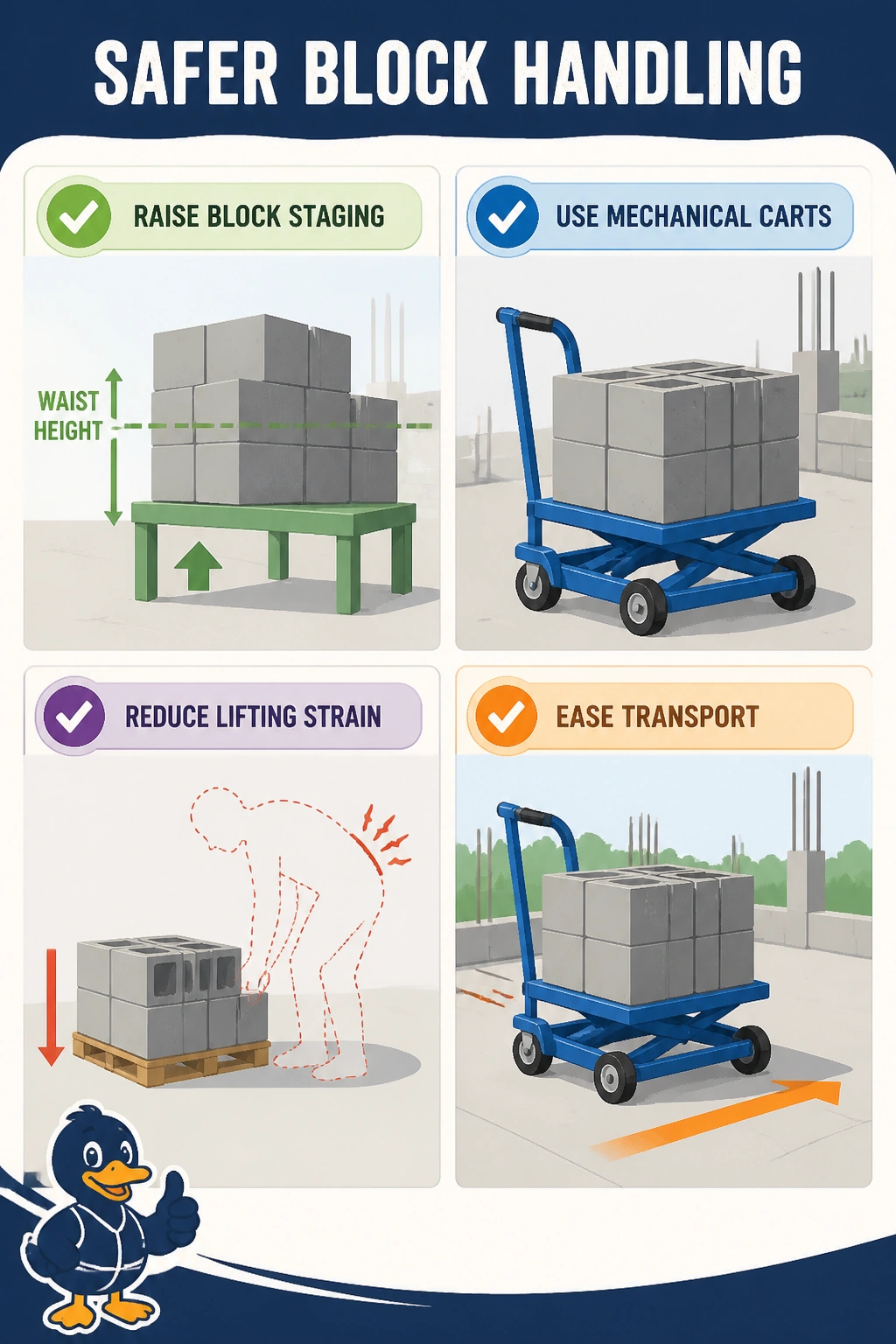
Your spine takes the hardest hit when you bend to floor level and haul dead weight across rough concrete all shift. You cut strain at the source by bringing materials up to waist height and using carts, rather than falling for the trap of relying on back belts.
Full Explanation
The strongest ergonomic solution is to Stage blocks near waist height and provide mechanical carts for transport. Keeping loads within the power zone between mid-thigh and mid-chest minimizes deep forward bending, while wheeled carts or pallet jacks eliminate prolonged manual carrying over uneven surfaces. Choosing to Instruct workers to twist at the waist rather than moving their feet when placing blocks teaches a harmful motion that concentrates shear stress on spinal discs. Opting to Stack all mortar bags directly on the ground slab to eliminate elevated staging platforms forces workers into repeated low-level lifts, worsening lumbar fatigue. Electing to Require back belts as the primary control for continuous heavy masonry lifting fails because NIOSH guidance does not support back belts as effective personal protective equipment for preventing lifting injuries in uninjured workers, and belts can create a false sense of security. One caveat is that rolling carts over rough or sloped slabs requires clear housekeeping and wheel locks when parked near edges. As an operational check, walk the masonry work zone at shift start to verify adjustable block stands are positioned close to the wall and pathways are free of cord or debris trip hazards.
Prefer to study offline? Printable PDF study book + test engine ($7.50, unofficial). These questions stay free here.