
Plumbers cut a 24-inch-square mechanical chase opening through a second-floor concrete deck above an active lobby, and a carpenter lays a loose sheet of scrap plywood over the hole. What must the safety technician require to bring this floor hole cover into compliance with OSHA 29 CFR 1926.502?
Select an answer to reveal the explanation.
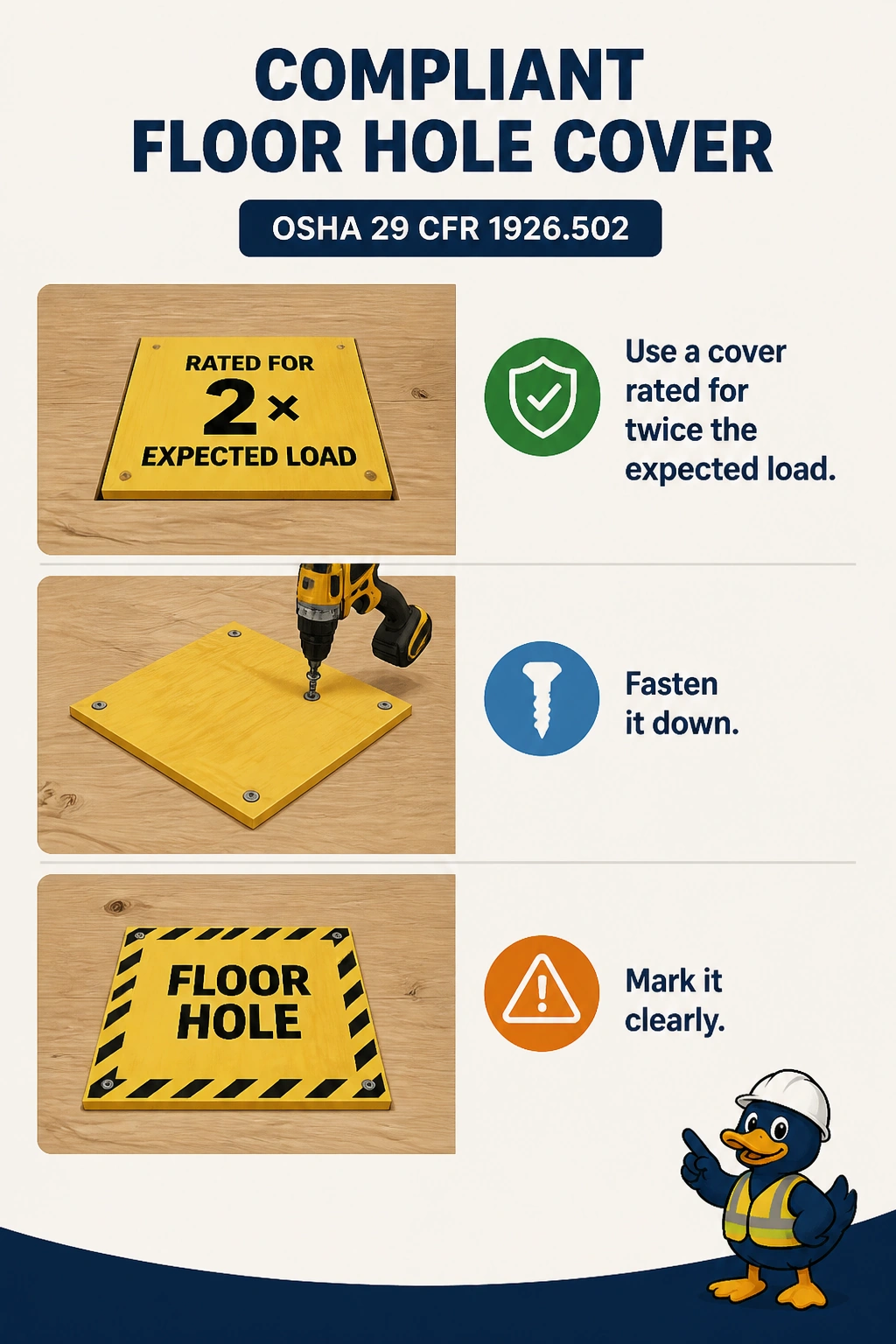
Short Explanation
You need a cover that can support the required load, stays secured, and is clearly marked, because loose plywood can shift and expose workers to a fall. Warning paint, a nearby sign, or caution ribbon cannot replace those protections.
Full Explanation
Floor openings create serious fall hazards, so OSHA 29 CFR 1926.502 requires a cover capable of supporting twice the expected load, secured against accidental displacement, and marked to identify the hazard. A cover rated for twice the expected load, fastened down, and clearly marked addresses all three requirements: it can support workers, equipment, and materials; it is less likely to shift under foot traffic; and its marking warns workers of the opening. Painting plywood bright orange and placing a traffic cone beside it does not establish its load capacity or secure it, so the cover could fail or move. Nailing a warning sign to the nearest column alerts workers but neither protects the opening nor marks the cover itself. Taping caution ribbon around the plywood edges provides a warning barrier, not structural support or positive attachment. As an exam caveat, conspicuous color or warnings do not make an unsecured or inadequately rated cover compliant. As a practical check, verify the rating and visible marking, inspect the fasteners, and confirm that the installed cover does not move during floor walks.
Prefer to study offline? Printable PDF study book + test engine ($7.50, unofficial). These questions stay free here.