
Painters finishing a commercial lobby wipe down woodwork with linseed oil and mineral spirits, leaving dozens of soaked rags on a cardboard box at the end of the shift. What disposal practice must the safety technician require to prevent a fire?
Select an answer to reveal the explanation.
Short Explanation
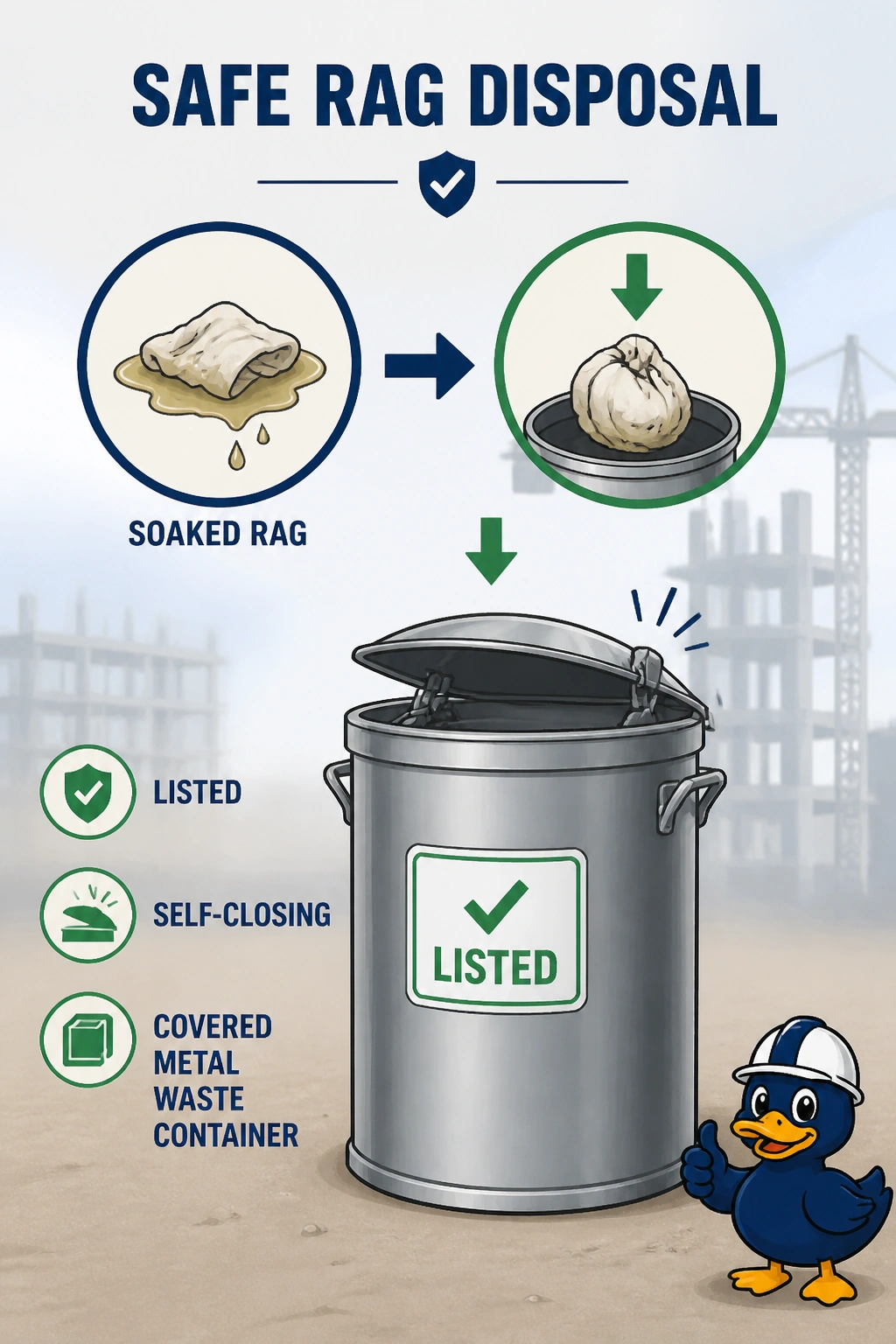
You may see a pile of oil-soaked rags as harmless, but drying linseed oil oxidizes and generates heat that can ignite nearby cardboard or wood scrap overnight. Keep them in a listed, self-closing covered metal waste container to limit oxygen and contain heat; plastic bags and open bins leave the hazard uncontrolled.
Full Explanation
Drying oils such as linseed oil undergo exothermic oxidation when spread across absorbent rags, creating a classic spontaneous combustion hazard on construction sites. Requiring workers to place the soaked rags inside a listed, self-closing covered metal waste container limits oxygen, contains heat, and isolates combustible vapors from ignition sources under OSHA fire prevention and housekeeping standards. Tying the rags tightly inside a heavy-duty plastic trash bag beside the main exit door traps heat inside a combustible plastic liner and puts the hazard along an egress route. Stacking the rags flat in an open cardboard bin overnight so vapors can evaporate provides fuel, oxygen, and insulation within a paper container. Tossing the rags into the general wood-scrap roll-off container outside the building mixes self-heating waste with dry lumber and debris. As a caveat, metal oily-waste cans should be emptied regularly into approved hazardous waste disposal streams rather than left overflowing. For a concrete operational check, inspect painting and finishing areas at shift end to confirm lids close tightly and no loose solvent rags remain on benches or floors.
Prefer to study offline? Printable PDF study book + test engine ($7.50, unofficial). These questions stay free here.