
During a morning rigging inspection before hoisting steel roof trusses, a rigger pulls an alloy steel chain sling from the gang box and notices its metal capacity identification tag is missing. What action must the safety technician require?
Select an answer to reveal the explanation.
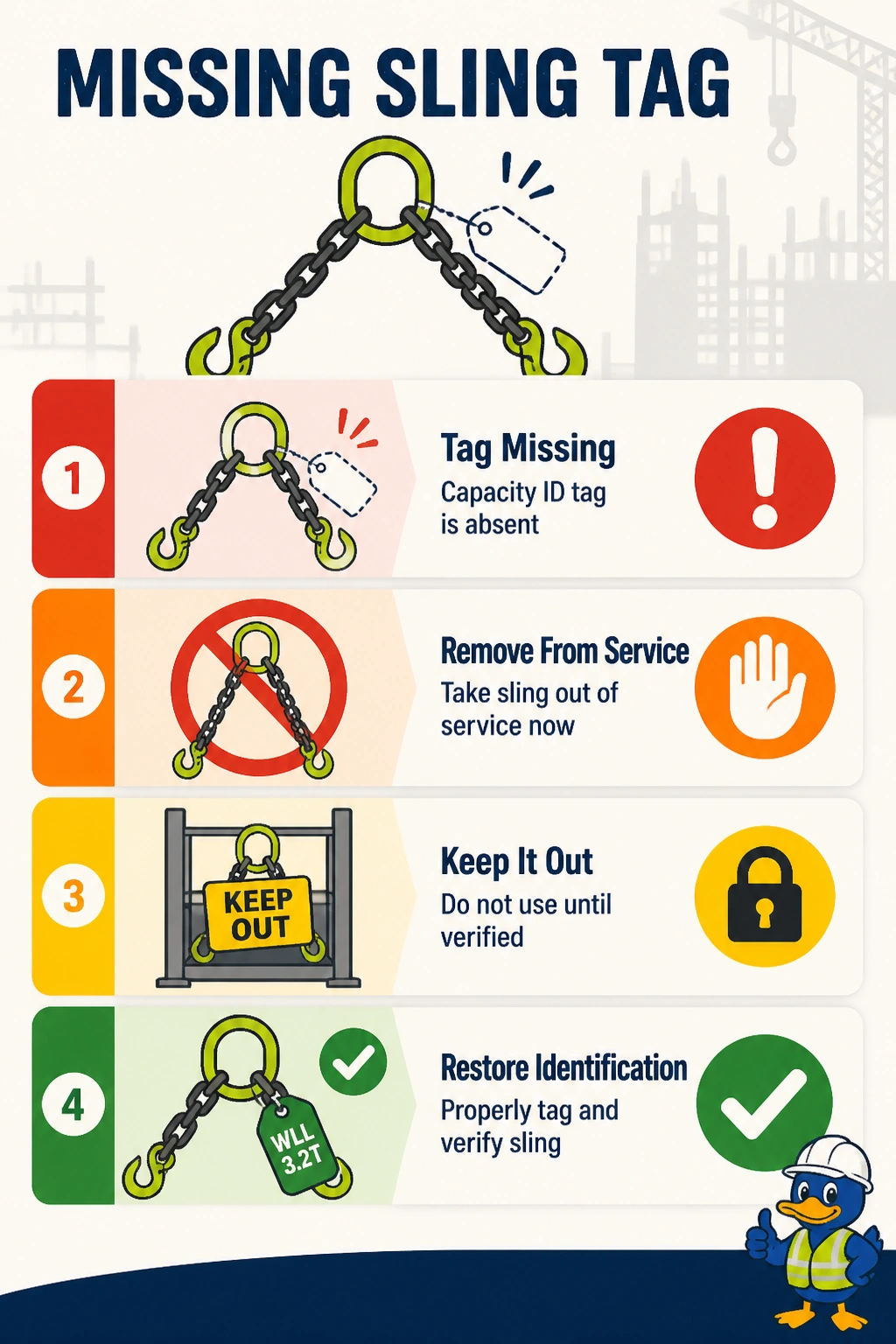
Short Explanation
An alloy chain sling without its capacity tag is a mystery load waiting to fail over someone's head. Under OSHA 29 CFR 1926.251, you must pull that sling from service immediately rather than guessing its grade or rating in the field. The trap is letting a rigger eyeball link thickness or derate the sling by rule of thumb.
Full Explanation
Alloy steel chain slings look nearly identical across different steel grades, so the permanently affixed identification tag stating size, grade, rated capacity, and reach is essential for safe rigging under 29 CFR 1926.251. Requiring the crew to Remove the chain sling from service immediately until properly tagged and verified prevents overloading an unknown grade of chain during a crane pick. Attempting to Estimate the sling's capacity by measuring chain link thickness with a tape measure cannot identify the alloy grade or whether the chain was previously stretched or heat-damaged. Choosing to Use the sling for half-weight picks only until a replacement tag is ordered still relies on an unverified guess of the original working load limit. Having a crew Stamp the foreman's best estimate of load capacity onto a new washer and attach it violates manufacturer and OSHA identification rules because only the manufacturer or a qualified person can certify and re-tag a sling after proof testing. As a caveat, even a properly tagged sling must also be removed if links show cracks, excessive wear, or stretching. For a concrete operational check, tag out defective rigging with a red Do Not Use tag and lock it out of the rigging box before the crane arrives.
Prefer to study offline? Printable PDF study book + test engine ($7.50, unofficial). These questions stay free here.