
An electrician needs to inspect wiring inside an open, energized 277-volt lighting junction box mounted 10 feet above a concrete floor, and grabs a 12-foot aluminum extension ladder from the gang box. Why must the safety technician stop the work and require a different ladder?
Select an answer to reveal the explanation.
Short Explanation
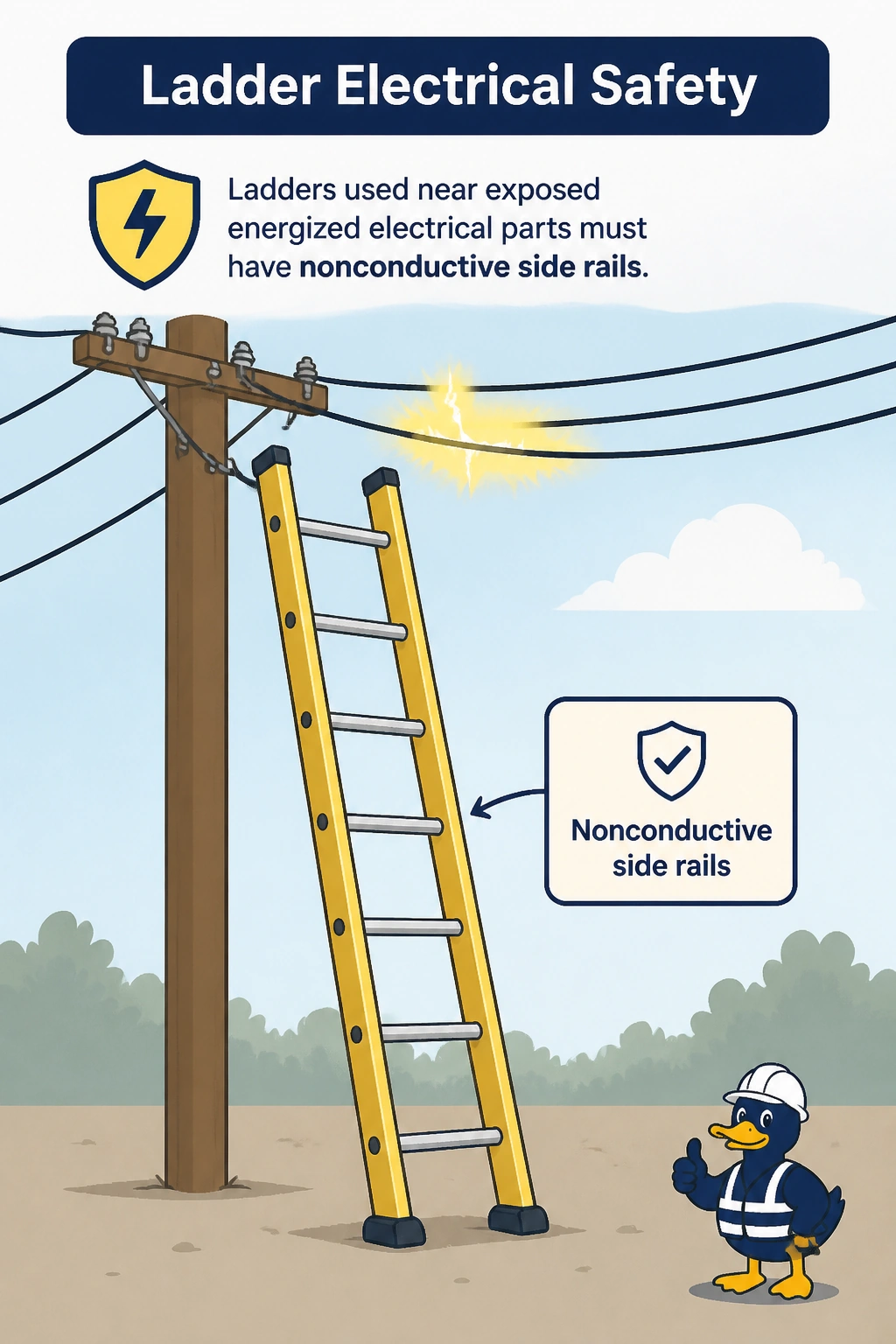
Grabbing a metal ladder around live wiring turns a routine inspection into a direct path to ground, so you must swap it out before climbing. Under OSHA rules, ladders used where a worker or the ladder could contact exposed energized electrical parts must have nonconductive side rails like fiberglass. Don't get tripped up by thinking metal ladders are banned site-wide or that a three-foot extension applies when you aren't stepping onto a landing.
Full Explanation
Under 29 CFR 1926.1053, Ladders used near exposed energized electrical parts must have nonconductive side rails whenever the worker or the ladder could contact those parts. Aluminum conducts electricity readily, so an accidental slip or tool contact against an energized 277-volt conductor can energize the entire rail and create a fatal shock or arc-flash path to the concrete floor; switching to a clean, dry fiberglass ladder eliminates that conductive path. The claim that Portable metal ladders are banned from commercial construction sites under all OSHA rules is false because metal ladders remain permitted for general non-electrical tasks away from energized lines and equipment. The idea that A 12-foot extension ladder is too short to provide the required three-foot landing extension misapplies 29 CFR 1926.1053, which only requires side rails to extend three feet above an upper landing surface when workers use the ladder to access that level. Similarly, Extension ladders require a personal fall arrest system whenever work exceeds six feet is incorrect because OSHA construction fall protection triggers at six feet do not apply to portable ladders under Subpart X. As an exam caveat, remember that even a fiberglass ladder becomes hazardous if wet or coated with conductive dust, and de-energizing and locking out the circuit remains the preferred primary control. Before work starts, verify the ladder's nonconductive fiberglass rating label, inspect the rails for moisture or damage, and confirm whether the 277-volt circuit can be locked out.
Prefer to study offline? Printable PDF study book + test engine ($7.50, unofficial). These questions stay free here.