
A mobile crane subcontractor is mobilizing a 90-ton hydraulic crane onto a commercial hospital site where recent grading left soft backfill over an old utility trench. Who is responsible under OSHA 29 CFR 1926.1402 for ensuring ground conditions are firm, drained, and graded before crane assembly or operation?
Select an answer to reveal the explanation.
Short Explanation
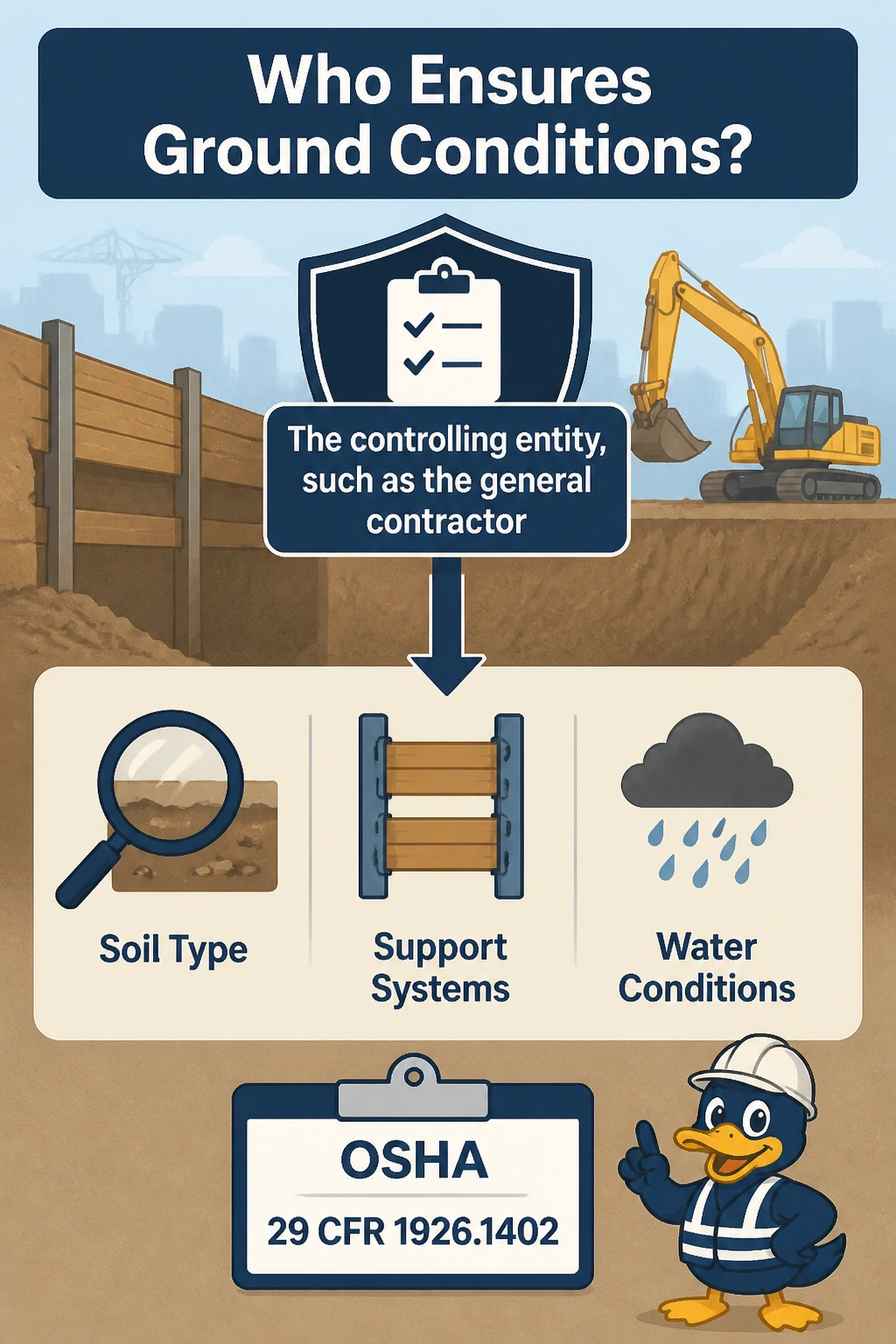
Think of a crane like a skyscraper on wheels—even the strongest boom can fail if the soil beneath its outriggers gives way. You need firm, drained, and graded ground, not a visual guess from the cab. The controlling entity—such as the general contractor—must ensure the site is ready, rather than leaving site preparation to the operator or rental company.
Full Explanation
Under OSHA 29 CFR 1926.1402, a crane may not be assembled or used unless the ground is firm, drained, and graded to support the equipment and its loads, together with any blocking or cribbing. The controlling entity, such as the general contractor, is responsible for providing adequate ground conditions and informing the crane user and operator about known underground hazards, such as buried utilities. The crane operator alone, based on a visual cab check, is not responsible for ensuring site preparation: a visual check cannot reveal soft backfill or buried hazards that require site knowledge. The crane rental company that supplied the equipment does not control jobsite grading, drainage, or utility records. The rigging foreman who attaches the load slings before each pick handles rigging, not ground preparation or subsurface stability. As a caveat, if a project has no controlling entity, the employer with authority to make or arrange ground preparations assumes this duty. Before a lift, check with the site superintendent for compaction records and utility locates, and confirm that outrigger mats are appropriately sized.
Prefer to study offline? Printable PDF study book + test engine ($7.50, unofficial). These questions stay free here.