
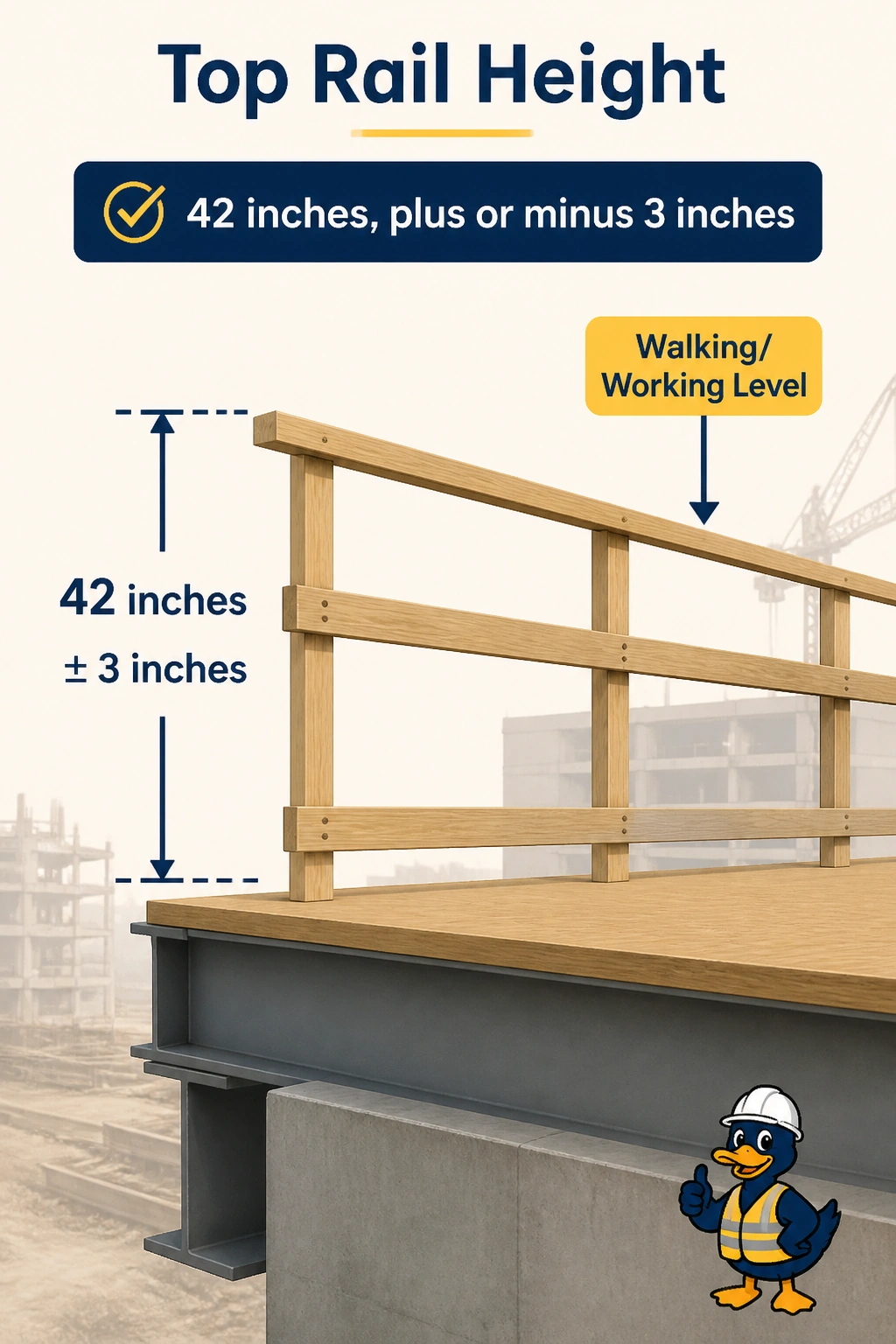
Carpenters are building a wooden perimeter guardrail system around an open second-floor concrete slab edge 16 feet above the ground. Under OSHA 29 CFR 1926.502, what vertical height above the walking/working level must the top edge of the top rail meet?
Select an answer to reveal the explanation.
Short Explanation
Think of a guardrail's top rail as a waist-high catch point—too low and a worker tips right over it, too high and someone can slip underneath. You need that exact 42-inch target with a three-inch tolerance to keep the barrier effective. The trap is guessing 36 inches, which is the old residential stair-handrail number rather than a fall-protection guardrail.
Full Explanation
Perimeter guardrail systems protect workers at unprotected edges only when built to standardized geometry that intercepts a worker's center of gravity before a fall occurs. Under 29 CFR 1926.502, the top edge height of top rails must be 42 inches, plus or minus 3 inches above the walking or working level, paired with a midrail halfway between the top edge and the floor. Choosing 36 inches above the slab sets the rail too low for fall arrest at a leading edge, increasing the risk that a tripping worker pitches forward over the top. Choosing 30 inches above the slab is dangerously below hip height and leaves a wide upper opening that fails to restrain a falling worker. Choosing 48 inches above the slab exceeds the permitted 45-inch upper limit and creates an excessive gap below the top rail unless additional intermediate members are installed. As a caveat, when workers wear stilts, the top edge height must be increased by an amount equal to the height of the stilts. For an operational check, measure top-rail height with a tape measure from the slab surface, confirm midrails and toeboards where needed, and test that the top rail withstands 200 pounds of outward or downward force.
Prefer to study offline? Printable PDF study book + test engine ($7.50, unofficial). These questions stay free here.