
During a morning inspection of a 6-foot-deep, 60-foot-long utility trench, a safety technician sees two pipelayers working at the far end while the only access ladder sits at the opposite end 55 feet away. What must the technician require to comply with 29 CFR 1926.651(c)(2)?
Select an answer to reveal the explanation.
Short Explanation
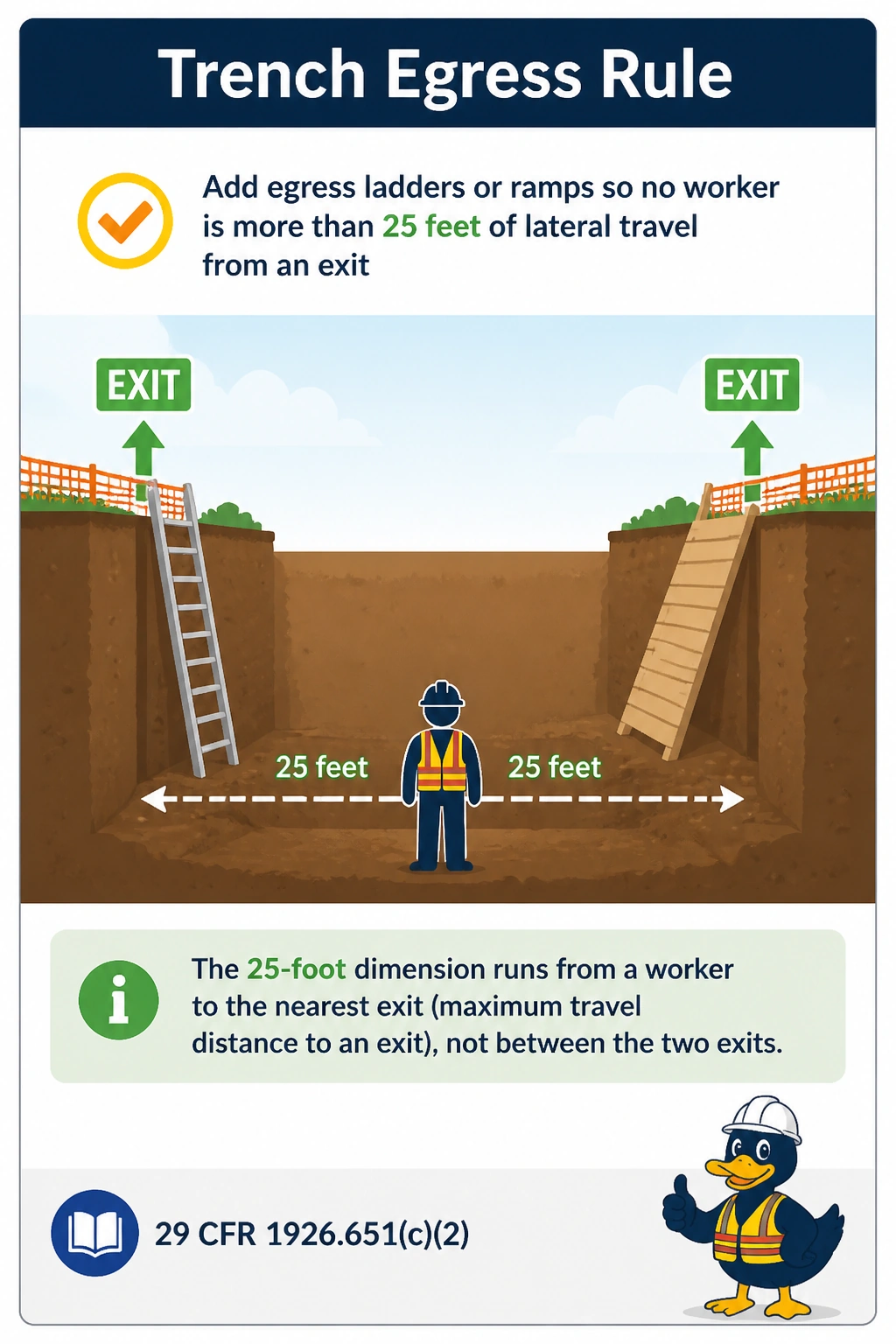
When a trench wall starts to move, 55 feet feels like a marathon you do not have time to run. The trap is thinking a sturdy trench box or a single ladder in the middle solves the exit problem for a long excavation. Under 29 CFR 1926.651, you must Add egress ladders or ramps so no worker is more than 25 feet of lateral travel from an exit.
Full Explanation
Under OSHA's trenching standard, 29 CFR 1926.651, any trench 4 feet or more in depth requires a stairway, ladder, ramp, or other safe means of egress positioned so employees never travel more than 25 feet laterally to exit, meaning the technician must Add egress ladders or ramps so no worker is more than 25 feet of lateral travel from an exit. Because this trench is 6 feet deep and 60 feet long, workers 55 feet from the lone ladder cannot evacuate quickly during a collapse or water intrusion. Choosing to Allow the crew to continue as long as the trench is protected by a certified steel trench box confuses cave-in protection with emergency egress; both are independently required. Choosing to Place a single ladder at the midpoint of the 60-foot trench and require workers to climb the shoring still leaves workers at the ends up to 30 feet away and introduces a fall hazard by using shoring as a ladder. Choosing to Station an attendant at the trench edge with a rescue rope instead of adding another access ladder substitutes an unapproved rescue workaround for mandatory self-egress. As a caveat, any portable ladder used for trench egress must extend at least 3 feet above the landing surface and be secured against displacement. As an operational check, pace off the distance from every active work point in the trench to the nearest ladder before allowing pipe installation to resume.
Prefer to study offline? Printable PDF study book + test engine ($7.50, unofficial). These questions stay free here.