
A painting crew needs to transfer a Category 1, 2, or 3 flammable liquid from a 55-gallon metal drum into a smaller 5-gallon metal safety can inside a well-ventilated equipment shed. What electrical precaution must the crew take before opening the drum valve?
Select an answer to reveal the explanation.
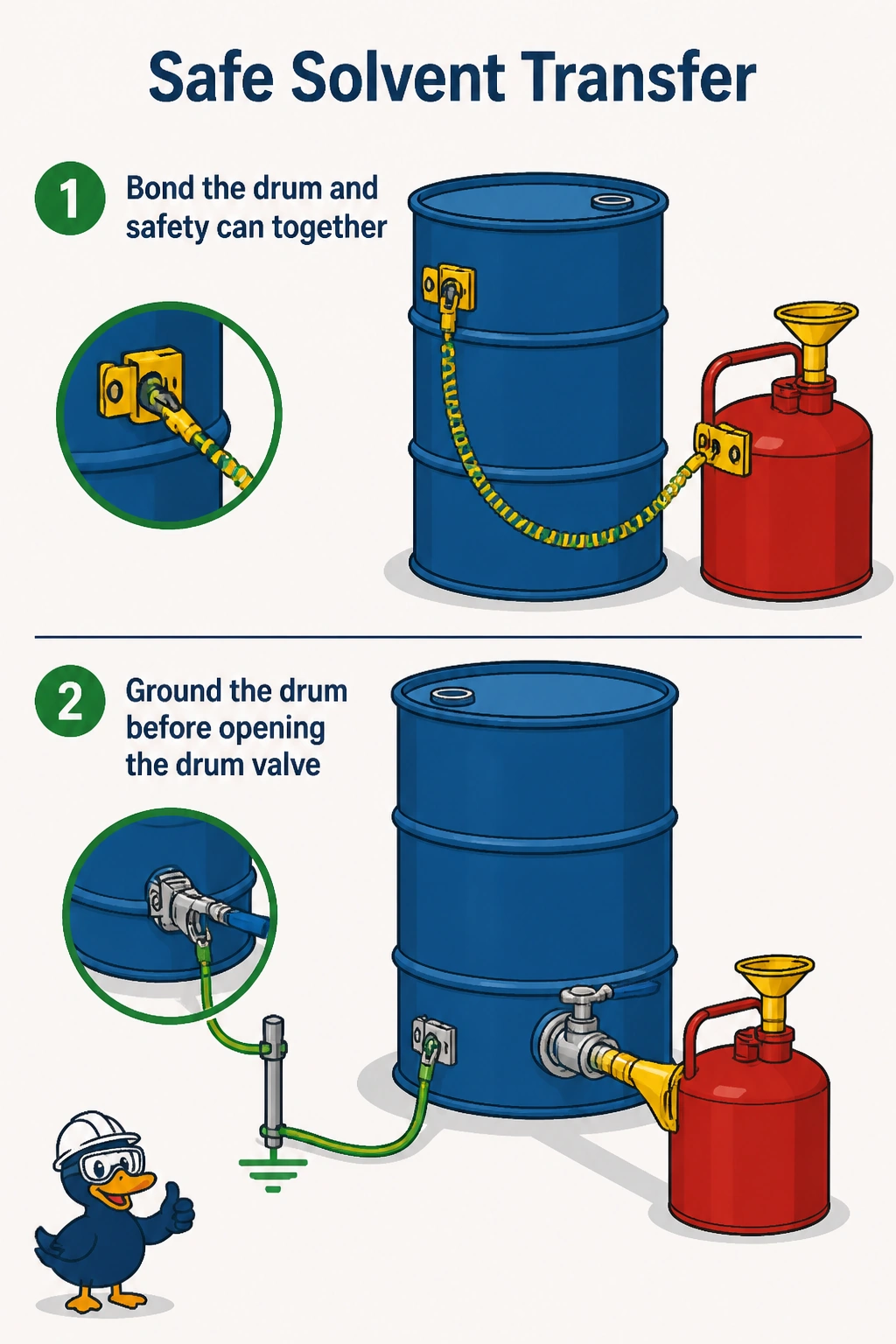
Short Explanation
Think of pouring flammable solvent like shuffling across a carpet in winter—static electricity builds up fast and looks for a spark. You want any charge equalized before a single drop flows, or the vapor cloud can ignite. The trap is thinking a rubber mat or tape stops static, when isolating metal actually traps the charge.
Full Explanation
Flowing flammable liquids generate static electricity through friction against pipes, valves, and container walls, creating an ignition hazard if a spark jumps across an air gap. Under 29 CFR 1926.152(e)(2), transfer of Category 1, 2, or 3 flammable liquids from one container to another shall be done only when the containers are electrically interconnected (bonded). The construction rule does not add a separate duty to ground the drum. Grounding the dispensing container is recognized static-control practice, not the text of 1926.152. Choosing to Place a rubber insulating mat beneath the 5-gallon safety can fails because insulation blocks the path to ground and allows static voltage to build on the receiving can until it discharges. Deciding to Wrap the metal drum spout with non-conductive electrical tape also fails because tape neither equalizes potential between the two metal vessels nor dissipates static charge. Simply deciding to Turn off all battery-powered flashlights in the storage shed addresses an external ignition source while leaving the primary static discharge hazard intact. As a caveat, bonding and grounding alone will not protect the crew if the shed lacks adequate ventilation to keep vapors below the lower flammable limit. For an operational check, inspect the bonding jumper and ground clamp for clean metal-to-metal contact on bare, unpainted surfaces before opening the valve.
Prefer to study offline? Printable PDF study book + test engine ($7.50, unofficial). These questions stay free here.