
A demolition crew renovating a 1974 municipal building encounters chalky pipe insulation in a mechanical chase and wants to strip it out dry to finish before lunch. What must the safety technician require before the material is disturbed?
Select an answer to reveal the explanation.
Short Explanation
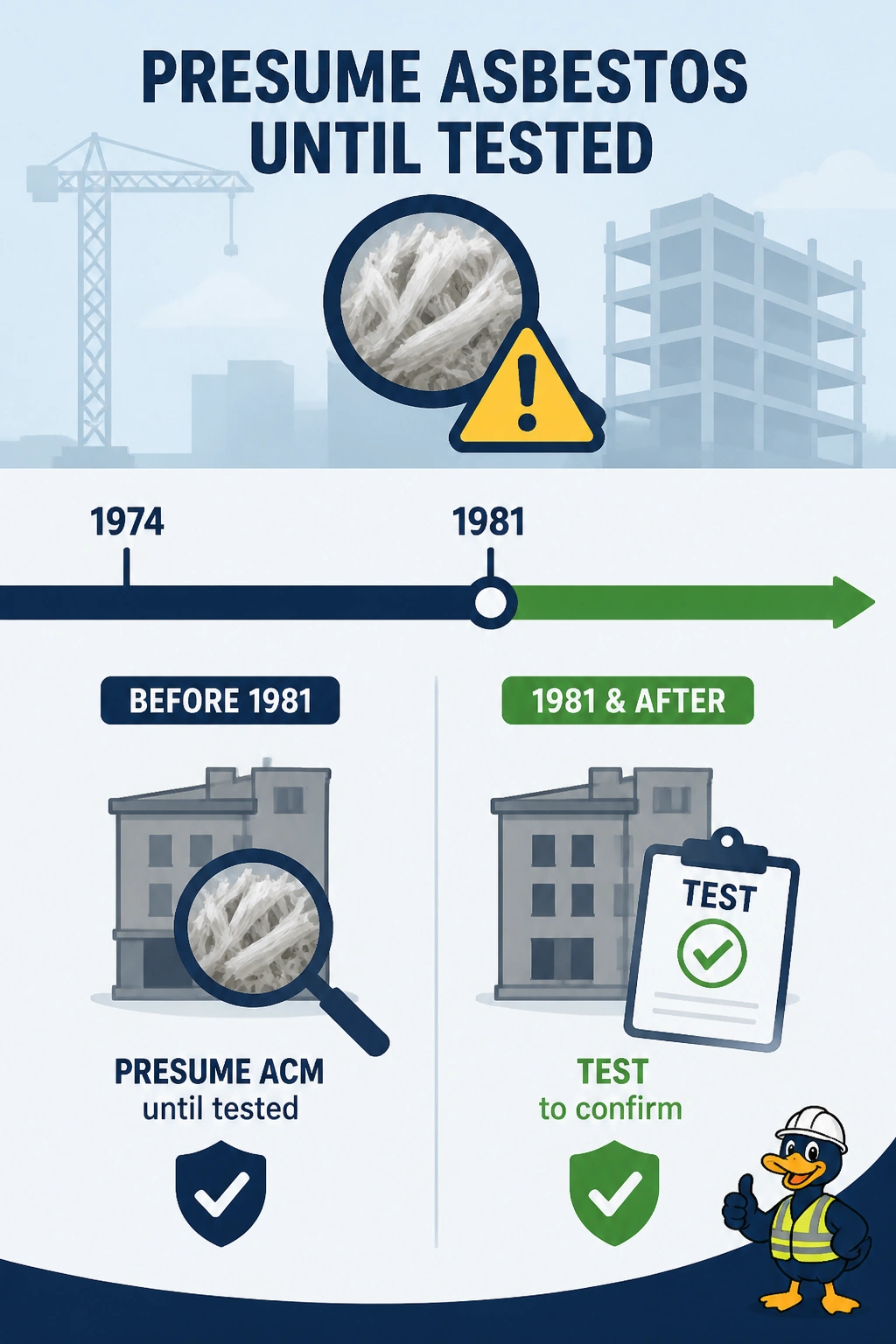
Older pipe insulation might look like harmless chalky plaster, but in a 1974 building, tearing into it dry can fill your crew's lungs with invisible asbestos fibers. You cannot tell by eyesight alone whether a material is safe. Halt the work and treat it as presumed asbestos until lab testing clears it.
Full Explanation
Under OSHA 29 CFR 1926.1101, thermal system insulation and surfacing material found in buildings constructed no later than 1980 are classified as Presumed Asbestos-Containing Material (PACM), so the technician must Treat it as presumed asbestos-containing material until testing proves otherwise. Only a qualified inspector collecting bulk samples analyzed by an accredited lab can rebut that presumption before disturbance. Choosing to Have workers wear dust masks and sweep the dry insulation into trash bags violates asbestos work-practice rules, uses inadequate respiratory protection, and spreads airborne fibers through dry sweeping. Choosing to Spray the pipes with compressed air to clear loose dust before cutting them is prohibited because compressed air violently aerosolizes asbestos fibers across the work zone. Choosing to Proceed with dry removal because commercial buildings from the 1970s rarely used it is factually false, as asbestos insulation was widely installed in commercial construction through the 1970s. As a caveat, even if sampling confirms asbestos, only properly trained and equipped abatement workers using regulated areas and wet methods may remove it. Stop work around the chase, post warning barriers, and arrange certified bulk sampling.
Prefer to study offline? Printable PDF study book + test engine ($7.50, unofficial). These questions stay free here.