
While inspecting a mechanical contractor's outdoor laydown yard, a safety technician finds full oxygen and acetylene cylinders chained upright together against the same wooden shed wall. What must the technician require for proper storage?
Select an answer to reveal the explanation.
Short Explanation
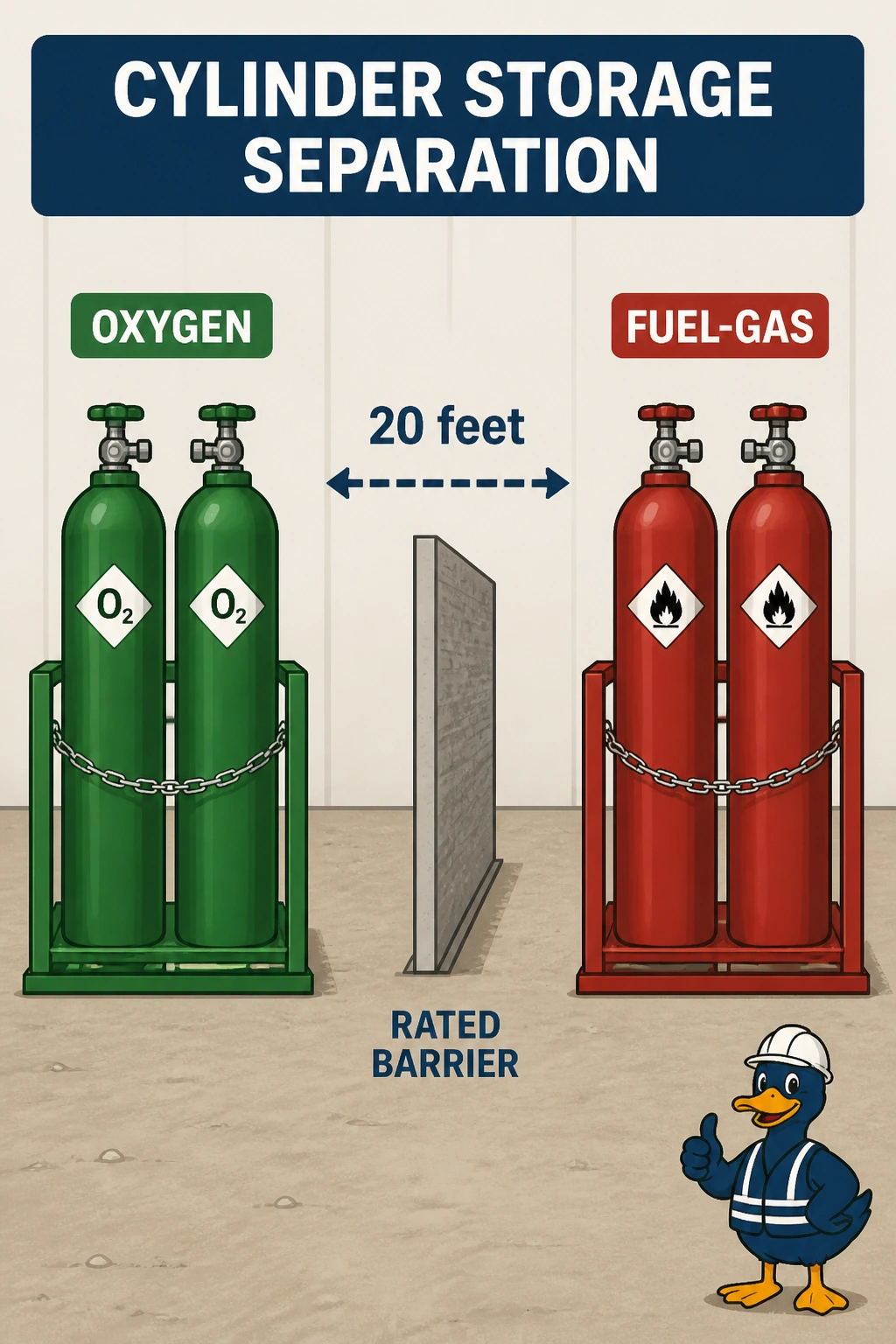
Storing oxygen right next to acetylene is like parking a box of matches directly against a leaking gas can. Even with valve caps screwed on, a small leak can turn a minor spark into an intense fire fed by pure oxygen. You must enforce the required separation distance or fire-rated barrier every time.
Full Explanation
Under 29 CFR 1926.350(a)(10), oxygen cylinders in storage shall be separated from fuel-gas cylinders or combustible materials by at least 20 feet, or by a noncombustible barrier at least 5 feet high having a fire-resistance rating of at least one-half hour. Cylinders in storage must also stay upright under 1926.350(a)(9). Choosing to Lay both cylinder types flat on wooden pallets inside the shaded shed violates upright storage rules for fuel gas and places cylinders in an enclosed area against combustible wood. Choosing to Keep the cylinders chained together as long as the valve protection caps are tight ignores the risk of valve or fusible plug leaks and fails to meet the separation rule. Choosing to Store the acetylene cylinders upside down at least 10 feet away from the oxygen is dangerous because acetylene cylinders contain liquid acetone that can discharge if tipped, and 10 feet is half the required distance. As a caveat, cylinders secured together on a welding cart for active use are treated differently than cylinders in storage. During yard inspections, pace off the 20-foot clearance, confirm valve caps are hand-tight, and verify chains secure cylinders upright.
Prefer to study offline? Printable PDF study book + test engine ($7.50, unofficial). These questions stay free here.