
A highway paving contractor hires six new laborers in mid-July when afternoon heat index values exceed 95 degrees Fahrenheit. To prevent heat-related illnesses during their first one to two weeks, how should the safety technician advise scheduling their work?
Select an answer to reveal the explanation.
Short Explanation
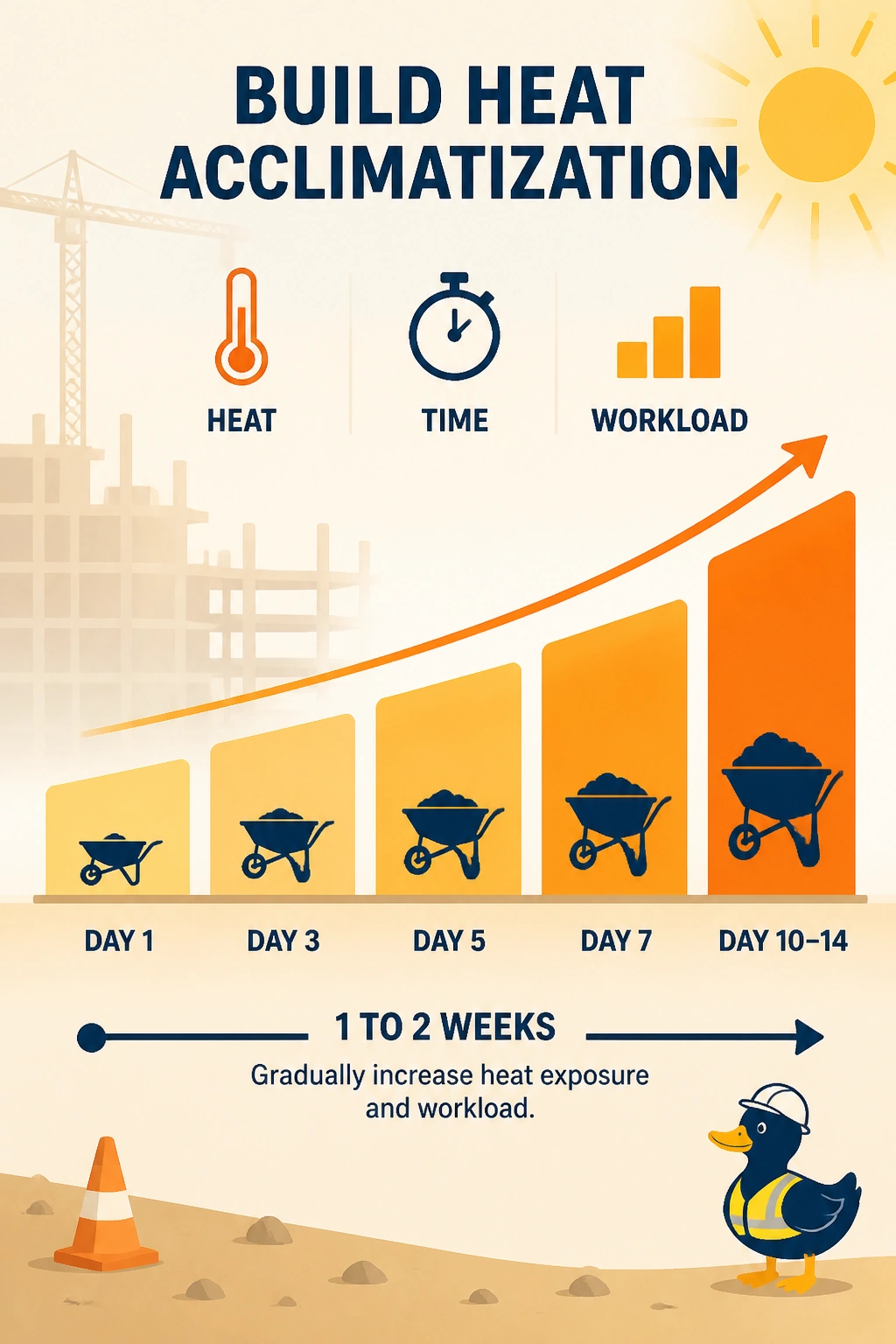
Throwing a new hire straight into peak summer heat is one of the fastest ways to trigger heat exhaustion or heat stroke. Your best defense is gradual acclimatization, avoiding the trap of thinking workers can just tough out full shifts on day one.
Full Explanation
OSHA and NIOSH heat illness prevention guidance emphasizes that new workers and those returning after an absence of a week or more are at the highest risk of fatal heat-related illness because their cardiovascular and sweating systems have not yet adapted to heat stress. The employer should gradually increase heat exposure and workload over one to two weeks for acclimatization, starting with reduced time in the heat and lighter tasks while increasing exposure incrementally over 7 to 14 days. Choosing to assign full ten-hour peak-heat shifts on day one so workers build endurance fast overwhelms the body's thermoregulation and causes core temperature to rise dangerously before physiological adaptation occurs. Choosing to replace water breaks with salt tablets so crews stay productive in the afternoon is unsafe because salt tablets can irritate the stomach and worsen dehydration without adequate water intake. Choosing to schedule heavy manual digging only during the hottest midday hours of the shift maximizes metabolic heat production precisely when environmental heat is highest, instead of shifting heavy tasks to cooler morning hours. As a caveat, acclimatization must be paired with cool drinking water, shaded rest areas, and close buddy-system monitoring for early symptoms like dizziness or heavy sweating. As an operational check, mark new hires on the daily crew roster during their first 14 days so foremen remember to enforce shorter heat-exposure intervals and extra rest breaks.
Prefer to study offline? Printable PDF study book + test engine ($7.50, unofficial). These questions stay free here.