
A site crew is preparing to dig a 6-foot-deep trench for a new water line in an area where public utility locators marked painted gas and fiber lines on the asphalt. What must happen as the excavator approaches the marked utility zone?
Select an answer to reveal the explanation.
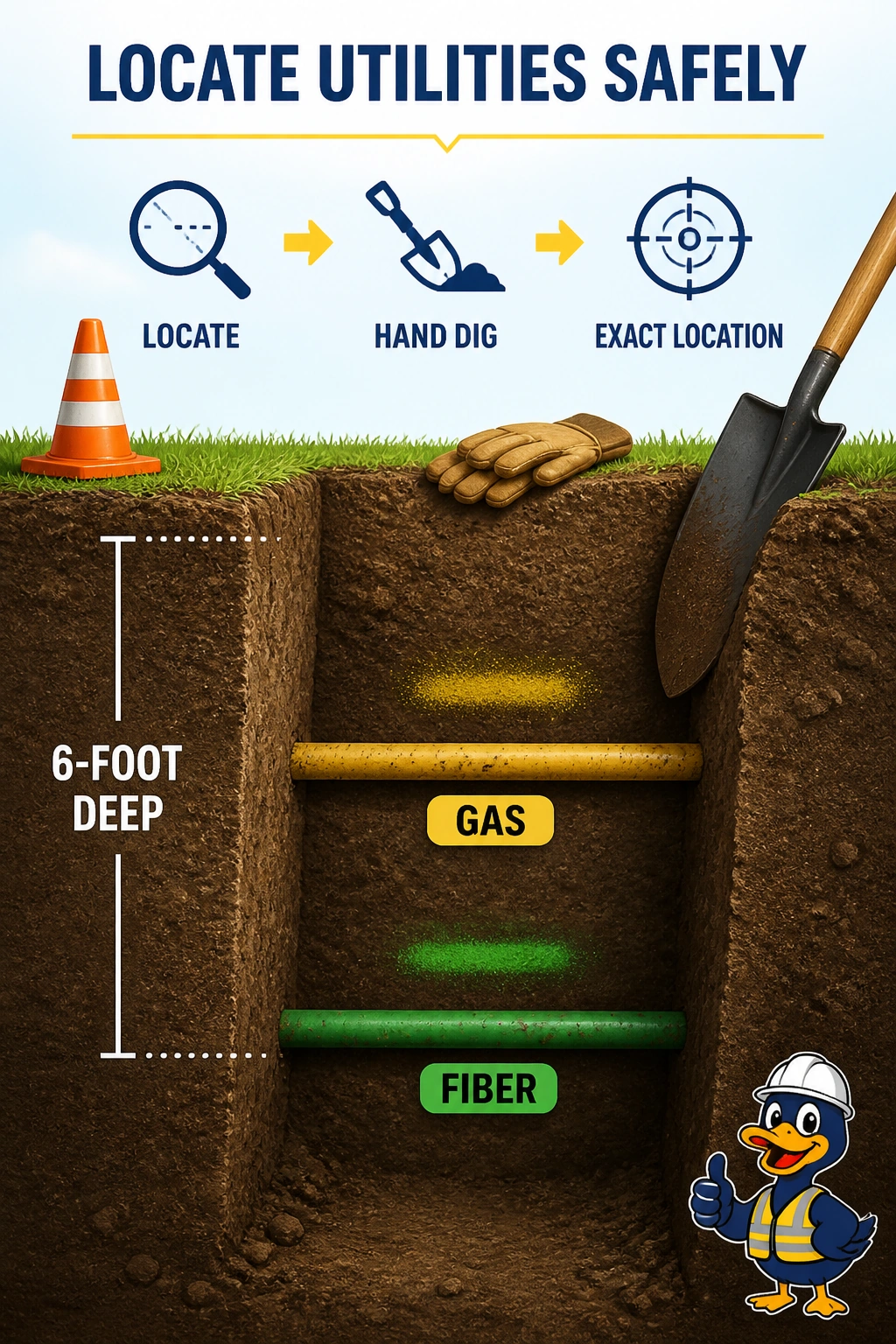
Short Explanation
Surface paint marks are a warning zone, not a laser-guided bullseye. Underground pipes often curve or sit shallower than expected, and one swipe of a steel excavator bucket can rupture a high-pressure gas line in your trench. Slow down near the marks and expose the line carefully by hand.
Full Explanation
Under OSHA 29 CFR 1926.651, when excavation operations approach the estimated location of underground installations, crews must Determine the exact utility location using safe means like hand digging. Acceptable methods such as careful hand digging or vacuum excavation expose the line visually without damaging its coating or wall before mechanical equipment resumes work nearby. Choosing to Dig directly through the paint marks with the toothed excavator bucket to save time risks severing energized cables or pressurized lines with lethal blast and electrocution consequences. Choosing to Assume the painted marks are exact to the inch and ignore depth checks overlooks normal locator tolerances and soil shifts that place utilities outside the painted stripe. Choosing to Proceed with machine trenching unless a gas odor is detected in the air relies on a hazard already being released rather than preventing a strike, and offers zero protection against electrical or fiber conduits. As a caveat, once exposed, underground installations must be protected, supported, or removed as necessary to safeguard workers. Before breaking ground, verify current 811 locate tickets on site and confirm hand-digging tolerance zones with the operator.
Prefer to study offline? Printable PDF study book + test engine ($7.50, unofficial). These questions stay free here.