
Before using a portable four-gas monitor to check a utility vault, a technician sees the display shows normal ambient oxygen and zero toxic gas, and the annual factory calibration sticker is current. What instrument check is still required before daily use?
Select an answer to reveal the explanation.
Short Explanation
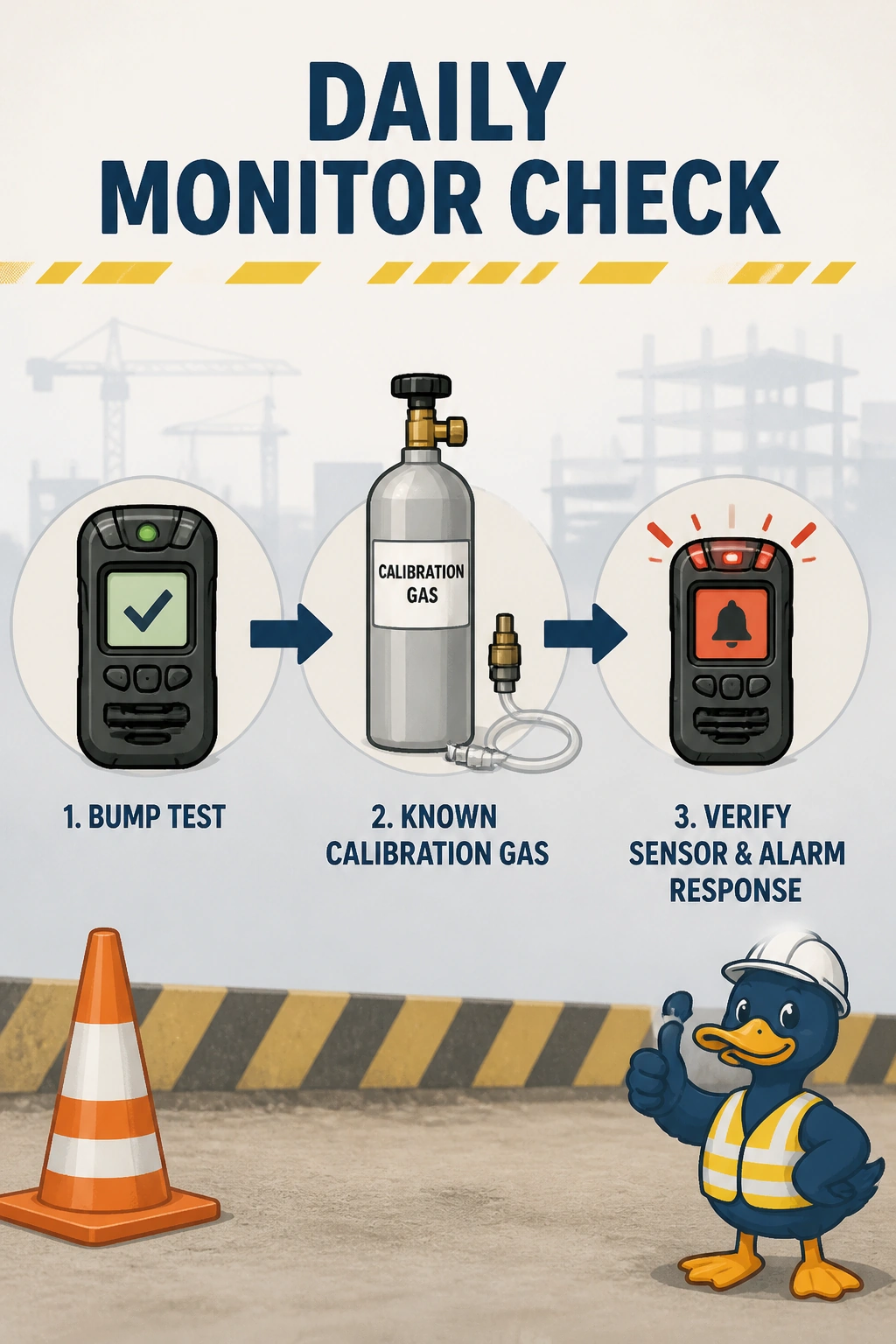
Seeing zeros on a gas meter screen only proves the display is turned on, not that the sensors can still smell gas. Before you trust your crew's lives to a monitor, you run a quick bump test with certified test gas to confirm the sensors and alarms actually wake up. Relying on an old sticker or a truck tailpipe is a classic field trap.
Full Explanation
Direct-reading gas monitors can suffer from sensor poisoning, clogged inlet filters, or dead alarm buzzers between scheduled calibrations. Therefore, the technician must Perform a bump test with known calibration gas to verify sensor and alarm response before each day's use, and run a full calibration if the meter fails the bump test. Trying to Skip further checks because a current annual sticker guarantees daily sensor accuracy is dangerous because a sensor can fail or drift hours after calibration. Attempting to Hold the monitor near a truck exhaust pipe to see if the carbon monoxide alarm beeps uses an unverified gas concentration and can foul or poison catalytic and electrochemical sensors. Choosing to Replace all four electrochemical sensors before entering the utility vault is unnecessary maintenance when sensors are within service life and pass functional checks. As a caveat, always verify the calibration gas cylinder has not expired and matches the manufacturer's target concentrations. For an operational check, log each daily bump test result alongside the monitor serial number before issuing the unit to the entry team.
Prefer to study offline? Printable PDF study book + test engine ($7.50, unofficial). These questions stay free here.