
Ironworkers are tying vertical #5 rebar dowels protruding two feet above a concrete footing while carpenters work directly above on formwork. What must be installed on the exposed rebar ends under 29 CFR 1926.701(b)?
Select an answer to reveal the explanation.
Short Explanation
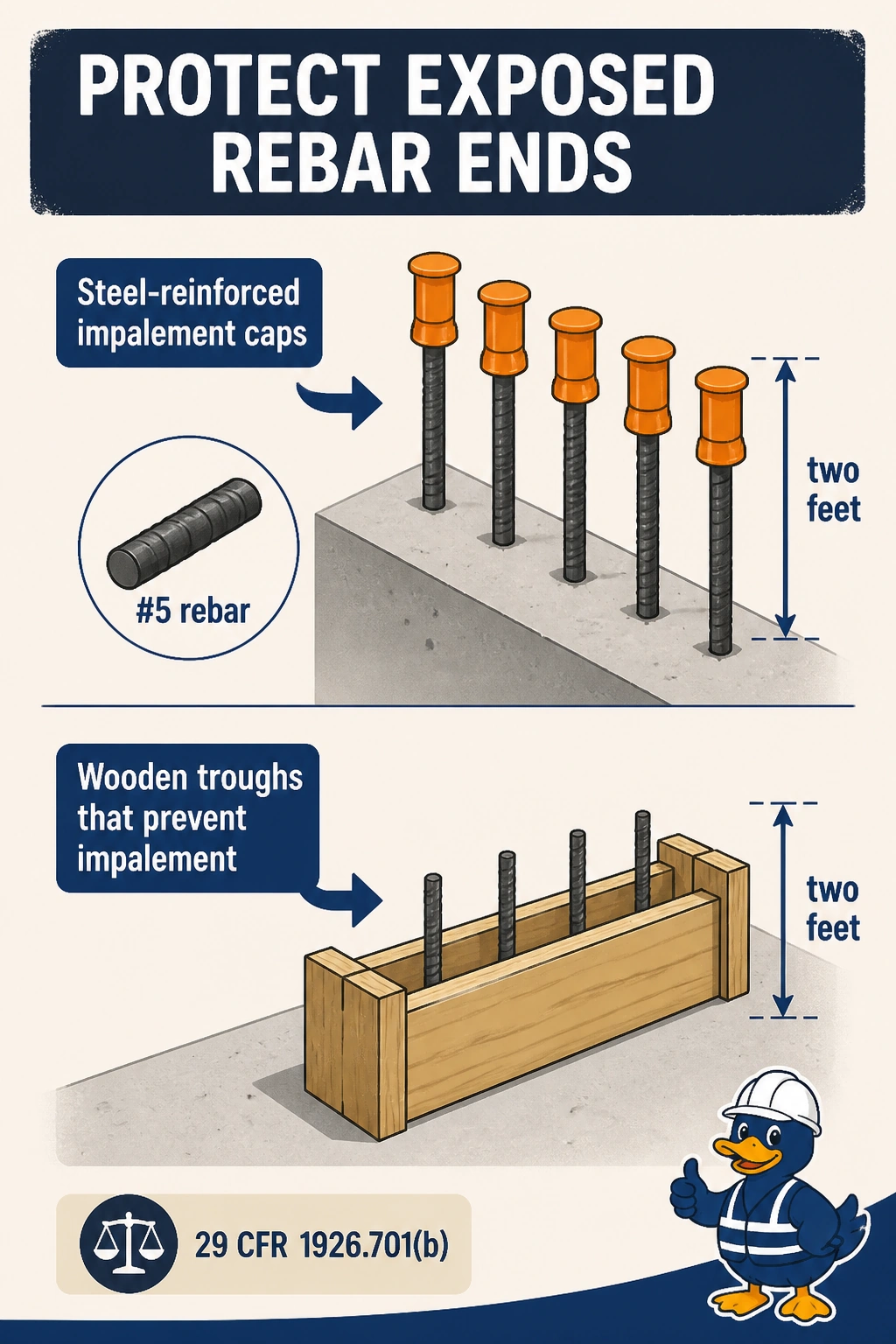
You need protection that can stop a worker from being impaled if they fall onto the exposed dowels. Impalement protection means steel-reinforced caps or wooden troughs that prevent impalement, not thin plastic scratch caps. Flagging tape and a warning line six feet from the footing edge do not provide that physical protection.
Full Explanation
Under 29 CFR 1926.701(b), protruding reinforcing steel onto or into which employees could fall must be guarded to eliminate the impalement hazard. Steel-reinforced impalement caps or wooden troughs that prevent impalement distribute impact forces over a wider surface, rather than allowing the bar to pierce a cap or a person. Thin plastic mushroom scratch caps intended only for abrasion control fail because unreinforced plastic can snap or puncture under the force of a human fall. High-visibility orange flagging tape tied around every fourth dowel may improve visibility, but it provides no physical barrier against impalement. A perimeter warning line placed six feet away from the concrete footing edge does not protect workers tying steel or working directly overhead on formwork. As an exam caveat, a cap intended only for abrasion control is not impalement protection, even if it covers the rebar end. For a practical check, inspect installed caps during daily walks for steel-plate reinforcement markings and confirm that no bare dowels remain near walkways or ladders.
Prefer to study offline? Printable PDF study book + test engine ($7.50, unofficial). These questions stay free here.