
A framing crew sets up a portable extension ladder to access a flat commercial roof 14 feet above the ground, and the foreman asks how to position the top of the ladder. What must the crew do to comply with OSHA ladder standards?
Select an answer to reveal the explanation.
Short Explanation
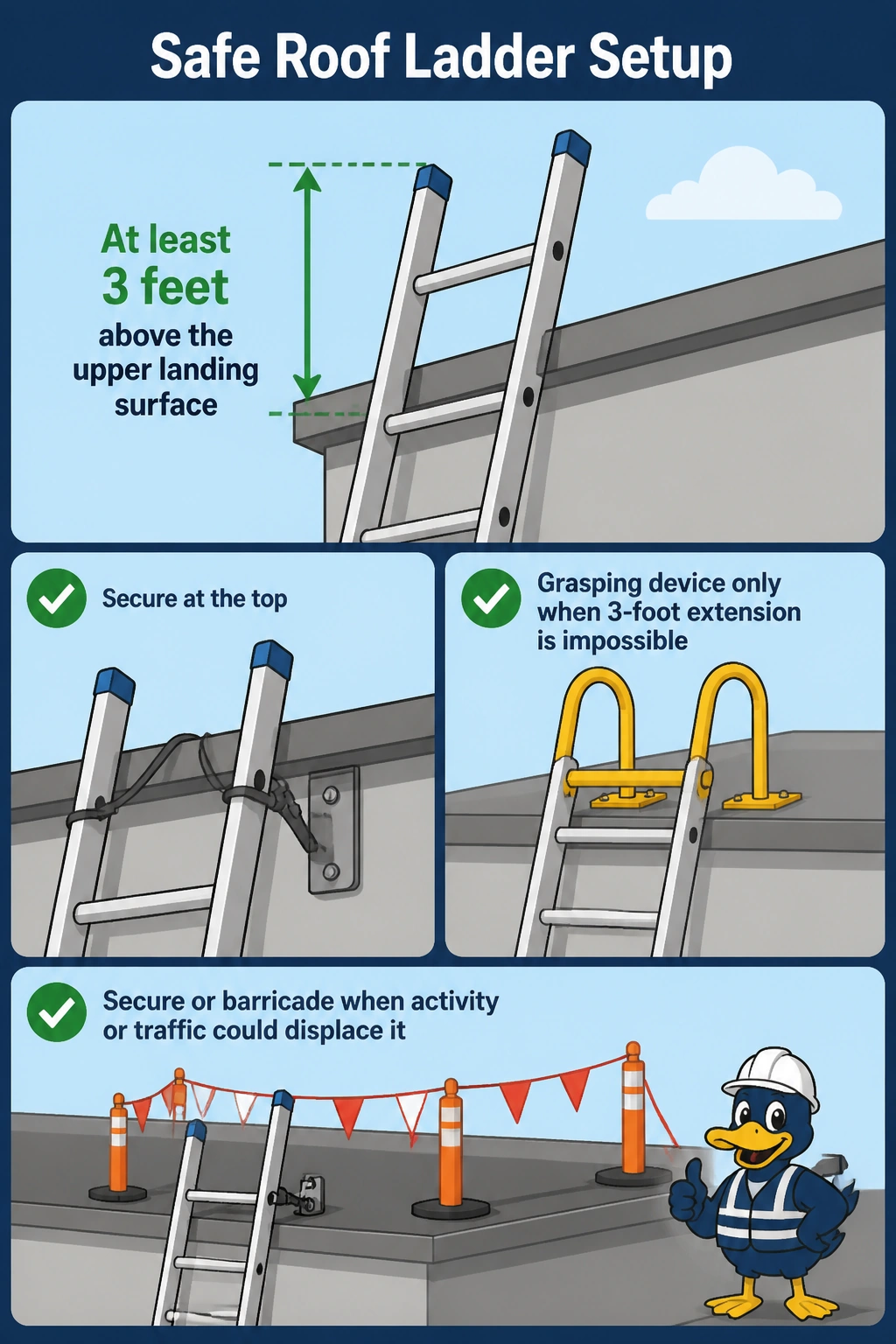
Climbing onto a roof from a ladder that ends at the edge feels like stepping off a diving board without a handrail. You need a steady handhold above the roofline so you never have to grab at thin air. Watch out for the trap of thinking 18 inches or a spotter at the base replaces proper upper-landing extension.
Full Explanation
Under OSHA 29 CFR 1926.1053, when a portable ladder is used for access to an upper landing surface, the crew must Extend the side rails at least 3 feet above the upper landing surface; secure the ladder at the top and provide a grasping device only when a 3-foot extension is impossible, and secure or barricade it when activity or traffic could displace it. That 3-foot extension gives workers a stable handhold while stepping onto and off the roof without losing balance. Choosing to Extend the side rails 18 inches above the landing and tie off the bottom rungs falls short of the 3-foot requirement and leaves workers reaching down as they transition. Choosing to Set the ladder base out at a 1-to-1 ratio from the wall and lock the spreader describes an overly shallow 45-degree angle rather than the 4-to-1 quarter-length setup rule, and spreaders belong on stepladders, not extension ladders. Choosing to Place the side rails flush with the roof edge and use a spotter at the base removes the upper handhold entirely, which increases fall risk during the step-off. As a caveat, when a 3-foot extension is physically impossible, the ladder must be secured at the top to a rigid support and a grasping device such as a grabrail must be provided. As an operational check, confirm at least 3 feet of side rail above the landing before anyone climbs and verify top tie-off.
Prefer to study offline? Printable PDF study book + test engine ($7.50, unofficial). These questions stay free here.