
A utility crew is excavating an 8-foot-deep trench for a storm drain using an excavator, and the operator asks where to place the excavated soil near the trench. What must the crew do to protect workers inside the trench?
Select an answer to reveal the explanation.
Short Explanation
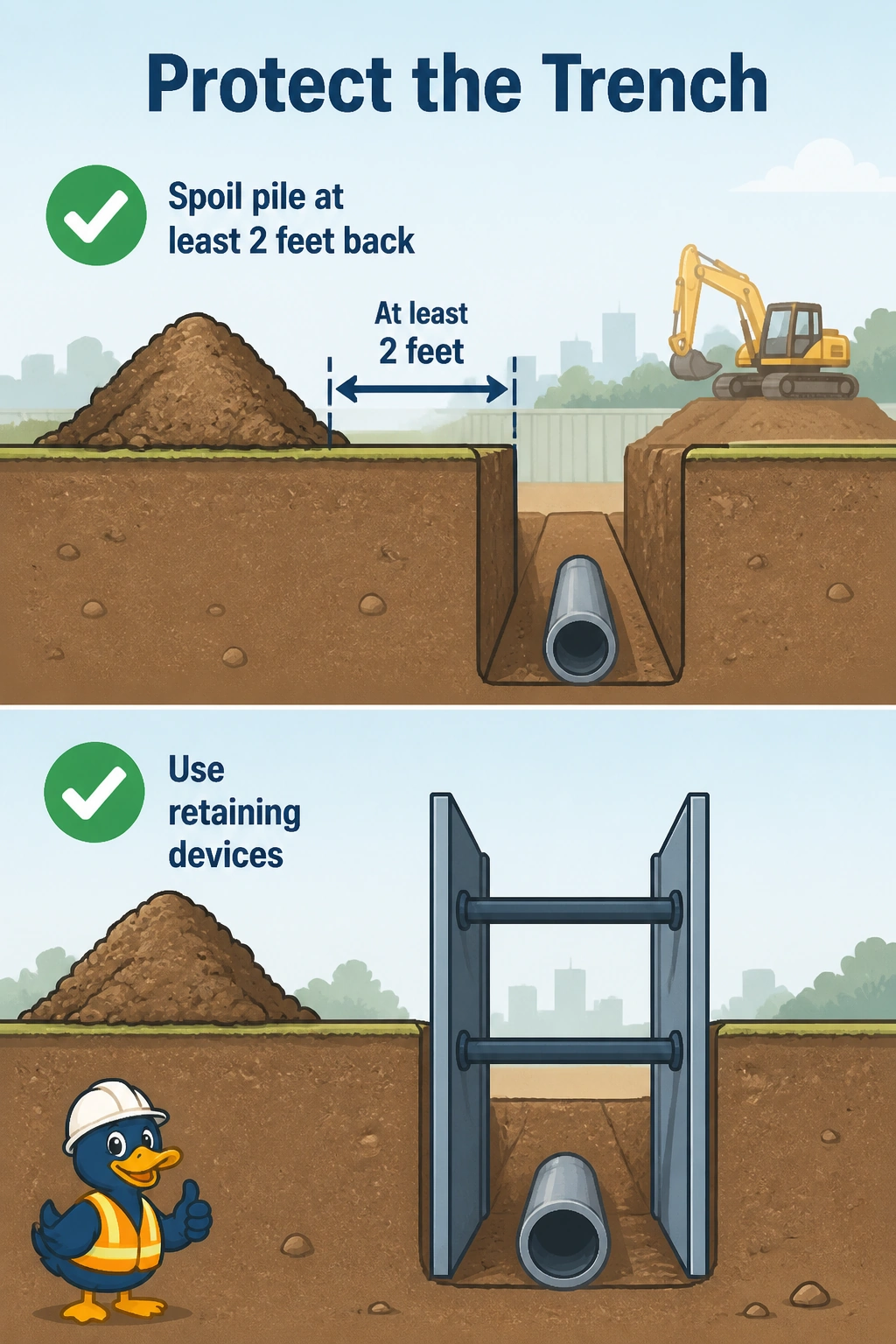
Piling fresh dirt right on the lip of a trench is like stacking heavy bricks on a cardboard ledge over your crew's heads. You need a clear buffer zone so loose soil and rocks cannot roll in or overload the trench wall. Watch out for the trap of trading away that 2-foot setback just to speed up backfilling.
Full Explanation
Under OSHA 29 CFR 1926.651(j)(2), employers must protect workers from excavated material or equipment that could fall or roll into an excavation, which means the crew must Keep the spoil pile at least 2 feet back from the excavation edge or use retaining devices. Maintaining this 2-foot setback reduces surcharge weight on the trench wall and stops clods, stones, and tools from tumbling onto workers below. Choosing to Stack the excavated soil right along the trench lip to form a barrier against surface runoff adds heavy surcharge load directly on the edge and increases the chance of a cave-in. Choosing to Leave the spoil pile within 6 inches of the edge so the excavator can backfill faster later violates the minimum 2-foot clearance requirement and leaves workers exposed to falling debris. Choosing to Compact the spoil pile directly on top of the trench box walls to add downward stability misuses the protective system, which is engineered to shield workers from lateral soil pressure rather than support heaped spoil. As a caveat, if space constraints prevent a 2-foot setback, effective retaining devices such as toeboards or barriers must be installed. As an operational check, walk the trench perimeter before entry and measure that all spoil, tools, and materials sit at least 2 feet back from the cut.
Prefer to study offline? Printable PDF study book + test engine ($7.50, unofficial). These questions stay free here.