
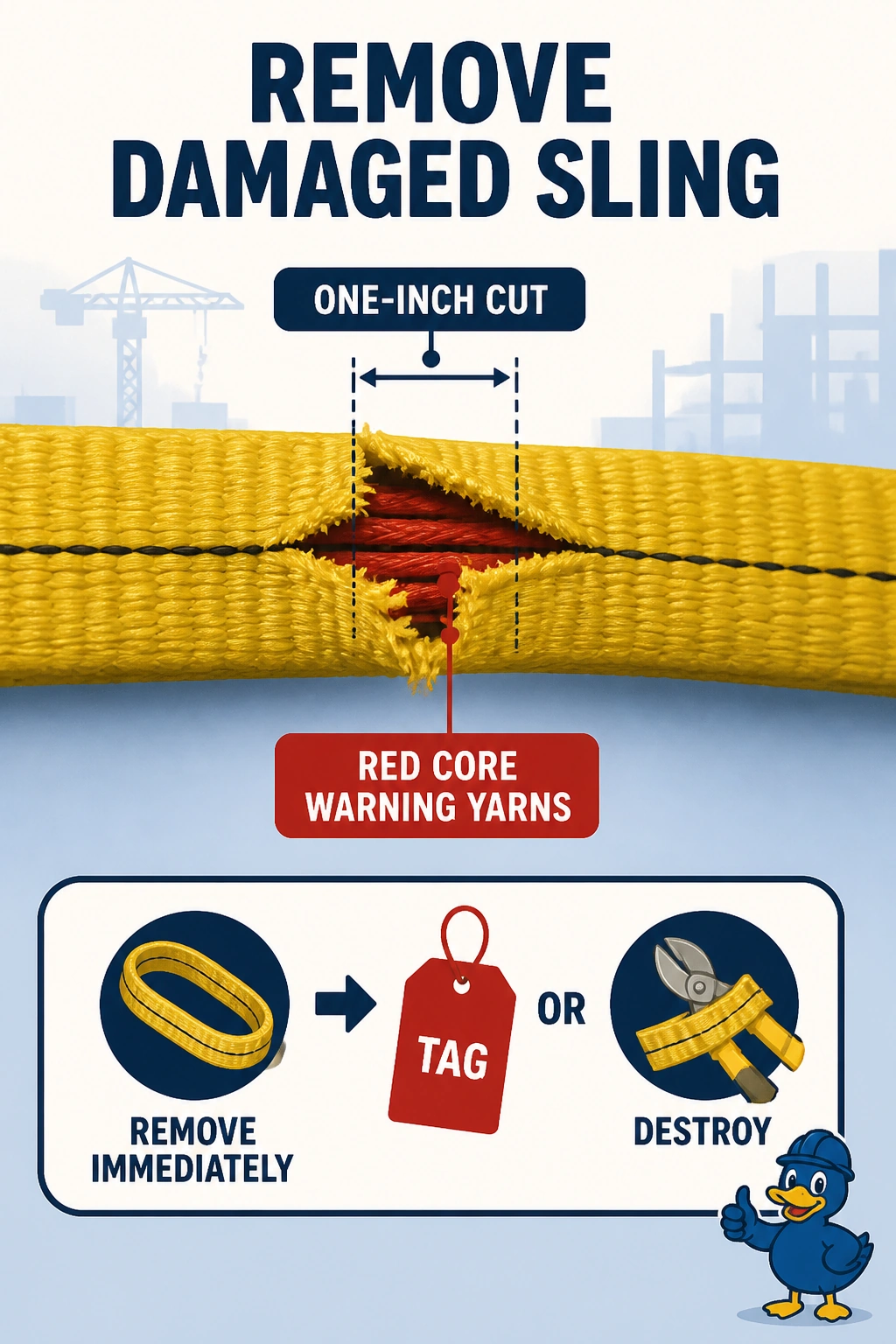
During a pre-lift inspection, a rigger finds a synthetic web sling with a one-inch cut along its edge and exposed red core warning yarns. What action must the safety technician require before the crane lift proceeds?
Select an answer to reveal the explanation.
Short Explanation
A cut in a synthetic sling is like a nick in a climbing rope: once load-bearing fibers are severed, the remaining strands can unzip without warning. If you tape over the damage, derate the sling, or flip it, you are gambling with a dropped load. Remove the sling from service immediately and tag or destroy it so nobody uses it later.
Full Explanation
Under 29 CFR 1926.251(e)(8), remove a synthetic web sling immediately when it has a cut. Red core yarns are a manufacturer damage indicator, not an OSHA-listed removal condition. Because tensile strength depends on continuous load-bearing fibers, remove the sling from service immediately and tag or destroy it so it cannot re-enter the rigging box. Wrapping the cut area with heavy duct tape and monitoring it during the lift only hides progressive tearing and adds no structural capacity. Derating the sling to half its rated capacity for lighter, non-critical loads is not acceptable because damaged synthetic fibers can fail unpredictably, well below any arbitrary reduction. Flipping the sling over so the undamaged side bears against the load shackle ignores that the entire cross-section carries tension and an edge cut acts as a stress riser. One caveat: only a qualified manufacturer or authorized repair facility may repair and proof-test certain slings; field crews must not do so. As a practical check, verify that daily pre-use rigging inspections are documented and that a locked quarantine bin is available for defective gear.
Prefer to study offline? Printable PDF study book + test engine ($7.50, unofficial). These questions stay free here.