
Carpenters on a multi-story commercial building are framing interior floor openings and perimeter edges above a lower concrete slab. At what vertical height above a lower level does OSHA 29 CFR 1926 Subpart M require fall protection for general construction work?
Select an answer to reveal the explanation.
Short Explanation
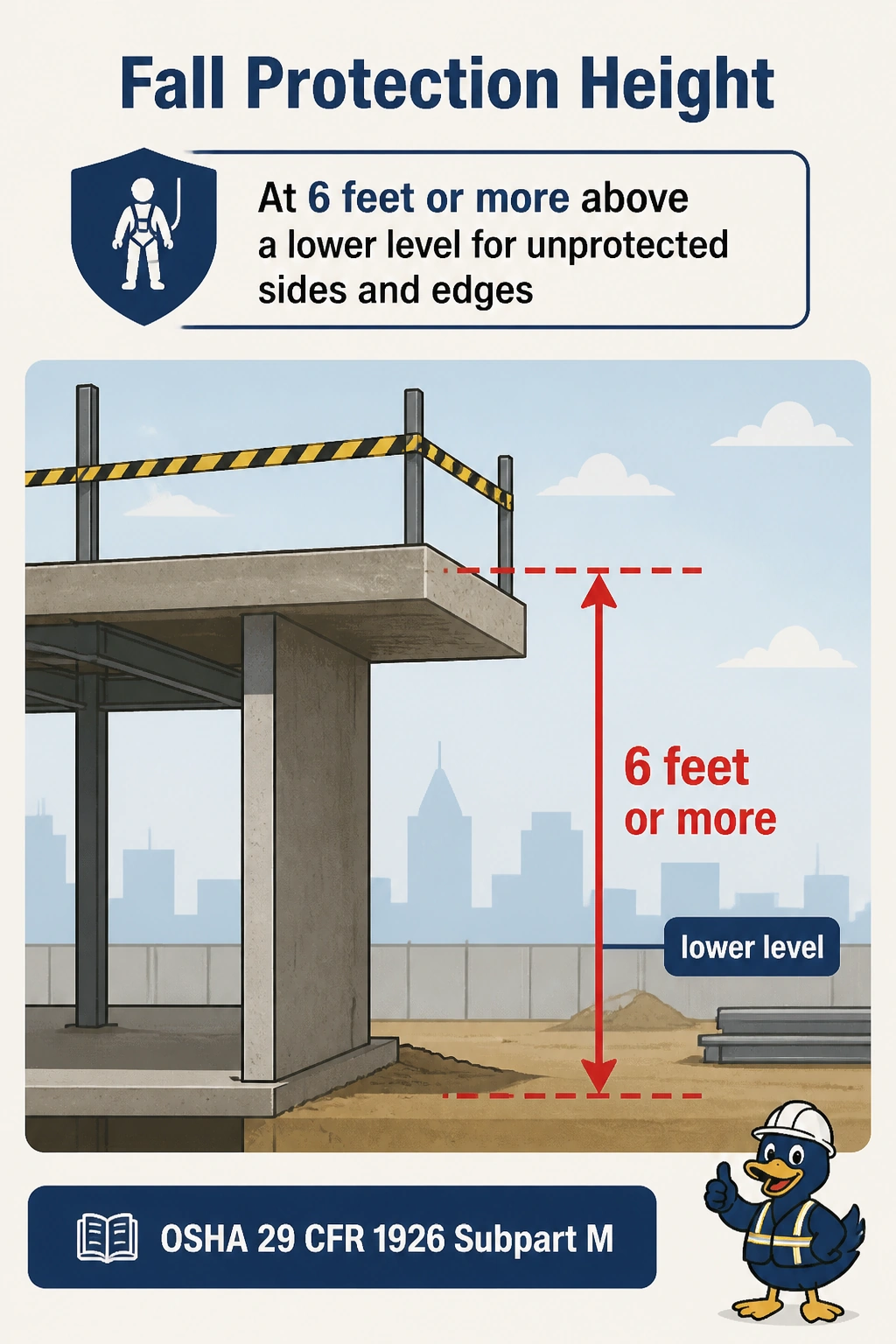
Fall-protection thresholds vary by construction activity, so you cannot rely on a number from another industry. For general construction edges, 6 feet is the trigger; the 4-foot general-industry rule and 10-foot scaffold rule do not apply to standard framing.
Full Explanation
Under OSHA 29 CFR 1926.501, general construction work requires guardrail systems, safety net systems, or personal fall arrest systems at 6 feet or more above a lower level for unprotected sides and edges. This is the baseline Subpart M threshold for these construction edges. The 4-foot threshold matches general industry standards, not the construction standards that govern this framing work. The 10-foot threshold matches scaffold platform rules, which concern scaffolds rather than general construction edges. The 15-foot threshold matches steel erection rules and applies to steel erection activities, not framing; relying on it would leave carpenters unprotected between 6 and 15 feet. One caveat: 1926.501(b)(8) is not an any-height personal-fall-arrest rule. Below 6 feet above dangerous equipment, employees must be protected from falling into or onto it by guardrail systems or equipment guards; at 6 feet or more, guardrails, a personal fall arrest system, or safety nets are required. As a practical check, measure edge-to-slab heights with a tape during pre-task walkdowns and verify that guardrails or anchor points are in place before framing begins.
Prefer to study offline? Printable PDF study book + test engine ($7.50, unofficial). These questions stay free here.